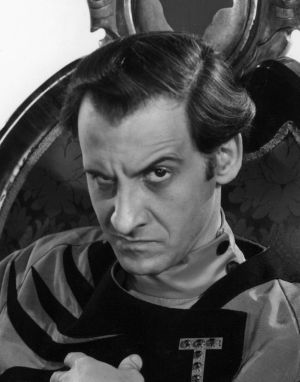
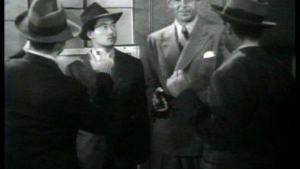
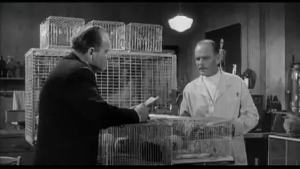
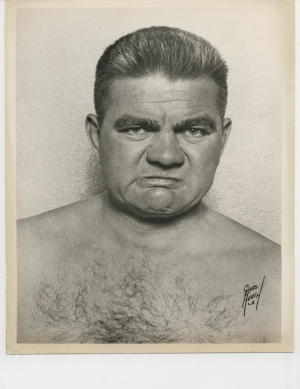
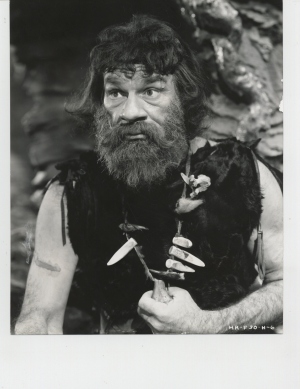
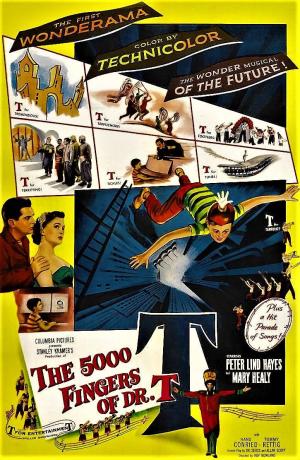
This is a child's dream. As such sex scarcely, if at all, enters into it. (Bart understands that both Dr. T and Zabladowski have designs on his mother of some sort, but he doesn't really know of what sort or why.) There are NO Freudian metaphors none that resonate or shed any light, anyway; one can always find a random background level of such pseudo-metaphors anywhere, including in the patterns in the grain of the wood in the table in front of me -; and there's certainly nothing in the dream to indicate that Dr. T, or anyone in the film, is gay. That is: there's nothing in the content of the dream to determine that he's gay. He likes music? He's fond of fine, fancy clothes? He has pinched nostrils? Give me a break.
I suppose there's very little to indicate that he's heterosexual, either, although if we must decide one way or the other we should conclude that he is, since he DOES want to marry Bart's mother (who alternates between looking prim and sexless and looking altogether luscious), and neither his desire for profit nor his vainglory provide him with a motivation for so doing. I'll admit he may simply wish to indulge in his lust for power.
Power is the key. What moral content there is and it's really more of a fantasia than a parable is this: it's wrong to "push people around". The more sinister interpretations people seem to have racked their brains to come up with simply do not, in the cold light of day, make any sense. Is the film really saying anything against musical education? Against piano practice per se? Even if this is what Dr. Seuss et al. were trying to do, Frederick Hollander's music subverts the enterprise. Are we being subliminally told that there's something suss about art? Even if we are the images are subliminally telling us the precise opposite. I refuse to believe that anything with such a wonderful score, such delightful and clever songs, such beguiling art direction, is REALLY telling us not to bother with the piano if we really want to learn to play it (you'll notice that one or two of the 500 children look quite upset that they don't get to play "Ten Happy Fingers"), or that artists are not to be trusted.
The score and the songs and the art, and most of the ideas, are more than enough to compensate for those aspects of the production that are merely competent (there are and were directors who could have DAZZLED us with this material, from the first minute to the last). Don't worry: it's never less than competent. The only way in which the film falls short in any important way is that it doesn't quite have the nerve embrace its own fantasy. Why does it have to all turn out to be a dream? Why can't Bart REALLY be kidnapped by Dr. T. and forced to practise on a 44,000-key piano? For decades, Hollywood was so terrified of pure fantasy that it would ALWAYS do this: it would take, say, a book by L. Frank Baum in which Dorothy goes to the land of Oz and create a film in which she merely dreams about doing so. There's no denying that this hurts the screen version of "The Wizard of Oz" even if there's also no denying that the fantasy is more than strong enough to survive the blow. So it is here.

 استمتع بأفلام وبرامج بلا حدود
 حمل ما تحب وشاهد بدون إنترنت
 واجهة بسيطة وأداء سلس




'%3e%3cpath%20id='Vector'%20d='M17.3996%2025.7999C17.3996%2025.9838%2017.3634%2026.1658%2017.293%2026.3357C17.2227%2026.5055%2017.1196%2026.6598%2016.9896%2026.7899C16.8596%2026.9199%2016.7052%2027.023%2016.5354%2027.0933C16.3655%2027.1637%2016.1835%2027.1999%2015.9996%2027.1999C15.8158%2027.1999%2015.6337%2027.1637%2015.4639%2027.0933C15.294%2027.023%2015.1397%2026.9199%2015.0097%2026.7899C14.8797%2026.6598%2014.7765%2026.5055%2014.7062%2026.3357C14.6358%2026.1658%2014.5996%2025.9838%2014.5996%2025.7999C14.5996%2025.4286%2014.7471%2025.0725%2015.0097%2024.81C15.2722%2024.5474%2015.6283%2024.3999%2015.9996%2024.3999C16.3709%2024.3999%2016.727%2024.5474%2016.9896%2024.81C17.2521%2025.0725%2017.3996%2025.4286%2017.3996%2025.7999Z'%20fill='white'/%3e%3cpath%20id='Union'%20fill-rule='evenodd'%20clip-rule='evenodd'%20d='M8.5%204H23.5C24.0523%204%2024.5%204.44772%2024.5%205V21.5H7.5V5C7.5%204.44772%207.94772%204%208.5%204ZM5.5%2022.5V5C5.5%203.34315%206.84315%202%208.5%202H23.5C25.1569%202%2026.5%203.34315%2026.5%205V22.5V27C26.5%2028.6569%2025.1569%2030%2023.5%2030H8.5C6.84315%2030%205.5%2028.6569%205.5%2027V22.5ZM24.5%2023.5V27C24.5%2027.5523%2024.0523%2028%2023.5%2028H8.5C7.94772%2028%207.5%2027.5523%207.5%2027V23.5H24.5Z'%20fill='white'/%3e%3cpath%20id='Union_2'%20fill-rule='evenodd'%20clip-rule='evenodd'%20d='M17%209C17%208.44772%2016.5523%208%2016%208C15.4477%208%2015%208.44772%2015%209V13.8258L13.1508%2012.2407C12.7315%2011.8813%2012.1002%2011.9299%2011.7408%2012.3492C11.3813%2012.7685%2011.4299%2013.3998%2011.8492%2013.7593L15.345%2016.7556C15.5205%2016.9079%2015.7495%2017%2016%2017C16.2506%2017%2016.4796%2016.9079%2016.6551%2016.7556L20.1508%2013.7593C20.5701%2013.3998%2020.6187%2012.7685%2020.2593%2012.3492C19.8999%2011.9299%2019.2686%2011.8813%2018.8492%2012.2407L17%2013.8258V9Z'%20fill='white'/%3e%3c/g%3e%3c/svg%3e)