1234money official logo1234money

Command Ctrl

Stream the signal

  • الرئيسية
  • برنامج تلفزيوني
  • فيلم
  • رسوم متحركة
  • VSKit
  • الأكثر مشاهدة
  • تطبيق 1234money
  • FM Download
  • Games
  • Old 1234money
English
العربية
Français
Bahasa Indonesia
हिन्दी
اردو
Filipino
1234money Download Appتطبيق
تطبيق
عرض المزيد1234money home light arrow
1234money downloadاستمتع بأفلام وبرامج بلا حدود
1234money downloadحمل ما تحب وشاهد بدون إنترنت
1234money downloadواجهة بسيطة وأداء سلس
امسح رمز الاستجابة السريعة للتنزيل أو
تحميل 1234money
For phones and tablets
TV
1234money TV APK
لأجهزة Android TV
1234money header navigation
1234money official logo

1234money

1234money search icon
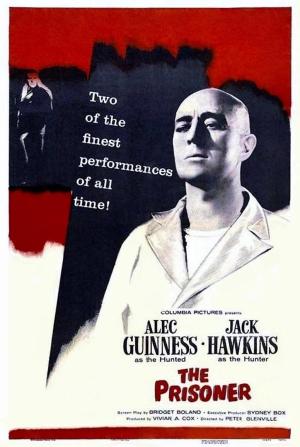
The Prisoner

The Prisoner

★ 6.81955Movie1 h 31 mالمملكة المتحدة
دراما

A Cardinal, a hero of resistance, endures brutal interrogation with unshakable resolve, refusing to confess his supposed treason. As his tormentor's methods fail, the interrogator finds himself unexpectedly moved by pity for indomitable.
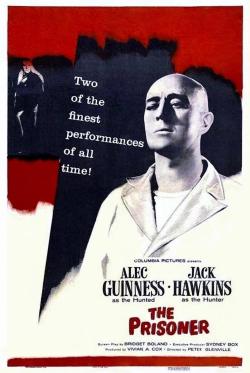
1231 people rated
🔇

The Prisoner

1955

R

1 h 31 m

المملكة المتحدة

دراما

A Cardinal, a hero of resistance, endures brutal interrogation with unshakable resolve, refusing to confess his supposed treason. As his tormentor's methods fail, the interrogator finds himself unexpectedly moved by pity for indomitable.
More

6.8 /10

1231 people rated

شاهد أونلاين

شاهد في التطبيق

share

الحلقات

film
lklk
Netflix
Plex

العرض الفرعي

play
أفضل الممثلين(15)
starring avatar
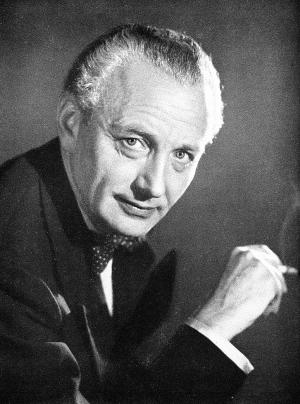
Alec Guinness
The Cardinal
default avatar
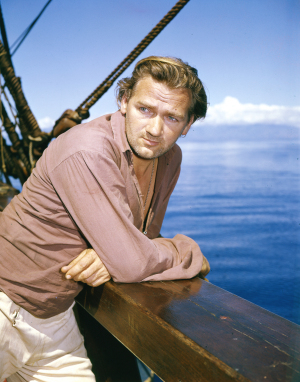
Jack Hawkins
The Interrogator
starring avatar
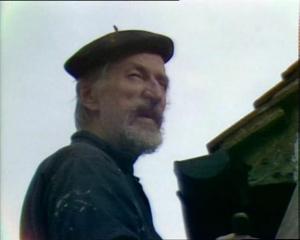
Wilfrid Lawson
The Jailer
starring avatar
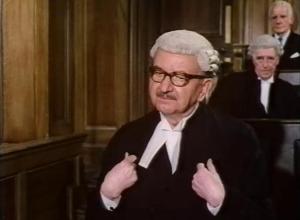
Kenneth Griffith
The Secretary
starring avatar
Jeanette Sterke
The Girl
default avatar
Ronald Lewis
The Guard
starring avatar
Raymond Huntley
The General
starring avatar
Mark Dignam
The Governor
starring avatar
Gerard Heinz
The Doctor
starring avatar
Jonathan Bailey
Minor Role
starring avatar
Percy Herbert
Soldier
starring avatar
Richard Leech
Minor Role
default avatar
Oscar Quitak
Cafe Waiter
default avatar
Delene Scott
Minor Role
starring avatar
Denis Shaw
Plainclothesman

تقييمات المستخدمين

author avatar

EL'CHAPO CAÏPHL 🇨🇮

29/05/2023 07:31
source: The Prisoner
author avatar

Betsnat Bt

26/05/2023 14:15
Moviecut—The Prisoner
author avatar

Abimael_Adu

23/05/2023 03:26
Believed to be inspired by the post-war communist show trials of Cardinals Stepinac and Mindszenty this brilliant play by Bridget Boland opened in 1954, directed by Peter Glenville with a cast headed by Alec Guinness, Noel Willman and Wilfred Lawson. Glenville was entrusted with directing the film version the following year with Guinness and Lawson reprising their roles whilst Willman was replaced by Jack Hawkins. As has been well documented it proved to be extremely controversial and was not only banned from both Venice and Cannes for fear of offending the communists but was also accused in some quarters of being anti-Catholic! Sixty-five years on of course, such 'sensitivities' seem insignificant and all that really matters now is how it stands up as a film. Although Glenville, making an assured directorial debut, has chosen to take a few scenes outside the proscenium arch, it still remains 'filmed theatre' and is no less effective for that. It is essentially a two-hander between the Cardinal of Alec Guinness and the Interrogator of Jack Hawkins. The lighting, settings and clever camerawork have combined to make their wordy exchanges as 'filmic' as possible. Guinness is superlative and bearing in mind his subsequent conversion to Catholicism, I would imagine that he put more of himself into this role than any other. His performance as an extremely clever man reduced to a quivering, grovelling wreck by solitary confinement and psychological torture is brave to say the least. He is very much an 'interior' actor of course and I would say that his detachment is inclined to lessen ones sympathy for his character. The casting of Jack Hawkins is a masterstroke as this character's undoubted cunning is tempered by this actor's innate sensitivity. Although he succeeds in his job of breaking the Cardinal down, disgracing him in the eyes of his followers and diminishing his spiritual power, his is a Pyrrhic victory as he too will suffer the consequences. The playwright herself has written the screenplay and in keeping with the infernal compromises of film, has been obliged to tack on a romantic sub-plot between a prison guard and a married woman which is undeveloped and utterly superfluous. One cannot fail to mention Wilfred Lawson as the jailer whose character has been cleverly written by Boland to provide a contrast and to fulfil the role of a Shakesperean Fool. Lawson's casting is inspired and he is simply superb. Purely as a film, it is not without its weaknesses but is easily the best of the Guinness/Glenville collaborations. The scene that lingers longest is that in which the Interrogator observes those praying in the church and realises that although the symbol of the faith represented by the Cardinal has been tarnished, the faith itself can never be destroyed. The Cardinal's plea:" Do not judge the priesthood by the priest" is devastatingly timeless.
author avatar

Safae.Safushy

23/05/2023 03:26
I'd never heard of the movie THE PRISONER until Arrow Video decided to release their version of the film. I've been a fan of Sir Alec Guinness but the truth is the majority of his films rarely get mentioned let alone released on disc so this one interested me from the start. The end result was a mixed bag. The film is set in an Eastern European country though never identified as to which one. Nazism has been replaced by an apparent communist style regime and people are held in check by an oppressive government. The film opens during a religious ceremony overseen by a Cardinal (Guinness) when it is interrupted by a group of police arresting him and taking him into custody. Placed in a cell and accused of treason he is held captive by the Interrogator (Jack Hawkins). Knowing that the tried and true methods often employed by the regime (mainly torture) will most likely fail with the Cardinal since he suffered thus at the hands of the Nazis in the past, the Interrogator uses other techniques of a more psychological approach. Rather than attack him on political views he does so on his religious beliefs instead. The state, unwilling to wait patiently for the Cardinal's confession, attempts to force his hand with false evidence they have against him. He easily refutes their bogus efforts which strengthen his resolve rather than weaken it. The Interrogator uses other methods like sleep deprivation, starvation and others to slowly weaken the Cardinal. It's an effective use of tools as he combines those with an attack on the vanity of the Cardinal as well. Breaking him down bit by bit he slowly manipulates the Cardinal to believe that his pious behavior is less an attempt to humble himself before God than it is an attempt to rewrite his own personal history, one filled with shame at his poor life before the priesthood. He pressures him to believe that he chose his path not out of being selfless and wanting to help others but to rise from his own poverty to a position that will care for him in a selfless world. The movie moves along at a snail's pace but rightfully so. To move it forward any other way would be to follow the path of the government on display here and rush things that take time. The attempt to slowly and methodically breakdown of the Cardinal is, after all, what the movie is about on the surface. But at its core it is a battle between religion and totalitarianism. Coming out shortly after the war and in the midst of the cold war this makes it an intriguing film to watch. The performances of the two lead actors are amazing to watch. Both are well known for larger roles that came to them later on, most notably their co-starring once again 2 years later in THE BRIDGE ON THE RIVER KWAI, seeing them at this earlier stage in their careers is interesting. Early on they were both excellent at their craft. Arrow is releasing this as part of their Arrow Academy series and they've done a great job. But then what else would anyone expect of Arrow? The film is presented in a high definition 1080p version and contains plenty of extras. Those include "Interrogating Guinness" a new video appreciation of the film by author and academic Neil Sinyard, select scene commentary by author and critic Philip Kemp, a reversible sleeve with original and newly commissioned artwork by Peter Strain and for the first pressing only an illustrated collector's booklet with new writing on the film by Mark Cunliffe.
author avatar

QuinNellow

23/05/2023 03:26
"The Prisoner" is a post-WWII psychological drama taking place in an unnamed East European country that has fallen under Communist rule. You'll notice that none of the characters are credited with proper names, in this tale of a popular Cardinal (Alec Guinness) being put through the wringer by an interrogator (Jack Hawkins). The Cardinal has been accused of treason against the state, and arrested, and the interrogator hopes to crack through the churchmans' shell and find his weak spot, anything to make the man confess to what are essentially baseless charges. It's all about the acting in this small scale production, a battle of wills which does indeed come off as a photographed stage play. Director Peter Glenville doesn't give it style or cinematic flair, but it IS pretty atmospheric as photographed by D.P. Reginald H. Wyer. Inspired by two real-life churchmen, the tale (written by Bridget Boland) is intelligent and compelling. One does feel quite bad for the Cardinal, who is a tough nut to crack at first. And yet neither lead character is painted as purely one-dimensional; the viewer doesn't necessarily hate the interrogator when all is said and done. There is a minor number of supporting players, all of them very good, especially the hearty and jovial Wilfrid Lawson as the jailer. Ronald Lewis, as the young warder, figures in a subplot about his love for a married woman (Jeanette Sterke), although this bit of business never really goes anywhere. Fortunately, Guiness and Hawkins (old pros, the both of them) deliver commanding performances that hold ones' attention even if the material does not. Provocative and controversial in its day, "The Prisoner" was seen by some as too sympathetic to Communists, and by others as being too *anti*-Communist. It clocks in at a fairly trim running time, 94 minutes, and does give us a fairly powerful ending. Seven out of 10.
author avatar

BLIKSEM BERGIGO

23/05/2023 03:26
For a man with such extensive Shakespearian stage experience, Alec Guinness certainly didn't show movie audiences the depth of his talent. You can catch a few movies if you know where to look, but in general, his usual fare doesn't leave a lasting impression. Perhaps that was why he donned disguises so often; maybe he feared just being himself wasn't good enough? My hypothesis notwithstanding, you must know he wasn't knighted because of his work in Star Wars. If you want to see his real talent he kept bottled up for the rest of his film career, find the forgotten drama The Prisoner. It's a cat-and-mouse film with virtually two players: Alec Guinness and Jack Hawkins. Alec plays a cardinal arrested on suspicion of treason, and Jack plays the interrogator bent on extracting a confession. For political reasons, Jack and the men of his fictional fascist government need Alec to confess. If he dissolutions his followers, they'll be easier to control. To avoid Alec's martyrdom, Jack has to be very careful in his interrogation tactics. Depending on your point of view of the story, either of the men could be considered the lead. With nearly equal screen time, it's a toss up. Alec is obviously the focus, as he's imprisoned and psychologically tortured; but Jack soon looks at his assignment as more than just a job and becomes obsessed with making Alec break. Both men do exactly what is asked of them in the script and show talents they didn't usually show in their other movies. Their timing, chemistry, and feed off each other's energy is very engaging, even if the genre doesn't usually appeal to you. I wasn't expecting to like the film, but I couldn't tear my eyes away. I can't count how many times I said, "I didn't know he had it in him," when Alec would scream or cry. Can you imagine Alec Guinness crying? Here at the Hot Toasty Rag, we love rewarding three types of performances: the "what does it take?" performance, the obscure performance, and the best performance of one's career. As Alec's falls in all three categories, we were very happy to honor him in 1955.
author avatar

Mia Botha

23/05/2023 03:26
"The Prisoner" is a tour de force between two superlative actors Alec Guinness and Jack Hawkins. It's an unusual sort of movie in that it is set in an unnamed communist country following WWII and all of the characters do not have names. A Cardinal (Alec Guinness) is arrested for treason against the government. He had been a hero of the resistance against the Germans in WWII and now is accused of rallying the people against the new totalitarian regime. He is to be question by master interrogator Jack Hawkins. Over a period of three months the interrogator tries to break the priest's resolve and force him to sign a bogus confession of his guilt. He uses sleep deprevation, relentless badgering, bright lights and even bringing the Cardinal' s mother into play. But the Cardinal is the interrogator's equal in intelligence. Eventually the Cardinal's own self doubts are brought to the forefront and he is broken and put on trial. He is found guilty and is sentenced to death but.................................................................................................................. The ending of the movie is particularly poignant leaving the question: Did anyone really win this verbal battle of the minds? Although this is essentially a two actor performance, there are some interesting supporting players as well. Wilfred Lawson plays the somewhat likeable jailer, Kenneth Griffith is Hawkins ambitious secretary, Jeanette Stark and Ronald Lewis play a young couple trying to make sense of it all and Raymond Huntley is the General. The story was supposedly based on the Cardinal Mindszenty trial in Hungary in 1948.
author avatar

Aunty Camilla

23/05/2023 03:26
****SPOILERS*** Brought up on charges of treason against the state the Cardinal, Alec Guinness, of an Eastern European communist nation is put through the ringer by his Interrogator, Jack Hawkins, in order to get him to confess to his so-called crimes. The Cardinal who's an old hand at being tortured by the German Gestapo during WWII takes it all in stride not caring what is done to his body but when the Interrogator starts to work on his mind and his life as a young boy in the city fish market he strikes a raw nerve with the Cardinal. The Cardinal has done some bad things, like sticking his hand in the cookie jar, in the past before he became religious and it's his former comrade in arms, against the Nazis, in WWII, the Interrogator who brings those events out into the open. It takes some three months for the Interrogator to get the Cardinal to crack with days of sleep deprivation and weeks of isolation but in the end the Cardinal finally gives in to all of his demands. ***SPOILERS*** At his trial the Cardinal confesses to everything, even the Lincoln and Julius Cesar assassinations, under the sun in an open court with those in attendance, mostly the Cardinal's supporters, open mouthed and shocked by his many false and mindless confessions. It didn't take long for the smug with victory Interrogator to realize that all his efforts in getting the Cardinal to confess backfired in his face! The vary fact that the Cardinal so eagerly confessed to all if not even more of the crimes that he was accused of by the state showed the people that he was just playing along with his captors and in fact showing them up for the brutish thugs whom they are. With his conviction thrown out and confessions shown to be total lies and BS it's the Cardinal who in fact got the last laugh not the Interrogator and his superiors. And with that the Cardinal walks out free as a bird or cardinal from prison to the cheers of all the people who were tried to be made out, by the Interrogator, that he betrayed!
author avatar

🥰B

23/05/2023 03:26
Spoiler/plot- 1955, The Prisoner, An outspoken Cardinal from Eastern European country is jailed for his rebellious beliefs and subject to relentless interrogation of a psychologist in prison. Hoping for a phony confession that would create chaos among the countries large Catholic population, the interrogator knows no amount of brutal torture will sway his prison subject that fought the Nazi Gestapo. But after months of hard mental torture, the interrogator finds a crack in his subject's facade when the interrogator challenges his religious ideals in a gripping prison scene. The film ending is quite a enjoyable twist. *Special Stars- Sir Alec Guiness plays the lead, as The Cardinal. Jack Hawkins plays the interrogator. *Theme- Totalitarian governments break-down the individual, while religion glorifies it. *Based on- Eastern European world news headlines. *Trivia/location/goofs- An English film shot a the Pinewood Studios. Such a controversial film that it was BANNED at Cannes & Venice Film festivals for it's political implications on Eastern BLOC countries. A memorable line is given by Guiness just before his Cardinal role is jailed, "Any confession coming from me in prison is a lie or completely due to the weakness of man". 'The Motion Picture Guide' rates this film highly and rates the performances by the two male leads as "...two best roles and performed at their very best." *Emotion- A very excellent dramatic and tension filled film plot with meaty roles for these two giants of the British screen. While these two stars were in the same film, seldom have they shared scenes acting off each other like in this film. A true delight to enjoy watching these solid film stars in the beauty of black-and-white. The film's subject matter is thought provoking for spiritual and non-spiritual people alike.
author avatar

TV.Quran ✅

23/05/2023 03:26
'The Prisoner,'is a film version of the play by the same title, and is widely based on the life of Cardinal Mindszenty of Hungary. It addresses the topic of religious freedom and therefore, also authentic human rights. Alec Guinness in the role of a Catholic cardinal and Jack Hawkins as his interrogator who represents an atheist, totalitarian state (i.e. a state under communism) are brilliant. The supporting actors are also excellent. The film is tense; it addresses man's inhumanity to man (Jack Hawkins) and the frailty of the human spirit when it is subjected to physical, emotional and mental torture (Alec Guinness). It is the story of one man's battle to preserve his interior freedom and every man's battle with himself; and it shows how a good man's courage and even his frailty unwittingly change the lives of his interrogator, his jailer and a guard. The film's one weakness was that the cardinal's appearance did not adequately reflect the horrific torture to which he was subjected: though tortured for months on end, he is always clean-shaven and there is no gradual deterioration to give credence to his utter physical and mental exhaustion. That said, I loved the film and found it very moving, particularly the scene close to the end when the cardinal looks into the guard's eyes and humbly says 'Try not to judge the Priesthood by the priest.' (It is necessary to have watched the film to understand the poignancy of this remark which cleverly responds to a comment made earlier by the guard).

تقييمات المستخدمين

author avatar

EL'CHAPO CAÏPHL 🇨🇮

29/05/2023 07:31
source: The Prisoner
author avatar

Betsnat Bt

26/05/2023 14:15
Moviecut—The Prisoner
author avatar

Abimael_Adu

23/05/2023 03:26
Believed to be inspired by the post-war communist show trials of Cardinals Stepinac and Mindszenty this brilliant play by Bridget Boland opened in 1954, directed by Peter Glenville with a cast headed by Alec Guinness, Noel Willman and Wilfred Lawson. Glenville was entrusted with directing the film version the following year with Guinness and Lawson reprising their roles whilst Willman was replaced by Jack Hawkins. As has been well documented it proved to be extremely controversial and was not only banned from both Venice and Cannes for fear of offending the communists but was also accused in some quarters of being anti-Catholic! Sixty-five years on of course, such 'sensitivities' seem insignificant and all that really matters now is how it stands up as a film. Although Glenville, making an assured directorial debut, has chosen to take a few scenes outside the proscenium arch, it still remains 'filmed theatre' and is no less effective for that. It is essentially a two-hander between the Cardinal of Alec Guinness and the Interrogator of Jack Hawkins. The lighting, settings and clever camerawork have combined to make their wordy exchanges as 'filmic' as possible. Guinness is superlative and bearing in mind his subsequent conversion to Catholicism, I would imagine that he put more of himself into this role than any other. His performance as an extremely clever man reduced to a quivering, grovelling wreck by solitary confinement and psychological torture is brave to say the least. He is very much an 'interior' actor of course and I would say that his detachment is inclined to lessen ones sympathy for his character. The casting of Jack Hawkins is a masterstroke as this character's undoubted cunning is tempered by this actor's innate sensitivity. Although he succeeds in his job of breaking the Cardinal down, disgracing him in the eyes of his followers and diminishing his spiritual power, his is a Pyrrhic victory as he too will suffer the consequences. The playwright herself has written the screenplay and in keeping with the infernal compromises of film, has been obliged to tack on a romantic sub-plot between a prison guard and a married woman which is undeveloped and utterly superfluous. One cannot fail to mention Wilfred Lawson as the jailer whose character has been cleverly written by Boland to provide a contrast and to fulfil the role of a Shakesperean Fool. Lawson's casting is inspired and he is simply superb. Purely as a film, it is not without its weaknesses but is easily the best of the Guinness/Glenville collaborations. The scene that lingers longest is that in which the Interrogator observes those praying in the church and realises that although the symbol of the faith represented by the Cardinal has been tarnished, the faith itself can never be destroyed. The Cardinal's plea:" Do not judge the priesthood by the priest" is devastatingly timeless.
author avatar

Safae.Safushy

23/05/2023 03:26
I'd never heard of the movie THE PRISONER until Arrow Video decided to release their version of the film. I've been a fan of Sir Alec Guinness but the truth is the majority of his films rarely get mentioned let alone released on disc so this one interested me from the start. The end result was a mixed bag. The film is set in an Eastern European country though never identified as to which one. Nazism has been replaced by an apparent communist style regime and people are held in check by an oppressive government. The film opens during a religious ceremony overseen by a Cardinal (Guinness) when it is interrupted by a group of police arresting him and taking him into custody. Placed in a cell and accused of treason he is held captive by the Interrogator (Jack Hawkins). Knowing that the tried and true methods often employed by the regime (mainly torture) will most likely fail with the Cardinal since he suffered thus at the hands of the Nazis in the past, the Interrogator uses other techniques of a more psychological approach. Rather than attack him on political views he does so on his religious beliefs instead. The state, unwilling to wait patiently for the Cardinal's confession, attempts to force his hand with false evidence they have against him. He easily refutes their bogus efforts which strengthen his resolve rather than weaken it. The Interrogator uses other methods like sleep deprivation, starvation and others to slowly weaken the Cardinal. It's an effective use of tools as he combines those with an attack on the vanity of the Cardinal as well. Breaking him down bit by bit he slowly manipulates the Cardinal to believe that his pious behavior is less an attempt to humble himself before God than it is an attempt to rewrite his own personal history, one filled with shame at his poor life before the priesthood. He pressures him to believe that he chose his path not out of being selfless and wanting to help others but to rise from his own poverty to a position that will care for him in a selfless world. The movie moves along at a snail's pace but rightfully so. To move it forward any other way would be to follow the path of the government on display here and rush things that take time. The attempt to slowly and methodically breakdown of the Cardinal is, after all, what the movie is about on the surface. But at its core it is a battle between religion and totalitarianism. Coming out shortly after the war and in the midst of the cold war this makes it an intriguing film to watch. The performances of the two lead actors are amazing to watch. Both are well known for larger roles that came to them later on, most notably their co-starring once again 2 years later in THE BRIDGE ON THE RIVER KWAI, seeing them at this earlier stage in their careers is interesting. Early on they were both excellent at their craft. Arrow is releasing this as part of their Arrow Academy series and they've done a great job. But then what else would anyone expect of Arrow? The film is presented in a high definition 1080p version and contains plenty of extras. Those include "Interrogating Guinness" a new video appreciation of the film by author and academic Neil Sinyard, select scene commentary by author and critic Philip Kemp, a reversible sleeve with original and newly commissioned artwork by Peter Strain and for the first pressing only an illustrated collector's booklet with new writing on the film by Mark Cunliffe.
author avatar

QuinNellow

23/05/2023 03:26
"The Prisoner" is a post-WWII psychological drama taking place in an unnamed East European country that has fallen under Communist rule. You'll notice that none of the characters are credited with proper names, in this tale of a popular Cardinal (Alec Guinness) being put through the wringer by an interrogator (Jack Hawkins). The Cardinal has been accused of treason against the state, and arrested, and the interrogator hopes to crack through the churchmans' shell and find his weak spot, anything to make the man confess to what are essentially baseless charges. It's all about the acting in this small scale production, a battle of wills which does indeed come off as a photographed stage play. Director Peter Glenville doesn't give it style or cinematic flair, but it IS pretty atmospheric as photographed by D.P. Reginald H. Wyer. Inspired by two real-life churchmen, the tale (written by Bridget Boland) is intelligent and compelling. One does feel quite bad for the Cardinal, who is a tough nut to crack at first. And yet neither lead character is painted as purely one-dimensional; the viewer doesn't necessarily hate the interrogator when all is said and done. There is a minor number of supporting players, all of them very good, especially the hearty and jovial Wilfrid Lawson as the jailer. Ronald Lewis, as the young warder, figures in a subplot about his love for a married woman (Jeanette Sterke), although this bit of business never really goes anywhere. Fortunately, Guiness and Hawkins (old pros, the both of them) deliver commanding performances that hold ones' attention even if the material does not. Provocative and controversial in its day, "The Prisoner" was seen by some as too sympathetic to Communists, and by others as being too *anti*-Communist. It clocks in at a fairly trim running time, 94 minutes, and does give us a fairly powerful ending. Seven out of 10.
author avatar

BLIKSEM BERGIGO

23/05/2023 03:26
For a man with such extensive Shakespearian stage experience, Alec Guinness certainly didn't show movie audiences the depth of his talent. You can catch a few movies if you know where to look, but in general, his usual fare doesn't leave a lasting impression. Perhaps that was why he donned disguises so often; maybe he feared just being himself wasn't good enough? My hypothesis notwithstanding, you must know he wasn't knighted because of his work in Star Wars. If you want to see his real talent he kept bottled up for the rest of his film career, find the forgotten drama The Prisoner. It's a cat-and-mouse film with virtually two players: Alec Guinness and Jack Hawkins. Alec plays a cardinal arrested on suspicion of treason, and Jack plays the interrogator bent on extracting a confession. For political reasons, Jack and the men of his fictional fascist government need Alec to confess. If he dissolutions his followers, they'll be easier to control. To avoid Alec's martyrdom, Jack has to be very careful in his interrogation tactics. Depending on your point of view of the story, either of the men could be considered the lead. With nearly equal screen time, it's a toss up. Alec is obviously the focus, as he's imprisoned and psychologically tortured; but Jack soon looks at his assignment as more than just a job and becomes obsessed with making Alec break. Both men do exactly what is asked of them in the script and show talents they didn't usually show in their other movies. Their timing, chemistry, and feed off each other's energy is very engaging, even if the genre doesn't usually appeal to you. I wasn't expecting to like the film, but I couldn't tear my eyes away. I can't count how many times I said, "I didn't know he had it in him," when Alec would scream or cry. Can you imagine Alec Guinness crying? Here at the Hot Toasty Rag, we love rewarding three types of performances: the "what does it take?" performance, the obscure performance, and the best performance of one's career. As Alec's falls in all three categories, we were very happy to honor him in 1955.
author avatar

Mia Botha

23/05/2023 03:26
"The Prisoner" is a tour de force between two superlative actors Alec Guinness and Jack Hawkins. It's an unusual sort of movie in that it is set in an unnamed communist country following WWII and all of the characters do not have names. A Cardinal (Alec Guinness) is arrested for treason against the government. He had been a hero of the resistance against the Germans in WWII and now is accused of rallying the people against the new totalitarian regime. He is to be question by master interrogator Jack Hawkins. Over a period of three months the interrogator tries to break the priest's resolve and force him to sign a bogus confession of his guilt. He uses sleep deprevation, relentless badgering, bright lights and even bringing the Cardinal' s mother into play. But the Cardinal is the interrogator's equal in intelligence. Eventually the Cardinal's own self doubts are brought to the forefront and he is broken and put on trial. He is found guilty and is sentenced to death but.................................................................................................................. The ending of the movie is particularly poignant leaving the question: Did anyone really win this verbal battle of the minds? Although this is essentially a two actor performance, there are some interesting supporting players as well. Wilfred Lawson plays the somewhat likeable jailer, Kenneth Griffith is Hawkins ambitious secretary, Jeanette Stark and Ronald Lewis play a young couple trying to make sense of it all and Raymond Huntley is the General. The story was supposedly based on the Cardinal Mindszenty trial in Hungary in 1948.
author avatar

Aunty Camilla

23/05/2023 03:26
****SPOILERS*** Brought up on charges of treason against the state the Cardinal, Alec Guinness, of an Eastern European communist nation is put through the ringer by his Interrogator, Jack Hawkins, in order to get him to confess to his so-called crimes. The Cardinal who's an old hand at being tortured by the German Gestapo during WWII takes it all in stride not caring what is done to his body but when the Interrogator starts to work on his mind and his life as a young boy in the city fish market he strikes a raw nerve with the Cardinal. The Cardinal has done some bad things, like sticking his hand in the cookie jar, in the past before he became religious and it's his former comrade in arms, against the Nazis, in WWII, the Interrogator who brings those events out into the open. It takes some three months for the Interrogator to get the Cardinal to crack with days of sleep deprivation and weeks of isolation but in the end the Cardinal finally gives in to all of his demands. ***SPOILERS*** At his trial the Cardinal confesses to everything, even the Lincoln and Julius Cesar assassinations, under the sun in an open court with those in attendance, mostly the Cardinal's supporters, open mouthed and shocked by his many false and mindless confessions. It didn't take long for the smug with victory Interrogator to realize that all his efforts in getting the Cardinal to confess backfired in his face! The vary fact that the Cardinal so eagerly confessed to all if not even more of the crimes that he was accused of by the state showed the people that he was just playing along with his captors and in fact showing them up for the brutish thugs whom they are. With his conviction thrown out and confessions shown to be total lies and BS it's the Cardinal who in fact got the last laugh not the Interrogator and his superiors. And with that the Cardinal walks out free as a bird or cardinal from prison to the cheers of all the people who were tried to be made out, by the Interrogator, that he betrayed!
author avatar

🥰B

23/05/2023 03:26
Spoiler/plot- 1955, The Prisoner, An outspoken Cardinal from Eastern European country is jailed for his rebellious beliefs and subject to relentless interrogation of a psychologist in prison. Hoping for a phony confession that would create chaos among the countries large Catholic population, the interrogator knows no amount of brutal torture will sway his prison subject that fought the Nazi Gestapo. But after months of hard mental torture, the interrogator finds a crack in his subject's facade when the interrogator challenges his religious ideals in a gripping prison scene. The film ending is quite a enjoyable twist. *Special Stars- Sir Alec Guiness plays the lead, as The Cardinal. Jack Hawkins plays the interrogator. *Theme- Totalitarian governments break-down the individual, while religion glorifies it. *Based on- Eastern European world news headlines. *Trivia/location/goofs- An English film shot a the Pinewood Studios. Such a controversial film that it was BANNED at Cannes & Venice Film festivals for it's political implications on Eastern BLOC countries. A memorable line is given by Guiness just before his Cardinal role is jailed, "Any confession coming from me in prison is a lie or completely due to the weakness of man". 'The Motion Picture Guide' rates this film highly and rates the performances by the two male leads as "...two best roles and performed at their very best." *Emotion- A very excellent dramatic and tension filled film plot with meaty roles for these two giants of the British screen. While these two stars were in the same film, seldom have they shared scenes acting off each other like in this film. A true delight to enjoy watching these solid film stars in the beauty of black-and-white. The film's subject matter is thought provoking for spiritual and non-spiritual people alike.
author avatar

TV.Quran ✅

23/05/2023 03:26
'The Prisoner,'is a film version of the play by the same title, and is widely based on the life of Cardinal Mindszenty of Hungary. It addresses the topic of religious freedom and therefore, also authentic human rights. Alec Guinness in the role of a Catholic cardinal and Jack Hawkins as his interrogator who represents an atheist, totalitarian state (i.e. a state under communism) are brilliant. The supporting actors are also excellent. The film is tense; it addresses man's inhumanity to man (Jack Hawkins) and the frailty of the human spirit when it is subjected to physical, emotional and mental torture (Alec Guinness). It is the story of one man's battle to preserve his interior freedom and every man's battle with himself; and it shows how a good man's courage and even his frailty unwittingly change the lives of his interrogator, his jailer and a guard. The film's one weakness was that the cardinal's appearance did not adequately reflect the horrific torture to which he was subjected: though tortured for months on end, he is always clean-shaven and there is no gradual deterioration to give credence to his utter physical and mental exhaustion. That said, I loved the film and found it very moving, particularly the scene close to the end when the cardinal looks into the guard's eyes and humbly says 'Try not to judge the Priesthood by the priest.' (It is necessary to have watched the film to understand the poignancy of this remark which cleverly responds to a comment made earlier by the guard).
إخلاء المسؤولية: جميع مقاطع الفيديو والصور على 1234money مأخوذة من الإنترنت، وحقوق نشرها محفوظة لأصحابها الأصليين. نحن نقدم خدمات صفحات الويب فقط، ولا نخزن أو نسجل أو نرفع أي محتوى.
حول 1234money:إصدار الرابط الرسمي 1234.money|تحميل 1234money APK|سياسة الخصوصية|اتفاقية المستخدم
© 2026 1234money. All rights reserved.Telegram
1234money official logo

1234money

English
العربية
Français
Bahasa Indonesia
हिन्दी
اردو
Filipino
حول 1234money
إصدار الرابط الرسميتحميل 1234money APKسياسة الخصوصيةاتفاقية المستخدم
إخلاء المسؤولية: جميع مقاطع الفيديو والصور على 1234money مأخوذة من الإنترنت، وحقوق نشرها محفوظة لأصحابها الأصليين. نحن نقدم خدمات صفحات الويب فقط، ولا نخزن أو نسجل أو نرفع أي محتوى.