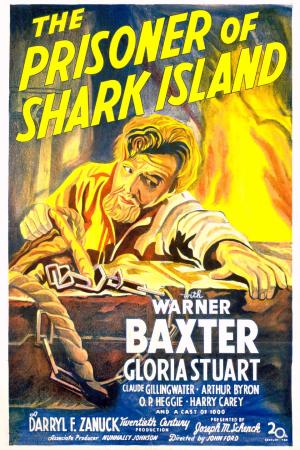
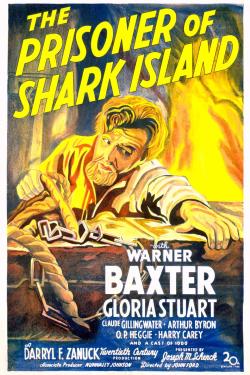
Falsely imprisoned for a crime he didn't commit, THE PRISONER OF SHARK ISLAND tries to maintain his dignity under vile circumstances.
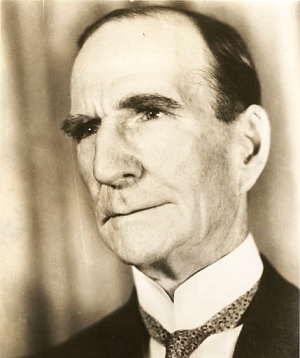
This is director John Ford's exciting and passionate tale of real-life Dr. Samuel Mudd, who, having set John Wilkes Booth's broken leg after Lincoln's assassination, was swept up in the hysteria following the President's death. Convicted of conspiracy, Dr. Mudd was sentenced to incarceration at Fort Jefferson in the Dry Tortugas south of Florida, a hellish, mosquito-infested prison where savage brutality was commonplace and escape attempts futile.
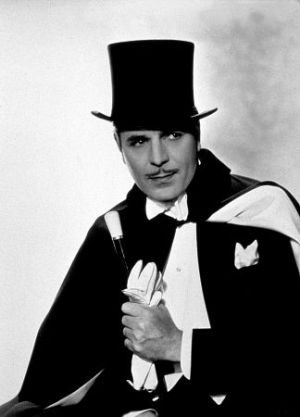
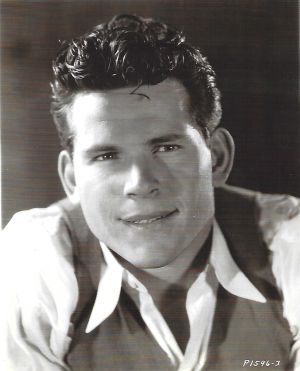
In one of his best roles, Warner Baxter gives a searing portrait as Dr. Mudd. While some of the plot situations are purely fanciful, Baxter never lets the viewer forget that this is the story of a real man unfolding before us. Whether vociferously proclaiming his innocence, vainly struggling to escape his hideous confinement or valiantly attempting to fight back an onslaught of yellow fever, Baxter is never anything less than completely compelling.
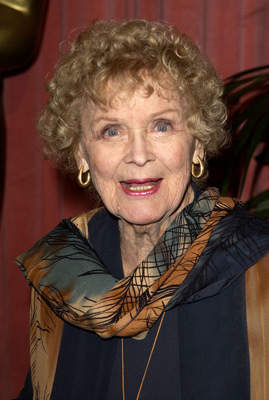
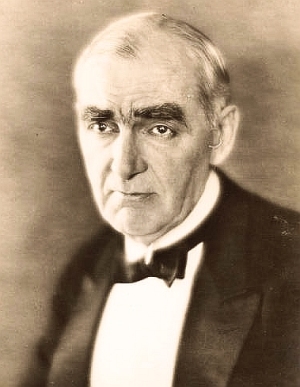
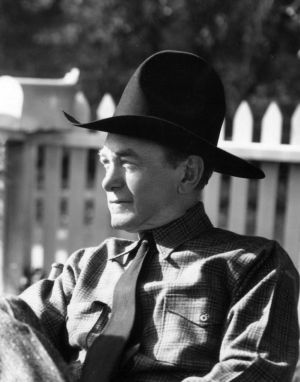
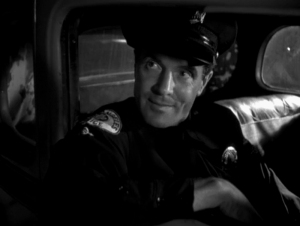
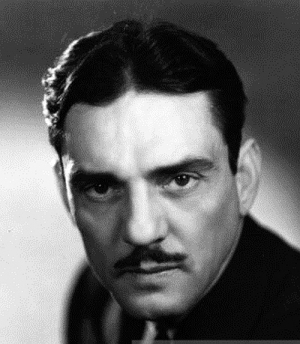
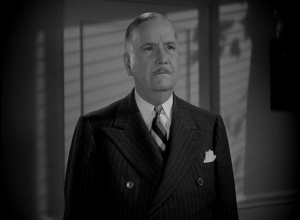
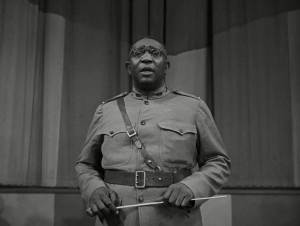
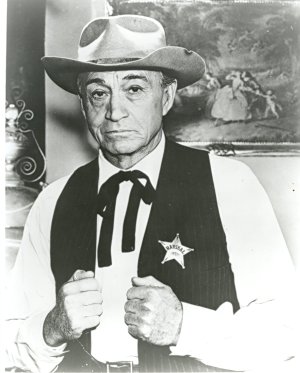
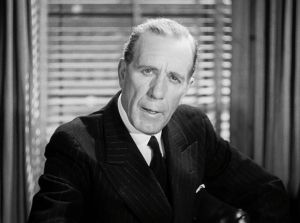
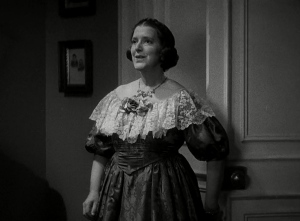
Equally fascinating is John Carradine as the sadistic prison sergeant who torments Mudd; with his gimlet eye and sadistic grin, Carradine sets the seal on the sinister persona he'd project for the rest of his career. The beloved silent Western cowboy star Harry Carey plays the warden of Fort Jefferson with realism & good grace. Gloria Stuart as Mudd's valiant wife and Claude Gillingwater as his fierce old father-in-law give firm support. Vivid character portrayals are given by O. P. Heggie as the prison's doomed doctor, Francis McDonald as Booth and Paul Fix as his accomplice David Herold. A cast standout is Ernest Whitman as Buck, Mudd's faithful field hand who attempts to rescue him.
Movie mavens should recognize Jan Duggan & Dick Elliott as the performers on stage at Ford's Theatre and Our Gang's Matthew Stymie' Beard as the lad come to fetch the Doctor to a birthing - all uncredited.
Director Ford's love of American history is plainly manifest in this frequently factual film. His reconstructions of the death of Lincoln (movingly played by Frank McGlynn Sr.) and the execution of the conspirators all have the look of antique illustrations. The entire film has excellent production values, with the Fort Jefferson sets being particularly well conceived.
*****************
The film depicts three of Booth's conspirators being executed for the murder. Actually, four individuals were hung on 7 July 1865: Lewis Powell (he stabbed & wounded an invalided Secretary of State Seward), George A. Atzerodt (he was assigned to murder Vice President Johnson), David E. Herold (who had accompanied Booth on his flight from Washington) and Mrs. Mary Surratt (she owned the boarding house where Booth met with his gang and may have been completely innocent). Two other men, along with Dr. Mudd, were given life sentences. The stagehand who held Booth's horse at the back of the theatre was given eight years.
And what of the other three people in the presidential box at Ford's Theatre that fateful night? Already emotionally fragile, Mrs. Mary Lincoln would eventually go mad and have to be placed in an asylum by her son. The Lincolns' guests were Miss Clara Harris and her fiancé Major Henry R. Rathbone. They would marry, but Henry would also go insane and murder Clara in a fit of rage.
Dr. Mudd's health was permanently affected by his time at Fort Jefferson, and, although released, he would die in 1883, the year of his 50th birthday.

 استمتع بأفلام وبرامج بلا حدود
 حمل ما تحب وشاهد بدون إنترنت
 واجهة بسيطة وأداء سلس

















'%3e%3cpath%20id='Vector'%20d='M17.3996%2025.7999C17.3996%2025.9838%2017.3634%2026.1658%2017.293%2026.3357C17.2227%2026.5055%2017.1196%2026.6598%2016.9896%2026.7899C16.8596%2026.9199%2016.7052%2027.023%2016.5354%2027.0933C16.3655%2027.1637%2016.1835%2027.1999%2015.9996%2027.1999C15.8158%2027.1999%2015.6337%2027.1637%2015.4639%2027.0933C15.294%2027.023%2015.1397%2026.9199%2015.0097%2026.7899C14.8797%2026.6598%2014.7765%2026.5055%2014.7062%2026.3357C14.6358%2026.1658%2014.5996%2025.9838%2014.5996%2025.7999C14.5996%2025.4286%2014.7471%2025.0725%2015.0097%2024.81C15.2722%2024.5474%2015.6283%2024.3999%2015.9996%2024.3999C16.3709%2024.3999%2016.727%2024.5474%2016.9896%2024.81C17.2521%2025.0725%2017.3996%2025.4286%2017.3996%2025.7999Z'%20fill='white'/%3e%3cpath%20id='Union'%20fill-rule='evenodd'%20clip-rule='evenodd'%20d='M8.5%204H23.5C24.0523%204%2024.5%204.44772%2024.5%205V21.5H7.5V5C7.5%204.44772%207.94772%204%208.5%204ZM5.5%2022.5V5C5.5%203.34315%206.84315%202%208.5%202H23.5C25.1569%202%2026.5%203.34315%2026.5%205V22.5V27C26.5%2028.6569%2025.1569%2030%2023.5%2030H8.5C6.84315%2030%205.5%2028.6569%205.5%2027V22.5ZM24.5%2023.5V27C24.5%2027.5523%2024.0523%2028%2023.5%2028H8.5C7.94772%2028%207.5%2027.5523%207.5%2027V23.5H24.5Z'%20fill='white'/%3e%3cpath%20id='Union_2'%20fill-rule='evenodd'%20clip-rule='evenodd'%20d='M17%209C17%208.44772%2016.5523%208%2016%208C15.4477%208%2015%208.44772%2015%209V13.8258L13.1508%2012.2407C12.7315%2011.8813%2012.1002%2011.9299%2011.7408%2012.3492C11.3813%2012.7685%2011.4299%2013.3998%2011.8492%2013.7593L15.345%2016.7556C15.5205%2016.9079%2015.7495%2017%2016%2017C16.2506%2017%2016.4796%2016.9079%2016.6551%2016.7556L20.1508%2013.7593C20.5701%2013.3998%2020.6187%2012.7685%2020.2593%2012.3492C19.8999%2011.9299%2019.2686%2011.8813%2018.8492%2012.2407L17%2013.8258V9Z'%20fill='white'/%3e%3c/g%3e%3c/svg%3e)
