England was at war, its very existence threatened. World War II is the first that includes new technologies of all types and is the first where movies become important. Movies and cinematic pageant were used by the Germans to define their new culture and unify vision. The Americans and British responded with amazing energy.
Now go back a bit. Victorian England experienced a huge schism of worlds, similar to what is happening in America today. On the one hand, you had the spiritualist movement and a bogus science of "paranormal" stuff: spirits, seances, magic. Arthur Conan Doyle was the most public promoter of the these notions, which he infused with the vague smell of science.
On the other hand, you had Darwin and a host of other scientists that were revealing the machinery, the logical machinery, of the world. Everything it seemed had a mechanical, predictable explanation. No divinity it seemed. No magic. Conan Doyle was also a talisman of this thread. He created Sherlock as a sort of cartoon, a thinking machine that could deduce human behavior.
It was a bit extreme and hit a sweet spot in the public. Conan Doyle actually came to resent the character, actually killed him at one point. But the meme has grown a whole literary and cinematic family tree, all based on the notion of discovered narrative.
By the time of the War, the Brits had adopted and adapted Sherlock as a sort of national identity. Cool, determined, still a master of logic but human. Watson is transformed from a dispassionate transcriber to a comic buffoon, also important to the national character.
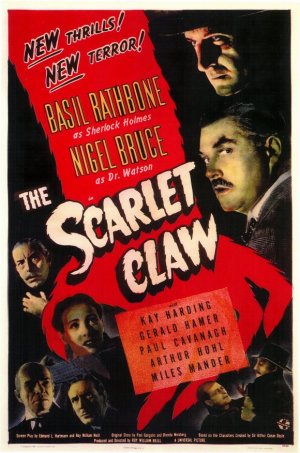
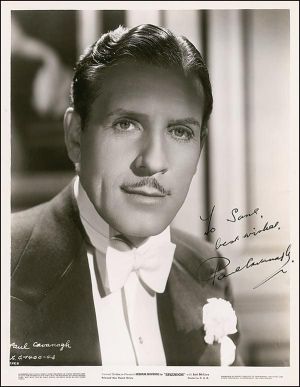
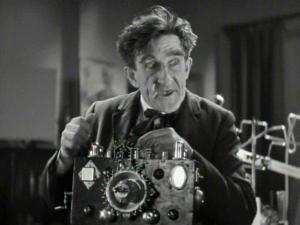
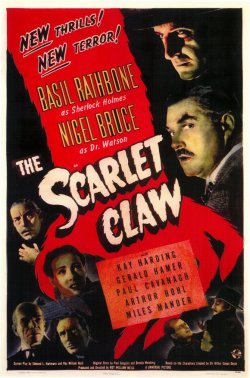
This story is not from Conan Doyle, but follows the "Hound" rather closely with the addition of the element of an actor. In Hound, the murderer was acting like a ghost. Here, he is as well but is literally an actor who takes on several human disguises as well. It is a peculiarly cinematic notion of folding: an actor acting as an actor acting as several people, on both sides of this Conan Doyle split.
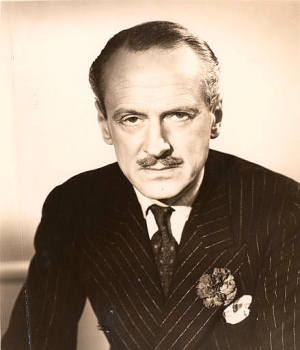
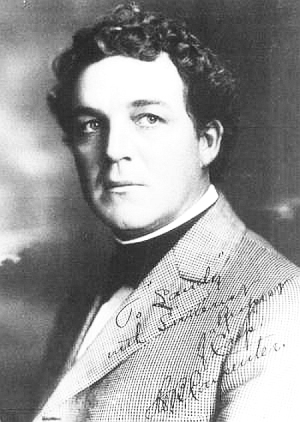
Incidentally, the "Lord Penrose" here in his occult society is deliberately a copy of Conan Doyle.
The story employs non of the deductive miracles of the books. Actually, this man might as well have been any Scotland Yard inspector.
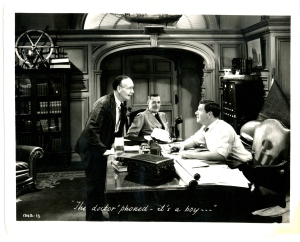
So this is a strange thing. It is derived from Sherlock without being genuinely Sherlock. It captures all the insider references that make it intelligent. It is produced as a sort of horror movie way. The inside of Penrose's house is extraordinary. Except for the ending, it is well made. It is set in Canada with a bit of hidden disdain for the French speakers. Even in this you find an essential element of how the English define themselves, as not French.
Students of the history of narrative will find this important. Fans of Sherlock will hiss.
Ted's Evaluation -- 3 of 3: Worth watching.

 استمتع بأفلام وبرامج بلا حدود
 حمل ما تحب وشاهد بدون إنترنت
 واجهة بسيطة وأداء سلس




















'%3e%3cpath%20id='Vector'%20d='M17.3996%2025.7999C17.3996%2025.9838%2017.3634%2026.1658%2017.293%2026.3357C17.2227%2026.5055%2017.1196%2026.6598%2016.9896%2026.7899C16.8596%2026.9199%2016.7052%2027.023%2016.5354%2027.0933C16.3655%2027.1637%2016.1835%2027.1999%2015.9996%2027.1999C15.8158%2027.1999%2015.6337%2027.1637%2015.4639%2027.0933C15.294%2027.023%2015.1397%2026.9199%2015.0097%2026.7899C14.8797%2026.6598%2014.7765%2026.5055%2014.7062%2026.3357C14.6358%2026.1658%2014.5996%2025.9838%2014.5996%2025.7999C14.5996%2025.4286%2014.7471%2025.0725%2015.0097%2024.81C15.2722%2024.5474%2015.6283%2024.3999%2015.9996%2024.3999C16.3709%2024.3999%2016.727%2024.5474%2016.9896%2024.81C17.2521%2025.0725%2017.3996%2025.4286%2017.3996%2025.7999Z'%20fill='white'/%3e%3cpath%20id='Union'%20fill-rule='evenodd'%20clip-rule='evenodd'%20d='M8.5%204H23.5C24.0523%204%2024.5%204.44772%2024.5%205V21.5H7.5V5C7.5%204.44772%207.94772%204%208.5%204ZM5.5%2022.5V5C5.5%203.34315%206.84315%202%208.5%202H23.5C25.1569%202%2026.5%203.34315%2026.5%205V22.5V27C26.5%2028.6569%2025.1569%2030%2023.5%2030H8.5C6.84315%2030%205.5%2028.6569%205.5%2027V22.5ZM24.5%2023.5V27C24.5%2027.5523%2024.0523%2028%2023.5%2028H8.5C7.94772%2028%207.5%2027.5523%207.5%2027V23.5H24.5Z'%20fill='white'/%3e%3cpath%20id='Union_2'%20fill-rule='evenodd'%20clip-rule='evenodd'%20d='M17%209C17%208.44772%2016.5523%208%2016%208C15.4477%208%2015%208.44772%2015%209V13.8258L13.1508%2012.2407C12.7315%2011.8813%2012.1002%2011.9299%2011.7408%2012.3492C11.3813%2012.7685%2011.4299%2013.3998%2011.8492%2013.7593L15.345%2016.7556C15.5205%2016.9079%2015.7495%2017%2016%2017C16.2506%2017%2016.4796%2016.9079%2016.6551%2016.7556L20.1508%2013.7593C20.5701%2013.3998%2020.6187%2012.7685%2020.2593%2012.3492C19.8999%2011.9299%2019.2686%2011.8813%2018.8492%2012.2407L17%2013.8258V9Z'%20fill='white'/%3e%3c/g%3e%3c/svg%3e)
