1234money official logo1234money

Command Ctrl

Stream the signal

  • Home
  • Palabas sa TV
  • Pelikula
  • Animasyon
  • VSKit
  • Pinaka-pinapanood
  • 1234money App
  • FM Download
  • Games
  • Old 1234money
English
العربية
Français
Bahasa Indonesia
हिन्दी
اردو
Filipino
1234money Download AppApp
App
Tingnan pa1234money home light arrow
1234money downloadMag-enjoy sa walang hanggang pelikula at palabas
1234money downloadI-download ang paborito mong palabas para panoorin offline
1234money downloadSimpleng disenyo at maayos na takbo
I-scan ang QR code upang mag-download o
I-download ang App
For phones and tablets
TV
1234money TV APK
Para sa Android TV
1234money header navigation
1234money official logo

1234money

1234money search icon
The Fleet That Came to Stay

The Fleet That Came to Stay

★ 6.71945Movie2 h 0 mEstados Unidos
DokumentaryoShortWar

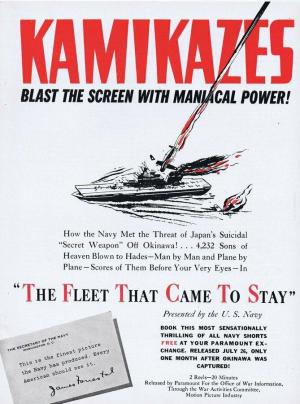
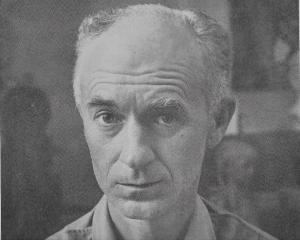
Well before he made the Westerns for which he would primarily be remembered, director Budd Boetticher put together this documentary of World War II's Battle of Okinawa from footage shot by Navy cameramen in the thick of the fighting. The vital editing skills Boetticher learned from Academy Award® -winning editor Barbara McLean helped him tell this complicated and protracted story with a directness and power that are both impressive and horrifying, as the soundtrack pounds with bombs and gunnery fire and the screen fills with dozens of Japanese kamikaze pilots deliberately crashing their planes into battleships and aircraft carriers. War correspondent Ernie Pyle makes a brief appearance, only weeks before he was killed on an island near Okinawa. - Marilyn Ferdinand

94 people rated
🔇

The Fleet That Came to Stay

1945

R

2 h 0 m

Estados Unidos

Dokumentaryo

Short

War

Well before he made the Westerns for which he would primarily be remembered, director Budd Boetticher put together this documentary of World War II's Battle of Okinawa from footage shot by Navy cameramen in the thick of the fighting. The vital editing skills Boetticher learned from Academy Award® -winning editor Barbara McLean helped him tell this complicated and protracted story with a directness and power that are both impressive and horrifying, as the soundtrack pounds with bombs and gunnery fire and the screen fills with dozens of Japanese kamikaze pilots deliberately crashing their planes into battleships and aircraft carriers. War correspondent Ernie Pyle makes a brief appearance, only weeks before he was killed on an island near Okinawa. - Marilyn Ferdinand
More

6.7 /10

94 people rated

Manood online

Manood sa app

share

Mga episode

film
lklk
Netflix
Plex

Trailer

play
Nangungunang Cast(1)
starring avatar
Ernie Pyle
Self

Pagsusuri ng User

author avatar

Esther Moulaka

29/05/2023 07:08
source: The Fleet That Came to Stay
author avatar

KOH-SAM

24/05/2023 23:03
Moviecut—The Fleet That Came to Stay
author avatar

Amie❤️❤️💃🏻💃🏻

15/05/2023 16:09
source: The Fleet That Came to Stay
author avatar

Punjanprama

12/05/2023 16:08
No pun intended - I am not sure if this is relevant to anyone right now. Hopefully it will never be. On the other hand, it is quite the curious look on war and how to ... well do it, I reckon one could say. Naval combat in particular. This may have been done for troops and their morale - I would not be surprised at all. This was a bonus on a disc - the director went on to become more popular for his western movies outputs ... but he also did a lot of other stuff. This being one amongst them all. It is short and anything but sweet. But it is also a testament of its time. And the way of thinking I guess you could say. If you are interested in the subject matter, certainly worth a look ... otherwise ... well probably not.
author avatar

Tangerino

12/05/2023 16:08
Tremendous film. Even though it lasts twenty minutes or so, you'll never forget it once you've seen it. Some of the most spectacular live-action battle sequences ever. The finest collection of kamikaze attack footage out there. The film is well narrated and masterfully edited, with a powerful, dynamic sound track. "The Fleet That Came To Stay" was originally released as a war bond drive film in black and white. I was fortunate enough to inherit a good quality 16mm original print, so am very familiar with it. There are several unforgettable sequences, particularly one scene where a bomb tears loose from a plane making a "deck trap" on an aircraft carrier, bounces along the runway past several groups of military personnel without exploding and finally falls over the edge of the boat. Unbelievable! The film also mentions staggering "shot down" statistics as part of the narrative. The final scene before "The End" and "Please buy war bonds..." will burn itself into your memory! My print is the only one I've ever seen; that is, I've never come across a VHS video or DVD copy anywhere. Too bad. It is possible a negative or print may have been preserved in the National Archives. Check it out if you're interested in obtaining a copy of this historic film.
author avatar

Elroy

12/05/2023 16:08
I have to admit to some lack of impartiality in regards to this film because my father was one of the U.S. Navy combat cameramen who helped film it. He was on board the USS Hornet until that ship was damaged and sent home for repairs, at which juncture he was transferred ashore, to serve with Marine and Army ground troops. He was wounded twice during the Okinawa campaign, and was finally repatriated home from an Army Field Hospital. A year earlier he had contributed film to the production of another documentary, "The Fighting Lady". Filmed in color and produced by 20th Century Fox, that documentary has a much more optimistic tone than "The Fleet that Came to Stay". The latter, which was produced by the Navy, is shorter, done in black-and-white, and takes a much grimmer attitude. That is not surprising, since the makers were clearly preparing the viewing public for the heavy losses expected to be incurred during the planned invasion of the Japanese home islands; an invasion that, thankfully, never occurred. Nevertheless, while the documentary mentions Japanese losses, it glosses over the Allied ones. It does not mention the 28 Allied ships that were sunk, the 368 ships that were damaged, nor the 768 U.S. planes that were lost in the battle. It also makes no mention of the over 80,000 Allied casualties, of whom more than 12,500 were killed. In addition, the film makes no mention the 100,000 casualties among the Okinawan civilians. Although part of Japan, Okinawa occupies a status with Japan roughly equivalent to that of Puerto Rico with the United States. Consequently, the Okinawans do not consider themselves to be Japanese, nor do the Japanese consider them to be Japanese. The Okinawan have never completely forgiven the Japanese for using their home as a battlefield, while subsequently sparing their own country from the same fate. This documentary was edited together, and the sound effects and narration added, in a film studio. However, the film from which it was produced was shot in combat by Navy combat cameramen. No special effects were utilized, no blue screens or CGI. 16mm motion picture cameras were used because, under the circumstances, the normal 35mm cameras utilized for movie production were too large to be practical. A 16mm image has to be enlarged 4 times in order to translate into the 35mm format normally normally used for motion pictures, which is why the film sometimes appears slightly grainy. Filming stunts in a Hollywood action movie is one thing, but filming in combat is quite another matter. That is especially the case when the photographer's subject is bent upon killing himself as well as the cameraman, as was the case at Okinawa. The phenomenon of "suicide bombing" has become news these days, but it was an everyday occurrence at Okinawa. In one of the most extraordinary battles ever fought, airborne suicide bombers came every by the hundred, continuously, and they came for months. Finally, some explanation must also be addressed to the very brief allusion in the film to Ernie Pyle. A man whose name has been virtually forgotten today, he was probably the most famous war correspondent of all time. By 1945, when this film was produced, his name had become such a household word that, clearly, no explanation was required. I tried to think of who would be a present-day counterpart to Ernie Pyle but I drew a complete blank because there simply isn't one. Having been awarded the Pulitzer Prize for his intimate coverage of the war in Europe among the ordinary infantrymen, he could easily have rested on his well-earned laurels. Instead, he insisted upon going to the Pacific, and he too was killed during the Battle for Okinawa.
author avatar

Hermila Berhe

19/04/2023 16:01
source: The Fleet That Came to Stay
author avatar

Ehllarpearl

19/04/2023 16:01
Tremendous film. Even though it lasts twenty minutes or so, you'll never forget it once you've seen it. Some of the most spectacular live-action battle sequences ever. The finest collection of kamikaze attack footage out there. The film is well narrated and masterfully edited, with a powerful, dynamic sound track. "The Fleet That Came To Stay" was originally released as a war bond drive film in black and white. I was fortunate enough to inherit a good quality 16mm original print, so am very familiar with it. There are several unforgettable sequences, particularly one scene where a bomb tears loose from a plane making a "deck trap" on an aircraft carrier, bounces along the runway past several groups of military personnel without exploding and finally falls over the edge of the boat. Unbelievable! The film also mentions staggering "shot down" statistics as part of the narrative. The final scene before "The End" and "Please buy war bonds..." will burn itself into your memory! My print is the only one I've ever seen; that is, I've never come across a VHS video or DVD copy anywhere. Too bad. It is possible a negative or print may have been preserved in the National Archives. Check it out if you're interested in obtaining a copy of this historic film.
author avatar

Coffee_masala

19/04/2023 16:01
No pun intended - I am not sure if this is relevant to anyone right now. Hopefully it will never be. On the other hand, it is quite the curious look on war and how to ... well do it, I reckon one could say. Naval combat in particular. This may have been done for troops and their morale - I would not be surprised at all. This was a bonus on a disc - the director went on to become more popular for his western movies outputs ... but he also did a lot of other stuff. This being one amongst them all. It is short and anything but sweet. But it is also a testament of its time. And the way of thinking I guess you could say. If you are interested in the subject matter, certainly worth a look ... otherwise ... well probably not.
author avatar

Mofe Duncan

19/04/2023 16:01
I have to admit to some lack of impartiality in regards to this film because my father was one of the U.S. Navy combat cameramen who helped film it. He was on board the USS Hornet until that ship was damaged and sent home for repairs, at which juncture he was transferred ashore, to serve with Marine and Army ground troops. He was wounded twice during the Okinawa campaign, and was finally repatriated home from an Army Field Hospital. A year earlier he had contributed film to the production of another documentary, "The Fighting Lady". Filmed in color and produced by 20th Century Fox, that documentary has a much more optimistic tone than "The Fleet that Came to Stay". The latter, which was produced by the Navy, is shorter, done in black-and-white, and takes a much grimmer attitude. That is not surprising, since the makers were clearly preparing the viewing public for the heavy losses expected to be incurred during the planned invasion of the Japanese home islands; an invasion that, thankfully, never occurred. Nevertheless, while the documentary mentions Japanese losses, it glosses over the Allied ones. It does not mention the 28 Allied ships that were sunk, the 368 ships that were damaged, nor the 768 U.S. planes that were lost in the battle. It also makes no mention of the over 80,000 Allied casualties, of whom more than 12,500 were killed. In addition, the film makes no mention the 100,000 casualties among the Okinawan civilians. Although part of Japan, Okinawa occupies a status with Japan roughly equivalent to that of Puerto Rico with the United States. Consequently, the Okinawans do not consider themselves to be Japanese, nor do the Japanese consider them to be Japanese. The Okinawan have never completely forgiven the Japanese for using their home as a battlefield, while subsequently sparing their own country from the same fate. This documentary was edited together, and the sound effects and narration added, in a film studio. However, the film from which it was produced was shot in combat by Navy combat cameramen. No special effects were utilized, no blue screens or CGI. 16mm motion picture cameras were used because, under the circumstances, the normal 35mm cameras utilized for movie production were too large to be practical. A 16mm image has to be enlarged 4 times in order to translate into the 35mm format normally normally used for motion pictures, which is why the film sometimes appears slightly grainy. Filming stunts in a Hollywood action movie is one thing, but filming in combat is quite another matter. That is especially the case when the photographer's subject is bent upon killing himself as well as the cameraman, as was the case at Okinawa. The phenomenon of "suicide bombing" has become news these days, but it was an everyday occurrence at Okinawa. In one of the most extraordinary battles ever fought, airborne suicide bombers came every by the hundred, continuously, and they came for months. Finally, some explanation must also be addressed to the very brief allusion in the film to Ernie Pyle. A man whose name has been virtually forgotten today, he was probably the most famous war correspondent of all time. By 1945, when this film was produced, his name had become such a household word that, clearly, no explanation was required. I tried to think of who would be a present-day counterpart to Ernie Pyle but I drew a complete blank because there simply isn't one. Having been awarded the Pulitzer Prize for his intimate coverage of the war in Europe among the ordinary infantrymen, he could easily have rested on his well-earned laurels. Instead, he insisted upon going to the Pacific, and he too was killed during the Battle for Okinawa.
— No more content —

Pagsusuri ng User

author avatar

Esther Moulaka

29/05/2023 07:08
source: The Fleet That Came to Stay
author avatar

KOH-SAM

24/05/2023 23:03
Moviecut—The Fleet That Came to Stay
author avatar

Amie❤️❤️💃🏻💃🏻

15/05/2023 16:09
source: The Fleet That Came to Stay
author avatar

Punjanprama

12/05/2023 16:08
No pun intended - I am not sure if this is relevant to anyone right now. Hopefully it will never be. On the other hand, it is quite the curious look on war and how to ... well do it, I reckon one could say. Naval combat in particular. This may have been done for troops and their morale - I would not be surprised at all. This was a bonus on a disc - the director went on to become more popular for his western movies outputs ... but he also did a lot of other stuff. This being one amongst them all. It is short and anything but sweet. But it is also a testament of its time. And the way of thinking I guess you could say. If you are interested in the subject matter, certainly worth a look ... otherwise ... well probably not.
author avatar

Tangerino

12/05/2023 16:08
Tremendous film. Even though it lasts twenty minutes or so, you'll never forget it once you've seen it. Some of the most spectacular live-action battle sequences ever. The finest collection of kamikaze attack footage out there. The film is well narrated and masterfully edited, with a powerful, dynamic sound track. "The Fleet That Came To Stay" was originally released as a war bond drive film in black and white. I was fortunate enough to inherit a good quality 16mm original print, so am very familiar with it. There are several unforgettable sequences, particularly one scene where a bomb tears loose from a plane making a "deck trap" on an aircraft carrier, bounces along the runway past several groups of military personnel without exploding and finally falls over the edge of the boat. Unbelievable! The film also mentions staggering "shot down" statistics as part of the narrative. The final scene before "The End" and "Please buy war bonds..." will burn itself into your memory! My print is the only one I've ever seen; that is, I've never come across a VHS video or DVD copy anywhere. Too bad. It is possible a negative or print may have been preserved in the National Archives. Check it out if you're interested in obtaining a copy of this historic film.
author avatar

Elroy

12/05/2023 16:08
I have to admit to some lack of impartiality in regards to this film because my father was one of the U.S. Navy combat cameramen who helped film it. He was on board the USS Hornet until that ship was damaged and sent home for repairs, at which juncture he was transferred ashore, to serve with Marine and Army ground troops. He was wounded twice during the Okinawa campaign, and was finally repatriated home from an Army Field Hospital. A year earlier he had contributed film to the production of another documentary, "The Fighting Lady". Filmed in color and produced by 20th Century Fox, that documentary has a much more optimistic tone than "The Fleet that Came to Stay". The latter, which was produced by the Navy, is shorter, done in black-and-white, and takes a much grimmer attitude. That is not surprising, since the makers were clearly preparing the viewing public for the heavy losses expected to be incurred during the planned invasion of the Japanese home islands; an invasion that, thankfully, never occurred. Nevertheless, while the documentary mentions Japanese losses, it glosses over the Allied ones. It does not mention the 28 Allied ships that were sunk, the 368 ships that were damaged, nor the 768 U.S. planes that were lost in the battle. It also makes no mention of the over 80,000 Allied casualties, of whom more than 12,500 were killed. In addition, the film makes no mention the 100,000 casualties among the Okinawan civilians. Although part of Japan, Okinawa occupies a status with Japan roughly equivalent to that of Puerto Rico with the United States. Consequently, the Okinawans do not consider themselves to be Japanese, nor do the Japanese consider them to be Japanese. The Okinawan have never completely forgiven the Japanese for using their home as a battlefield, while subsequently sparing their own country from the same fate. This documentary was edited together, and the sound effects and narration added, in a film studio. However, the film from which it was produced was shot in combat by Navy combat cameramen. No special effects were utilized, no blue screens or CGI. 16mm motion picture cameras were used because, under the circumstances, the normal 35mm cameras utilized for movie production were too large to be practical. A 16mm image has to be enlarged 4 times in order to translate into the 35mm format normally normally used for motion pictures, which is why the film sometimes appears slightly grainy. Filming stunts in a Hollywood action movie is one thing, but filming in combat is quite another matter. That is especially the case when the photographer's subject is bent upon killing himself as well as the cameraman, as was the case at Okinawa. The phenomenon of "suicide bombing" has become news these days, but it was an everyday occurrence at Okinawa. In one of the most extraordinary battles ever fought, airborne suicide bombers came every by the hundred, continuously, and they came for months. Finally, some explanation must also be addressed to the very brief allusion in the film to Ernie Pyle. A man whose name has been virtually forgotten today, he was probably the most famous war correspondent of all time. By 1945, when this film was produced, his name had become such a household word that, clearly, no explanation was required. I tried to think of who would be a present-day counterpart to Ernie Pyle but I drew a complete blank because there simply isn't one. Having been awarded the Pulitzer Prize for his intimate coverage of the war in Europe among the ordinary infantrymen, he could easily have rested on his well-earned laurels. Instead, he insisted upon going to the Pacific, and he too was killed during the Battle for Okinawa.
author avatar

Hermila Berhe

19/04/2023 16:01
source: The Fleet That Came to Stay
author avatar

Ehllarpearl

19/04/2023 16:01
Tremendous film. Even though it lasts twenty minutes or so, you'll never forget it once you've seen it. Some of the most spectacular live-action battle sequences ever. The finest collection of kamikaze attack footage out there. The film is well narrated and masterfully edited, with a powerful, dynamic sound track. "The Fleet That Came To Stay" was originally released as a war bond drive film in black and white. I was fortunate enough to inherit a good quality 16mm original print, so am very familiar with it. There are several unforgettable sequences, particularly one scene where a bomb tears loose from a plane making a "deck trap" on an aircraft carrier, bounces along the runway past several groups of military personnel without exploding and finally falls over the edge of the boat. Unbelievable! The film also mentions staggering "shot down" statistics as part of the narrative. The final scene before "The End" and "Please buy war bonds..." will burn itself into your memory! My print is the only one I've ever seen; that is, I've never come across a VHS video or DVD copy anywhere. Too bad. It is possible a negative or print may have been preserved in the National Archives. Check it out if you're interested in obtaining a copy of this historic film.
author avatar

Coffee_masala

19/04/2023 16:01
No pun intended - I am not sure if this is relevant to anyone right now. Hopefully it will never be. On the other hand, it is quite the curious look on war and how to ... well do it, I reckon one could say. Naval combat in particular. This may have been done for troops and their morale - I would not be surprised at all. This was a bonus on a disc - the director went on to become more popular for his western movies outputs ... but he also did a lot of other stuff. This being one amongst them all. It is short and anything but sweet. But it is also a testament of its time. And the way of thinking I guess you could say. If you are interested in the subject matter, certainly worth a look ... otherwise ... well probably not.
author avatar

Mofe Duncan

19/04/2023 16:01
I have to admit to some lack of impartiality in regards to this film because my father was one of the U.S. Navy combat cameramen who helped film it. He was on board the USS Hornet until that ship was damaged and sent home for repairs, at which juncture he was transferred ashore, to serve with Marine and Army ground troops. He was wounded twice during the Okinawa campaign, and was finally repatriated home from an Army Field Hospital. A year earlier he had contributed film to the production of another documentary, "The Fighting Lady". Filmed in color and produced by 20th Century Fox, that documentary has a much more optimistic tone than "The Fleet that Came to Stay". The latter, which was produced by the Navy, is shorter, done in black-and-white, and takes a much grimmer attitude. That is not surprising, since the makers were clearly preparing the viewing public for the heavy losses expected to be incurred during the planned invasion of the Japanese home islands; an invasion that, thankfully, never occurred. Nevertheless, while the documentary mentions Japanese losses, it glosses over the Allied ones. It does not mention the 28 Allied ships that were sunk, the 368 ships that were damaged, nor the 768 U.S. planes that were lost in the battle. It also makes no mention of the over 80,000 Allied casualties, of whom more than 12,500 were killed. In addition, the film makes no mention the 100,000 casualties among the Okinawan civilians. Although part of Japan, Okinawa occupies a status with Japan roughly equivalent to that of Puerto Rico with the United States. Consequently, the Okinawans do not consider themselves to be Japanese, nor do the Japanese consider them to be Japanese. The Okinawan have never completely forgiven the Japanese for using their home as a battlefield, while subsequently sparing their own country from the same fate. This documentary was edited together, and the sound effects and narration added, in a film studio. However, the film from which it was produced was shot in combat by Navy combat cameramen. No special effects were utilized, no blue screens or CGI. 16mm motion picture cameras were used because, under the circumstances, the normal 35mm cameras utilized for movie production were too large to be practical. A 16mm image has to be enlarged 4 times in order to translate into the 35mm format normally normally used for motion pictures, which is why the film sometimes appears slightly grainy. Filming stunts in a Hollywood action movie is one thing, but filming in combat is quite another matter. That is especially the case when the photographer's subject is bent upon killing himself as well as the cameraman, as was the case at Okinawa. The phenomenon of "suicide bombing" has become news these days, but it was an everyday occurrence at Okinawa. In one of the most extraordinary battles ever fought, airborne suicide bombers came every by the hundred, continuously, and they came for months. Finally, some explanation must also be addressed to the very brief allusion in the film to Ernie Pyle. A man whose name has been virtually forgotten today, he was probably the most famous war correspondent of all time. By 1945, when this film was produced, his name had become such a household word that, clearly, no explanation was required. I tried to think of who would be a present-day counterpart to Ernie Pyle but I drew a complete blank because there simply isn't one. Having been awarded the Pulitzer Prize for his intimate coverage of the war in Europe among the ordinary infantrymen, he could easily have rested on his well-earned laurels. Instead, he insisted upon going to the Pacific, and he too was killed during the Battle for Okinawa.
— No more content —
Disclaimer: Ang lahat ng mga video at larawan sa 1234money ay mula sa Internet, at ang kanilang mga copyright ay pagmamay-ari ng mga orihinal na tagalikha. Nagbibigay lamang kami ng mga serbisyo sa webpage at hindi nag-iimbak, nagtatala, o nag-a-upload ng anumang nilalaman.
Tungkol sa 1234money:Opisyal na paglabas ng link 1234.money|I-download ang 1234money APK|Patakaran sa Privacy|Kasunduan ng Gumagamit
© 2026 1234money. All rights reserved.Telegram
1234money official logo

1234money

English
العربية
Français
Bahasa Indonesia
हिन्दी
اردو
Filipino
Tungkol sa 1234money
Opisyal na paglabas ng linkI-download ang 1234money APKPatakaran sa PrivacyKasunduan ng Gumagamit
Disclaimer: Ang lahat ng mga video at larawan sa 1234money ay mula sa Internet, at ang kanilang mga copyright ay pagmamay-ari ng mga orihinal na tagalikha. Nagbibigay lamang kami ng mga serbisyo sa webpage at hindi nag-iimbak, nagtatala, o nag-a-upload ng anumang nilalaman.