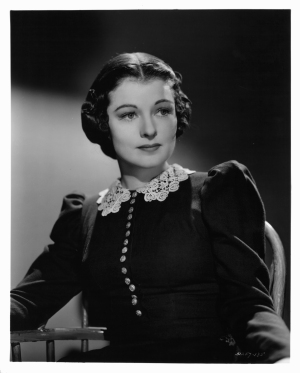
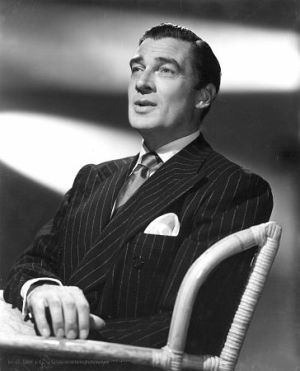
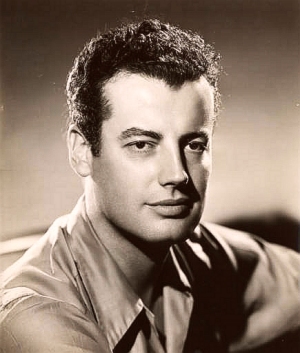
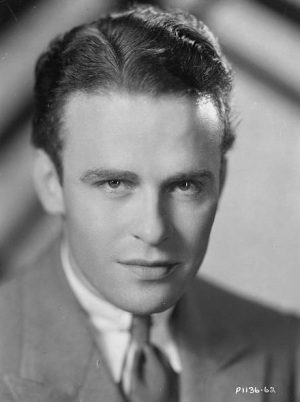
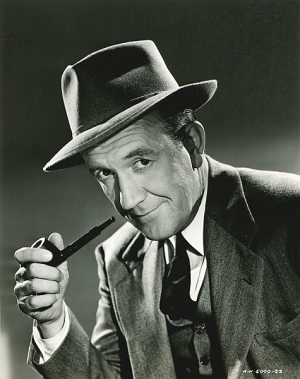
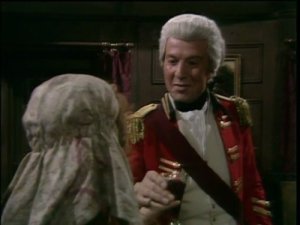
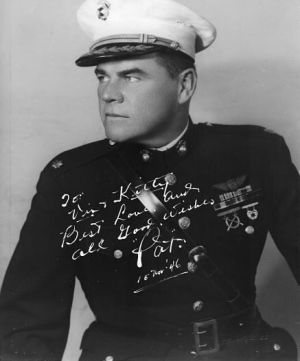
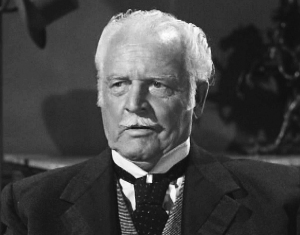
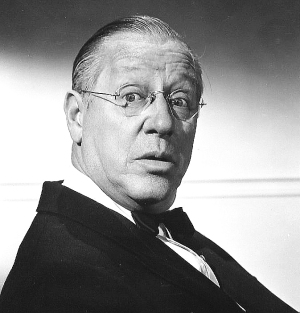
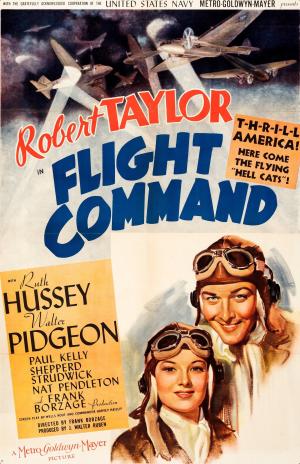
I kind of enjoyed most of it. Robert Taylor, freshly out of Navy flight school at Pensicola, is assigned to the famous Hellcat fighting squadron in San Diego. He's an eager young boot. Like most, he tries too hard at first and receives various reprimands. When one of his mates is killed in a flying accident, Taylor tries innocently to comfort his buddy's sister, Hussey -- who happens to be the wife of the Hellcats' commander, Walter Pidgeon.
The other Hellcats can't help but notice that Taylor is squiring around the commander's wife. He does things like fly her around upside down. It looks more than ordinarily suspicious because Pidgeon is conveniently off somewhere on duty. The other Hellcats get ideas and give Taylor an even rougher time. In a high dudgeon, Taylor initiates his resignation from the Navy.
Well, things look pretty gloomy. Taylor and Hussey are guilty of nothing but Hussey has been made to question the kind of relationship she has with Pidgeon. ("Keep the flag flying," he always tells her.) And Taylor is being what the Old Order Amish call "shunned." This is 1940 and not yet wartime, but the moment has come for Taylor to perform some heroic deed and prove himself -- his flying skills and his moral stature -- in the eyes of his comrades. He does so.
The triad of Pidgeon, Hussey, and Taylor is more textured and nuanced than it usually is in these routine stories. Hussey and Taylor, with a little less effort, could have fallen in love. That would require Pidgeon to die a hero's death. But Hussey and Taylor DON'T fall for each other, and the marital relationship is subject to some subtle questioning that almost resembles real life.
The flying scenes, and there are three or four big ones, are exciting. They cry out for color. The pre-war paint schemes on these airplanes were really exuberant -- bright yellows, reds, and greens. When war came they got rid of the flamboyance and gave them colors with names like "sea gray" and "dull blue." A terrible loss.
And you ought to see these stubby little biplanes. They're Grumman F-3-Fs. They're as unstable as inverted pendulums and they wobble all over the place when they fly in formation off the San Diego coast. The film misrepresents them slightly. They were armed with one .50 caliber and one .30 caliber forward-firing machine guns, whereas the movie gives them two guns of the same size. And when the aviators talk about "cruising at 350 miles an hour" they're dreaming. Two fifty was about it. Ugly suckers, they were quickly replaced by Grumman's single-wing Wildcat, and a good thing too.
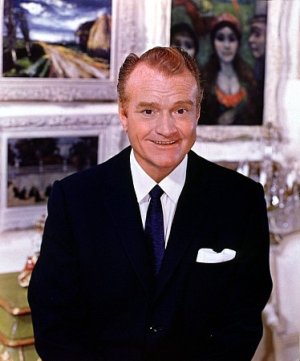
The performances are about what you'd expect in a more or less routine story about pilots, love, and the challenge of flight. No one stands out, except maybe Walter Pidgeon who, as always, stands out for not standing out. He always reminds me of some iron statue in the park. That's not necessarily bad. We need statues. Red Skelton is in the cast but has little to do. Paul Kelly, as "Dusty" Rhodes, is on hand to provide intensity.

 Nikmati film dan acara tanpa batas
 Download konten favorit untuk ditonton offline
 Tampilan mudah, lancar dipakai




'%3e%3cpath%20id='Vector'%20d='M17.3996%2025.7999C17.3996%2025.9838%2017.3634%2026.1658%2017.293%2026.3357C17.2227%2026.5055%2017.1196%2026.6598%2016.9896%2026.7899C16.8596%2026.9199%2016.7052%2027.023%2016.5354%2027.0933C16.3655%2027.1637%2016.1835%2027.1999%2015.9996%2027.1999C15.8158%2027.1999%2015.6337%2027.1637%2015.4639%2027.0933C15.294%2027.023%2015.1397%2026.9199%2015.0097%2026.7899C14.8797%2026.6598%2014.7765%2026.5055%2014.7062%2026.3357C14.6358%2026.1658%2014.5996%2025.9838%2014.5996%2025.7999C14.5996%2025.4286%2014.7471%2025.0725%2015.0097%2024.81C15.2722%2024.5474%2015.6283%2024.3999%2015.9996%2024.3999C16.3709%2024.3999%2016.727%2024.5474%2016.9896%2024.81C17.2521%2025.0725%2017.3996%2025.4286%2017.3996%2025.7999Z'%20fill='white'/%3e%3cpath%20id='Union'%20fill-rule='evenodd'%20clip-rule='evenodd'%20d='M8.5%204H23.5C24.0523%204%2024.5%204.44772%2024.5%205V21.5H7.5V5C7.5%204.44772%207.94772%204%208.5%204ZM5.5%2022.5V5C5.5%203.34315%206.84315%202%208.5%202H23.5C25.1569%202%2026.5%203.34315%2026.5%205V22.5V27C26.5%2028.6569%2025.1569%2030%2023.5%2030H8.5C6.84315%2030%205.5%2028.6569%205.5%2027V22.5ZM24.5%2023.5V27C24.5%2027.5523%2024.0523%2028%2023.5%2028H8.5C7.94772%2028%207.5%2027.5523%207.5%2027V23.5H24.5Z'%20fill='white'/%3e%3cpath%20id='Union_2'%20fill-rule='evenodd'%20clip-rule='evenodd'%20d='M17%209C17%208.44772%2016.5523%208%2016%208C15.4477%208%2015%208.44772%2015%209V13.8258L13.1508%2012.2407C12.7315%2011.8813%2012.1002%2011.9299%2011.7408%2012.3492C11.3813%2012.7685%2011.4299%2013.3998%2011.8492%2013.7593L15.345%2016.7556C15.5205%2016.9079%2015.7495%2017%2016%2017C16.2506%2017%2016.4796%2016.9079%2016.6551%2016.7556L20.1508%2013.7593C20.5701%2013.3998%2020.6187%2012.7685%2020.2593%2012.3492C19.8999%2011.9299%2019.2686%2011.8813%2018.8492%2012.2407L17%2013.8258V9Z'%20fill='white'/%3e%3c/g%3e%3c/svg%3e)