1234money official logo1234money

Command Ctrl

Stream the signal

  • Beranda
  • Acara TV
  • Film
  • Animasi
  • VSKit
  • Paling Banyak Ditonton
  • Aplikasi 1234money
  • FM Download
  • Games
  • Old 1234money
English
العربية
Français
Bahasa Indonesia
हिन्दी
اردو
Filipino
1234money Download AppAplikasi
Aplikasi
Lihat lebih banyak1234money home light arrow
1234money downloadNikmati film dan acara tanpa batas
1234money downloadDownload konten favorit untuk ditonton offline
1234money downloadTampilan mudah, lancar dipakai
Pindai kode QR untuk mengunduh atau
Download 1234money
For phones and tablets
TV
1234money TV APK
Untuk Android TV
1234money header navigation
1234money official logo

1234money

1234money search icon
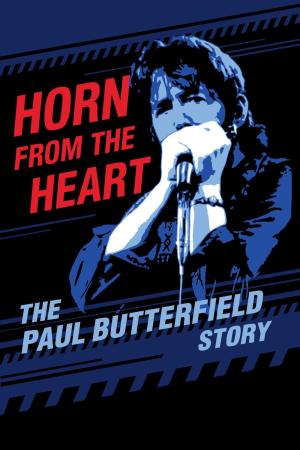
Horn from the Heart: The Paul Butterfield Story

Horn from the Heart: The Paul Butterfield Story

★ 7.82018Movie1 h 35 mAmerika Serikat
DokumenterBiographyMusik

Life and career of legendary blues musician Paul Butterfield.

131 people rated
🔇

Horn from the Heart: The Paul Butterfield Story

2018

R

1 h 35 m

Amerika Serikat

Dokumenter

Biography

Musik

Life and career of legendary blues musician Paul Butterfield.
More

7.8 /10

131 people rated

Tonton online

Tonton di app

share

Episode

film
lklk
Netflix
Plex

Trailer

play
Pemeran Utama(27)
starring avatar
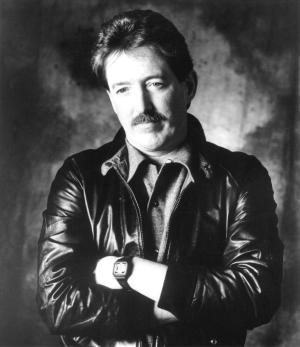
Paul Butterfield
Self
starring avatar
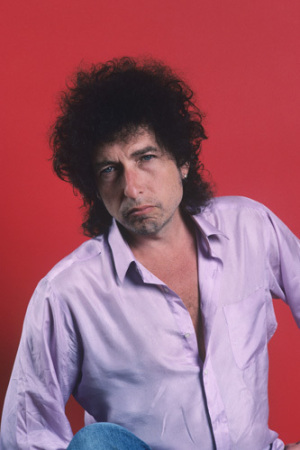
Bob Dylan
Self
starring avatar
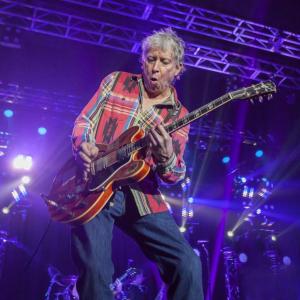
Elvin Bishop
Self - Interviewee
starring avatar
Elvin Bishop
Self - Guitarist
starring avatar
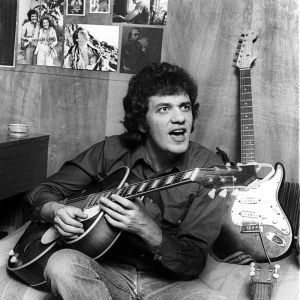
Mike Bloomfield
Self - Guitarist
starring avatar
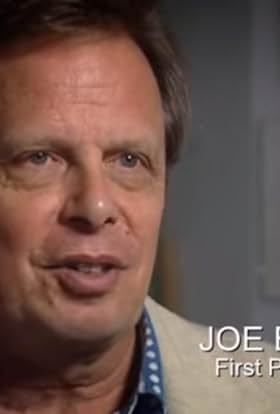
Joe Boyd
Self - Interviewee
default avatar
Cindy Cashdollar
Self - Interviewee
default avatar
Marshall Chess
Self - Interviewee
starring avatar
Buzz Feiten
Self - Interviewee
starring avatar
Buzz Feiten
Self - Guitarist
default avatar
Anton Fig
Self - Interviewee
default avatar
Anton Fig
Self - Drummer
default avatar
Barry Goldberg
Self - Interviewee
default avatar
Barry Goldberg
Self - Keyboardist
default avatar
Nick Gravenites
Self - Interviewee
default avatar
Nick Gravenites
Self - Songwriter
default avatar
Happy Traum
Self - Interviewee
default avatar
Happy Traum
Self - Guitarist
default avatar
Jac Holzman
Self - Interviewee
starring avatar
B.B. King
Self - Interviewee
starring avatar
Clydie King
Self - Interviewee
starring avatar
Clydie King
Self - Backing Vocalist
default avatar
Al Kooper
Self - Interviewee
default avatar
Al Kooper
Self - Keyboardist
default avatar
Jim Kweskin
Self - Interviewee
default avatar
Trevor Lawrence
Self - Interviewee
default avatar
Trevor Lawrence
Self - Saxophonist

Ulasan Pengguna

author avatar

Omi__ ❤️

29/05/2023 07:15
source: Horn from the Heart: The Paul Butterfield Story
author avatar

davido

24/05/2023 05:39
Moviecut—Horn from the Heart: The Paul Butterfield Story
author avatar

Ceranora

23/05/2023 03:08
This is going to be hard. I have to type a lot of letters and words to reach the minimum limit. I only have one very short comment to make about this film. If you like music, and you wouldn't watch the film or read this review if you didn't, put your feet up and enjoy this documentary. Could not be better. 10 out of 10. Your welcome in advance.
author avatar

hasona_al

23/05/2023 03:08
Greetings again from the darkness. Even the grainy concert footage and somewhat muffled audio of the opening clip do nothing to offset the raw energy and power of Paul Butterfield and his blues harp. If you are a blues lover, you are already familiar with his music, and you'll likely learn more about the man. If the blues aren't your thing, it's still fascinating to see someone so talented and committed to their art. Documentarian John Anderson does a nice job of blending interviews from family members and band members with video clips and historical data, mostly in chronological order. Mr. Anderson also acted as editor of "The Super Bowl Shuffle" video of the 1985 Chicago Bears, as well as numerous projects with Brian Wilson of The Beach Boys. This time out, he captures the essence of a musical genius not nearly enough people have tuned in to. Broken into segments (1942-65, 1966-71, 1972-1987), the film takes us through Butterfield's childhood in the Hyde Park area of Chicago, and through his final on stage appearance just a couple of weeks before his death. Along the way, we hear from bandmates like Elvin Bishop and Nick Gravenites, Paul's two sons and his brother Peter, as well as his former wife Kathryn, who describes him as the love of her life. One of Paul's sons shows us the now-vacant lot where the club once stood in which a teenage Paul played with the likes of Howlin' Wolf. It helps us understand where his love for the blues developed, how he formed one of the earliest integrated bands (with Jerome Arnold and Sam Lay), and how the great Muddy Waters became his life-long mentor and friend. We get to hear the earliest known recording of Butterfield from 1962, and then footage of him at Newport Folk Festival in 1965, Monterrey Pop Festival in 1967 (where he debuted a horns section), and of course, Woodstock in 1969. It's the 1965 story that is perhaps the most interesting, as it took an impassioned plea from Peter Yarrow (of Peter, Paul, and Mary) to get Butterfield a spot in the festival, and then he and his band electrified (pun intended) the folk audience with powerhouse blues. This is the same festival where Bob Dylan shocked the audience by "going electric" (with Butterfield's band as back-up). The music landscape shifted from the messages of folk music to a more rebellious and harder sound. Other interviews include David Sanborn, Al Kooper and Bonnie Raitt ... each more effusive than the other when discussing Butterfield's talent and stage presence. We see Butterfield's own high school yearbook quote, "I think I'm better than those trying to reform me", and we hear a clip from his "Blues Harmonica Master Class" recorded in 1984 (released in 1997). It was 1976 when Butterfield joined The Band's farewell concert for "The Last Waltz" (movie and album), and we hear about Paul's continued and numerous efforts to find the right sound and band in the second half of his career. Legendary Producer Paul Rothchild, known for his work with The Doors and Janis Joplin, certainly recognized greatness in Butterfield and helped with some of his best recordings. Sadly, the 1980's brought about severe peritonitis which led to various stomach and intestinal surgeries for Butterfield, which in turn, led to alcoholism and drug abuse. We get a clip of Butterfield on stage with Stevie Ray Vaughan in 1987, mere days before Paul died of a heroin overdose at age 44. Fortunately for us, the musical recordings live on for a man often described as a force of nature on the blues harp.
author avatar

Madina Abu

23/05/2023 03:08
This tells the story of Paul Butterfield and his music. He was an early blues-rock superstar, which he usually is not credited with today - and ended up with a lot of issues.
author avatar

AXay KaThi

23/05/2023 03:08
Ah ... Butterfield Blues Band ... where to start? First, the blues: There are those like myself who loved the blues all our lives. I loved the blues as far back as I can remember, even when I was 5, "before I knew to call her name." It was so hard to find. It was hidden, like a treasure. Instead, we were drowned in schlock, a flood of schlock: Sinatra, Elvis, Tony Bennett, Perry Como, Pat Boone, Beatles, ad nauseam. You had to hunt. You had to hope. I found the LP Best of Slim Harpo (Excello) where? In Dublin. When Butter's first album came out, it shook my world. I saw them at Town Hall, mid-town Manhattan, fall 1966. I sat in the front row, right in front of Bloomfield's Bassman speaker cabinet. He played an old, gold Les Paul. Butter blew into a bullet mike. Bishop played a red 335. His face was so red, you thought he'd bust a blood vessel. They were real. All music, just music. No light show, no costumes, no dancing girls. They came on stage, plugged in and played -- no talk, no BS. After an hour, they walked off. They came back and did an encore. And they were better, much better, then the record - which was a killer - the mark of true musicians. This was just before East-West was released. Of course, they did East-West, the song. Saw them shortly thereafter in '67 in the Village, in one of those tourist traps, the Café A Go Go. Again, they took no prisoners. Hard, pure, sexy blues. (Richie Havens opened and sucked.) As a kid, I'd ride my bike down to Brook's Record Shop (Plainfield, NJ) and stare at album covers of records I could not afford: Chuck Berry, Bo Diddley, Thelonius Monk, Moms Mabely, Little Richard. Mr. Brooks had a mail order service, where, as it turned out, Butter bought blues and soul 45s. Mr. Brooks turned me on to the Swan Silvertones. This movie is invaluable for explaining many facts about Butter I never knew, such as his educated, middle-class origins in Hyde Park, Chicago. It gives you a rough, though incomplete, idea of who he was as a person. Like so many accounts of pop music, it strays from essentials to the hyperbole of marginal, but famous pop people, like Maria Muldaur, Bonnie Raitt, Happy Traum and Jim Kweskin. Elvin Bishop, who came from dire poverty in Oklahoma to the University of Chicago on a National Merit Scholarship, hung around black cafeteria workers, who took him to blues clubs on the Southside. These clubs, like the Southside itself, were dangerous and violent, not a safe haven for white, middle class, wannabe hippies. I knew the Southside because my brother did a residency at UC. I also went to med school in Chicago. You have to read Michael Bloomfield: If You Love These Blues, An Oral History (Wolkin and Keenom), not only for the Butterfield Blues Band, but for insight into '60-'70s music, like Dylan, Janis, Mother Earth, etc. Where Bloomfield was key. To get to the blues, he had to rebel against an oppressive, affluent father in Glencoe, Il., which I also knew. That my have been his undoing. I saw him at the Lion's Share, a club in San Anselmo, Marin Co., CA in '72. To quote Hank Williams, his body was "just a shell." He couldn't hit a note. Both Butter and Bloomfield destroyed themselves with drugs. Woodstock, for all its idyllic beauty, was a hellhole. The festival there descended into chaos (I was there). See the movie Once Were Brothers about the Band, who also destroyed themselves with drugs in Woodstock. It's a cliché to say that the flowers of Flower Power died on the dung heap of heroin, speed, alcohol and coke. Easy money and fame led to an early grave for many.
author avatar

The Lawal’s ❤️

01/04/2023 16:01
source: Horn from the Heart: The Paul Butterfield Story
author avatar

d@rdol

01/04/2023 16:01
This tells the story of Paul Butterfield and his music. He was an early blues-rock superstar, which he usually is not credited with today - and ended up with a lot of issues.
author avatar

🦖Jurassic world enjoyer🦖

01/04/2023 16:01
Ah ... Butterfield Blues Band ... where to start? First, the blues: There are those like myself who loved the blues all our lives. I loved the blues as far back as I can remember, even when I was 5, "before I knew to call her name." It was so hard to find. It was hidden, like a treasure. Instead, we were drowned in schlock, a flood of schlock: Sinatra, Elvis, Tony Bennett, Perry Como, Pat Boone, Beatles, ad nauseam. You had to hunt. You had to hope. I found the LP Best of Slim Harpo (Excello) where? In Dublin. When Butter's first album came out, it shook my world. I saw them at Town Hall, mid-town Manhattan, fall 1966. I sat in the front row, right in front of Bloomfield's Bassman speaker cabinet. He played an old, gold Les Paul. Butter blew into a bullet mike. Bishop played a red 335. His face was so red, you thought he'd bust a blood vessel. They were real. All music, just music. No light show, no costumes, no dancing girls. They came on stage, plugged in and played -- no talk, no BS. After an hour, they walked off. They came back and did an encore. And they were better, much better, then the record - which was a killer - the mark of true musicians. This was just before East-West was released. Of course, they did East-West, the song. Saw them shortly thereafter in '67 in the Village, in one of those tourist traps, the Café A Go Go. Again, they took no prisoners. Hard, pure, sexy blues. (Richie Havens opened and sucked.) As a kid, I'd ride my bike down to Brook's Record Shop (Plainfield, NJ) and stare at album covers of records I could not afford: Chuck Berry, Bo Diddley, Thelonius Monk, Moms Mabely, Little Richard. Mr. Brooks had a mail order service, where, as it turned out, Butter bought blues and soul 45s. Mr. Brooks turned me on to the Swan Silvertones. This movie is invaluable for explaining many facts about Butter I never knew, such as his educated, middle-class origins in Hyde Park, Chicago. It gives you a rough, though incomplete, idea of who he was as a person. Like so many accounts of pop music, it strays from essentials to the hyperbole of marginal, but famous pop people, like Maria Muldaur, Bonnie Raitt, Happy Traum and Jim Kweskin. Elvin Bishop, who came from dire poverty in Oklahoma to the University of Chicago on a National Merit Scholarship, hung around black cafeteria workers, who took him to blues clubs on the Southside. These clubs, like the Southside itself, were dangerous and violent, not a safe haven for white, middle class, wannabe hippies. I knew the Southside because my brother did a residency at UC. I also went to med school in Chicago. You have to read Michael Bloomfield: If You Love These Blues, An Oral History (Wolkin and Keenom), not only for the Butterfield Blues Band, but for insight into '60-'70s music, like Dylan, Janis, Mother Earth, etc. Where Bloomfield was key. To get to the blues, he had to rebel against an oppressive, affluent father in Glencoe, Il., which I also knew. That my have been his undoing. I saw him at the Lion's Share, a club in San Anselmo, Marin Co., CA in '72. To quote Hank Williams, his body was "just a shell." He couldn't hit a note. Both Butter and Bloomfield destroyed themselves with drugs. Woodstock, for all its idyllic beauty, was a hellhole. The festival there descended into chaos (I was there). See the movie Once Were Brothers about the Band, who also destroyed themselves with drugs in Woodstock. It's a cliché to say that the flowers of Flower Power died on the dung heap of heroin, speed, alcohol and coke. Easy money and fame led to an early grave for many.
author avatar

Bony Étté Adrien

01/04/2023 16:01
This is going to be hard. I have to type a lot of letters and words to reach the minimum limit. I only have one very short comment to make about this film. If you like music, and you wouldn't watch the film or read this review if you didn't, put your feet up and enjoy this documentary. Could not be better. 10 out of 10. Your welcome in advance.

Ulasan Pengguna

author avatar

Omi__ ❤️

29/05/2023 07:15
source: Horn from the Heart: The Paul Butterfield Story
author avatar

davido

24/05/2023 05:39
Moviecut—Horn from the Heart: The Paul Butterfield Story
author avatar

Ceranora

23/05/2023 03:08
This is going to be hard. I have to type a lot of letters and words to reach the minimum limit. I only have one very short comment to make about this film. If you like music, and you wouldn't watch the film or read this review if you didn't, put your feet up and enjoy this documentary. Could not be better. 10 out of 10. Your welcome in advance.
author avatar

hasona_al

23/05/2023 03:08
Greetings again from the darkness. Even the grainy concert footage and somewhat muffled audio of the opening clip do nothing to offset the raw energy and power of Paul Butterfield and his blues harp. If you are a blues lover, you are already familiar with his music, and you'll likely learn more about the man. If the blues aren't your thing, it's still fascinating to see someone so talented and committed to their art. Documentarian John Anderson does a nice job of blending interviews from family members and band members with video clips and historical data, mostly in chronological order. Mr. Anderson also acted as editor of "The Super Bowl Shuffle" video of the 1985 Chicago Bears, as well as numerous projects with Brian Wilson of The Beach Boys. This time out, he captures the essence of a musical genius not nearly enough people have tuned in to. Broken into segments (1942-65, 1966-71, 1972-1987), the film takes us through Butterfield's childhood in the Hyde Park area of Chicago, and through his final on stage appearance just a couple of weeks before his death. Along the way, we hear from bandmates like Elvin Bishop and Nick Gravenites, Paul's two sons and his brother Peter, as well as his former wife Kathryn, who describes him as the love of her life. One of Paul's sons shows us the now-vacant lot where the club once stood in which a teenage Paul played with the likes of Howlin' Wolf. It helps us understand where his love for the blues developed, how he formed one of the earliest integrated bands (with Jerome Arnold and Sam Lay), and how the great Muddy Waters became his life-long mentor and friend. We get to hear the earliest known recording of Butterfield from 1962, and then footage of him at Newport Folk Festival in 1965, Monterrey Pop Festival in 1967 (where he debuted a horns section), and of course, Woodstock in 1969. It's the 1965 story that is perhaps the most interesting, as it took an impassioned plea from Peter Yarrow (of Peter, Paul, and Mary) to get Butterfield a spot in the festival, and then he and his band electrified (pun intended) the folk audience with powerhouse blues. This is the same festival where Bob Dylan shocked the audience by "going electric" (with Butterfield's band as back-up). The music landscape shifted from the messages of folk music to a more rebellious and harder sound. Other interviews include David Sanborn, Al Kooper and Bonnie Raitt ... each more effusive than the other when discussing Butterfield's talent and stage presence. We see Butterfield's own high school yearbook quote, "I think I'm better than those trying to reform me", and we hear a clip from his "Blues Harmonica Master Class" recorded in 1984 (released in 1997). It was 1976 when Butterfield joined The Band's farewell concert for "The Last Waltz" (movie and album), and we hear about Paul's continued and numerous efforts to find the right sound and band in the second half of his career. Legendary Producer Paul Rothchild, known for his work with The Doors and Janis Joplin, certainly recognized greatness in Butterfield and helped with some of his best recordings. Sadly, the 1980's brought about severe peritonitis which led to various stomach and intestinal surgeries for Butterfield, which in turn, led to alcoholism and drug abuse. We get a clip of Butterfield on stage with Stevie Ray Vaughan in 1987, mere days before Paul died of a heroin overdose at age 44. Fortunately for us, the musical recordings live on for a man often described as a force of nature on the blues harp.
author avatar

Madina Abu

23/05/2023 03:08
This tells the story of Paul Butterfield and his music. He was an early blues-rock superstar, which he usually is not credited with today - and ended up with a lot of issues.
author avatar

AXay KaThi

23/05/2023 03:08
Ah ... Butterfield Blues Band ... where to start? First, the blues: There are those like myself who loved the blues all our lives. I loved the blues as far back as I can remember, even when I was 5, "before I knew to call her name." It was so hard to find. It was hidden, like a treasure. Instead, we were drowned in schlock, a flood of schlock: Sinatra, Elvis, Tony Bennett, Perry Como, Pat Boone, Beatles, ad nauseam. You had to hunt. You had to hope. I found the LP Best of Slim Harpo (Excello) where? In Dublin. When Butter's first album came out, it shook my world. I saw them at Town Hall, mid-town Manhattan, fall 1966. I sat in the front row, right in front of Bloomfield's Bassman speaker cabinet. He played an old, gold Les Paul. Butter blew into a bullet mike. Bishop played a red 335. His face was so red, you thought he'd bust a blood vessel. They were real. All music, just music. No light show, no costumes, no dancing girls. They came on stage, plugged in and played -- no talk, no BS. After an hour, they walked off. They came back and did an encore. And they were better, much better, then the record - which was a killer - the mark of true musicians. This was just before East-West was released. Of course, they did East-West, the song. Saw them shortly thereafter in '67 in the Village, in one of those tourist traps, the Café A Go Go. Again, they took no prisoners. Hard, pure, sexy blues. (Richie Havens opened and sucked.) As a kid, I'd ride my bike down to Brook's Record Shop (Plainfield, NJ) and stare at album covers of records I could not afford: Chuck Berry, Bo Diddley, Thelonius Monk, Moms Mabely, Little Richard. Mr. Brooks had a mail order service, where, as it turned out, Butter bought blues and soul 45s. Mr. Brooks turned me on to the Swan Silvertones. This movie is invaluable for explaining many facts about Butter I never knew, such as his educated, middle-class origins in Hyde Park, Chicago. It gives you a rough, though incomplete, idea of who he was as a person. Like so many accounts of pop music, it strays from essentials to the hyperbole of marginal, but famous pop people, like Maria Muldaur, Bonnie Raitt, Happy Traum and Jim Kweskin. Elvin Bishop, who came from dire poverty in Oklahoma to the University of Chicago on a National Merit Scholarship, hung around black cafeteria workers, who took him to blues clubs on the Southside. These clubs, like the Southside itself, were dangerous and violent, not a safe haven for white, middle class, wannabe hippies. I knew the Southside because my brother did a residency at UC. I also went to med school in Chicago. You have to read Michael Bloomfield: If You Love These Blues, An Oral History (Wolkin and Keenom), not only for the Butterfield Blues Band, but for insight into '60-'70s music, like Dylan, Janis, Mother Earth, etc. Where Bloomfield was key. To get to the blues, he had to rebel against an oppressive, affluent father in Glencoe, Il., which I also knew. That my have been his undoing. I saw him at the Lion's Share, a club in San Anselmo, Marin Co., CA in '72. To quote Hank Williams, his body was "just a shell." He couldn't hit a note. Both Butter and Bloomfield destroyed themselves with drugs. Woodstock, for all its idyllic beauty, was a hellhole. The festival there descended into chaos (I was there). See the movie Once Were Brothers about the Band, who also destroyed themselves with drugs in Woodstock. It's a cliché to say that the flowers of Flower Power died on the dung heap of heroin, speed, alcohol and coke. Easy money and fame led to an early grave for many.
author avatar

The Lawal’s ❤️

01/04/2023 16:01
source: Horn from the Heart: The Paul Butterfield Story
author avatar

d@rdol

01/04/2023 16:01
This tells the story of Paul Butterfield and his music. He was an early blues-rock superstar, which he usually is not credited with today - and ended up with a lot of issues.
author avatar

🦖Jurassic world enjoyer🦖

01/04/2023 16:01
Ah ... Butterfield Blues Band ... where to start? First, the blues: There are those like myself who loved the blues all our lives. I loved the blues as far back as I can remember, even when I was 5, "before I knew to call her name." It was so hard to find. It was hidden, like a treasure. Instead, we were drowned in schlock, a flood of schlock: Sinatra, Elvis, Tony Bennett, Perry Como, Pat Boone, Beatles, ad nauseam. You had to hunt. You had to hope. I found the LP Best of Slim Harpo (Excello) where? In Dublin. When Butter's first album came out, it shook my world. I saw them at Town Hall, mid-town Manhattan, fall 1966. I sat in the front row, right in front of Bloomfield's Bassman speaker cabinet. He played an old, gold Les Paul. Butter blew into a bullet mike. Bishop played a red 335. His face was so red, you thought he'd bust a blood vessel. They were real. All music, just music. No light show, no costumes, no dancing girls. They came on stage, plugged in and played -- no talk, no BS. After an hour, they walked off. They came back and did an encore. And they were better, much better, then the record - which was a killer - the mark of true musicians. This was just before East-West was released. Of course, they did East-West, the song. Saw them shortly thereafter in '67 in the Village, in one of those tourist traps, the Café A Go Go. Again, they took no prisoners. Hard, pure, sexy blues. (Richie Havens opened and sucked.) As a kid, I'd ride my bike down to Brook's Record Shop (Plainfield, NJ) and stare at album covers of records I could not afford: Chuck Berry, Bo Diddley, Thelonius Monk, Moms Mabely, Little Richard. Mr. Brooks had a mail order service, where, as it turned out, Butter bought blues and soul 45s. Mr. Brooks turned me on to the Swan Silvertones. This movie is invaluable for explaining many facts about Butter I never knew, such as his educated, middle-class origins in Hyde Park, Chicago. It gives you a rough, though incomplete, idea of who he was as a person. Like so many accounts of pop music, it strays from essentials to the hyperbole of marginal, but famous pop people, like Maria Muldaur, Bonnie Raitt, Happy Traum and Jim Kweskin. Elvin Bishop, who came from dire poverty in Oklahoma to the University of Chicago on a National Merit Scholarship, hung around black cafeteria workers, who took him to blues clubs on the Southside. These clubs, like the Southside itself, were dangerous and violent, not a safe haven for white, middle class, wannabe hippies. I knew the Southside because my brother did a residency at UC. I also went to med school in Chicago. You have to read Michael Bloomfield: If You Love These Blues, An Oral History (Wolkin and Keenom), not only for the Butterfield Blues Band, but for insight into '60-'70s music, like Dylan, Janis, Mother Earth, etc. Where Bloomfield was key. To get to the blues, he had to rebel against an oppressive, affluent father in Glencoe, Il., which I also knew. That my have been his undoing. I saw him at the Lion's Share, a club in San Anselmo, Marin Co., CA in '72. To quote Hank Williams, his body was "just a shell." He couldn't hit a note. Both Butter and Bloomfield destroyed themselves with drugs. Woodstock, for all its idyllic beauty, was a hellhole. The festival there descended into chaos (I was there). See the movie Once Were Brothers about the Band, who also destroyed themselves with drugs in Woodstock. It's a cliché to say that the flowers of Flower Power died on the dung heap of heroin, speed, alcohol and coke. Easy money and fame led to an early grave for many.
author avatar

Bony Étté Adrien

01/04/2023 16:01
This is going to be hard. I have to type a lot of letters and words to reach the minimum limit. I only have one very short comment to make about this film. If you like music, and you wouldn't watch the film or read this review if you didn't, put your feet up and enjoy this documentary. Could not be better. 10 out of 10. Your welcome in advance.
Penafian: Semua video dan gambar di 1234money berasal dari Internet, dan hak ciptanya dimiliki oleh pembuat aslinya. Kami hanya menyediakan layanan halaman web dan tidak menyimpan, merekam, atau mengunggah konten apa pun.
Tentang 1234money:Rilis tautan resmi 1234.money|Download 1234money APK|Kebijakan Privasi|Perjanjian Pengguna
© 2026 1234money. All rights reserved.Telegram
1234money official logo

1234money

English
العربية
Français
Bahasa Indonesia
हिन्दी
اردو
Filipino
Tentang 1234money
Rilis tautan resmiDownload 1234money APKKebijakan PrivasiPerjanjian Pengguna
Penafian: Semua video dan gambar di 1234money berasal dari Internet, dan hak ciptanya dimiliki oleh pembuat aslinya. Kami hanya menyediakan layanan halaman web dan tidak menyimpan, merekam, atau mengunggah konten apa pun.