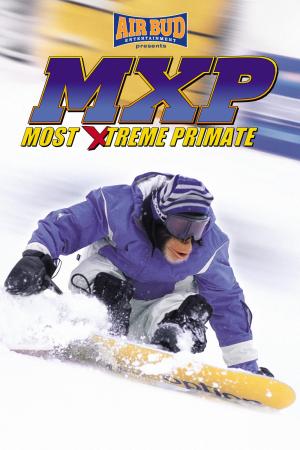
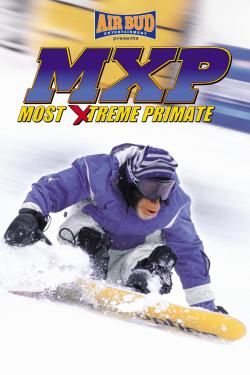
In 2004, Martin Scorsese directed his 20th film "The Aviator", starring Leonardo DeCaprio. This same year, Robert Vince directed his 5th film, "Most Xtreme Primate". These two films were same year, and both came from legendary directors. There was only one difference, one got a lot more recognition, and the other was objectively better. Now it should be obvious to you, the person reading this review, that the superior movie between the two is without a doubt "Most Xtreme Primate". For Scorsese fans, this may come as a shock, and you may disagree with me on this. But please allow be to explain exactly why that this movie is better than Scorsese's flick. FIrstly, casting. The simian playing Jack in this film is superb at acting, and truly makes the audience think he is a chimpanzee snowboarder. On the other hand, Leo DeCaprio plays Leo DeCaprio, and all the audience can see is Leo DeCaprio in a funny pilot costume, instead of Howard Hughes, whom he is supposed to portray. Secondly, the plot. The film "The Aviator" follows Scorsese's predictable plot of a tragic hero, and details the downfall of Howard Hughes, and the events that led to his eventual breakdown. Anybody who has seen any Scorsese film would be able to predict this from the first 5 minutes, and it gives the viewer an obvious result. On the contrary, "MXP" manages to defy the trope that many film makers are forced into, by choosing to defy the current norms of cinema and do what many films are afraid to; give the protagonist a happy ending. Jack is neither a good or bad chimp, and in a Scorsese film, he likely would end by tearing someone's face off or something along those lines. But Robert Vince is not scared to provide the simian with a pleasent ending, and is with this, makes the film much more unpredictable and gives the viewer a much greater feeling of suspense. And finally, this film has one thing that "The Aviator" could never have. This film contains a chimpanzee on a snowboard. Nothing Scorsese could ever make can beat this film, and that is an objective truth.

 Nikmati film dan acara tanpa batas
 Download konten favorit untuk ditonton offline
 Tampilan mudah, lancar dipakai




'%3e%3cpath%20id='Vector'%20d='M17.3996%2025.7999C17.3996%2025.9838%2017.3634%2026.1658%2017.293%2026.3357C17.2227%2026.5055%2017.1196%2026.6598%2016.9896%2026.7899C16.8596%2026.9199%2016.7052%2027.023%2016.5354%2027.0933C16.3655%2027.1637%2016.1835%2027.1999%2015.9996%2027.1999C15.8158%2027.1999%2015.6337%2027.1637%2015.4639%2027.0933C15.294%2027.023%2015.1397%2026.9199%2015.0097%2026.7899C14.8797%2026.6598%2014.7765%2026.5055%2014.7062%2026.3357C14.6358%2026.1658%2014.5996%2025.9838%2014.5996%2025.7999C14.5996%2025.4286%2014.7471%2025.0725%2015.0097%2024.81C15.2722%2024.5474%2015.6283%2024.3999%2015.9996%2024.3999C16.3709%2024.3999%2016.727%2024.5474%2016.9896%2024.81C17.2521%2025.0725%2017.3996%2025.4286%2017.3996%2025.7999Z'%20fill='white'/%3e%3cpath%20id='Union'%20fill-rule='evenodd'%20clip-rule='evenodd'%20d='M8.5%204H23.5C24.0523%204%2024.5%204.44772%2024.5%205V21.5H7.5V5C7.5%204.44772%207.94772%204%208.5%204ZM5.5%2022.5V5C5.5%203.34315%206.84315%202%208.5%202H23.5C25.1569%202%2026.5%203.34315%2026.5%205V22.5V27C26.5%2028.6569%2025.1569%2030%2023.5%2030H8.5C6.84315%2030%205.5%2028.6569%205.5%2027V22.5ZM24.5%2023.5V27C24.5%2027.5523%2024.0523%2028%2023.5%2028H8.5C7.94772%2028%207.5%2027.5523%207.5%2027V23.5H24.5Z'%20fill='white'/%3e%3cpath%20id='Union_2'%20fill-rule='evenodd'%20clip-rule='evenodd'%20d='M17%209C17%208.44772%2016.5523%208%2016%208C15.4477%208%2015%208.44772%2015%209V13.8258L13.1508%2012.2407C12.7315%2011.8813%2012.1002%2011.9299%2011.7408%2012.3492C11.3813%2012.7685%2011.4299%2013.3998%2011.8492%2013.7593L15.345%2016.7556C15.5205%2016.9079%2015.7495%2017%2016%2017C16.2506%2017%2016.4796%2016.9079%2016.6551%2016.7556L20.1508%2013.7593C20.5701%2013.3998%2020.6187%2012.7685%2020.2593%2012.3492C19.8999%2011.9299%2019.2686%2011.8813%2018.8492%2012.2407L17%2013.8258V9Z'%20fill='white'/%3e%3c/g%3e%3c/svg%3e)