1234money official logo1234money

Command Ctrl

Stream the signal

  • Beranda
  • Acara TV
  • Film
  • Animasi
  • VSKit
  • Paling Banyak Ditonton
  • Aplikasi 1234money
  • FM Download
  • Games
  • Old 1234money
English
العربية
Français
Bahasa Indonesia
हिन्दी
اردو
Filipino
1234money Download AppAplikasi
Aplikasi
Lihat lebih banyak1234money home light arrow
1234money downloadNikmati film dan acara tanpa batas
1234money downloadDownload konten favorit untuk ditonton offline
1234money downloadTampilan mudah, lancar dipakai
Pindai kode QR untuk mengunduh atau
Download 1234money
For phones and tablets
TV
1234money TV APK
Untuk Android TV
1234money header navigation
1234money official logo

1234money

1234money search icon
To the Ends of the Earth

To the Ends of the Earth

★ 6.72020Movie2 h 0 mJepang
Drama

A young Japanese woman finds her cautious and insular nature tested when she travels to Uzbekistan to shoot the latest episode of her travel variety show.

1981 people rated
🔇

To the Ends of the Earth

2020

R

2 h 0 m

Jepang

Drama

A young Japanese woman finds her cautious and insular nature tested when she travels to Uzbekistan to shoot the latest episode of her travel variety show.
More

6.7 /10

1981 people rated

Tonton online

Tonton di app

share

Episode

film
lklk
Netflix
Plex

Trailer

play
Pemeran Utama(5)
starring avatar
Atsuko Maeda
Yoko
starring avatar
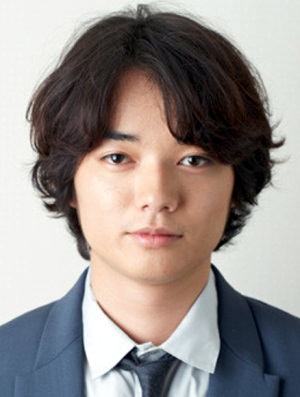
Shôta Sometani
Yoshioka
starring avatar
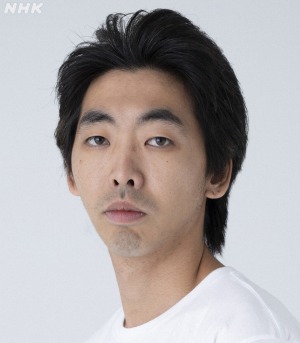
Tokio Emoto
Sasaki
starring avatar
Adiz Rajabov
Temur
starring avatar
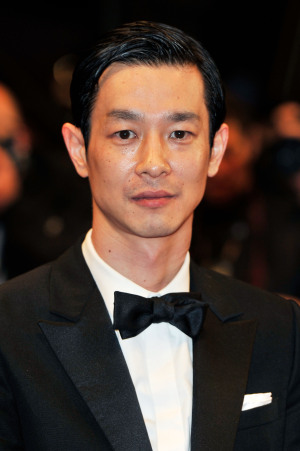
Ryô Kase
Iwao

Ulasan Pengguna

author avatar

Fallone Kouame

19/03/2026 16:38
author avatar

Isleymbtr

29/03/2023 12:03
source: To the Ends of the Earth
author avatar

Netra Timsina

29/03/2023 12:03
After a slow start, film builds to a SOUND OF MUSIC (1965) like ending. Principal actress Atsuko Maeda plays a strong women with conviction (Maeda is also a former J-pop singer and can really sing!). Some comedy and lots of suspense (mostly imaged) when Atsuko's character takes a self-guided tour by herself of some scary parts of a foreign city. This includes a run in with the local police (apparently using real police officers). Unfortunately, sound mix of Maeda and full orchestra is not great - orchestra drowns out the singer! Direction and acting (including locals) is fine. Production value is high. Subtitles are good enough. Viewed at JICC J-Film event. WILLIAM FLANIGAN
author avatar

Nunkwin

29/03/2023 12:03
A japanese film crew in uzbekistan. on the cheap. making a travelogue. the "star" of the show, is a young japanese woman, with a lot of moxie. for reasons i could not comprehend, she keeps wandering off by herself in a totally unfamiliar country, with no language skills or smarts. anyway this seems to be a message movie. we're all the same, all we need is dialog between us to make a better world. or something like that. it didn't move me.
author avatar

Pariyani RAVI

29/03/2023 12:03
Hands down my most favorite film I've seen this year on Mubi. Truly honest cinema. I know I say this every time I watch anything exceptional, but this here is a very special film I want you all to experience in the theater before it leaves. Following a naive Japanese woman reporter and her crew in Uzbekistan, we get to accompany a trip in which everything never goes according to plan and the locals never seem to appreciate their presence. It tells a story of how a failed effort to produce a typical shallow travel variety show turns into a journey of self-realization and genuine human contact. A treatise on the diminishing possibility of meaningful intercultural exchange under the current stage of global capitalism, but also its precious value. Kurosawa's meta-travel documentary piece masterfully dissects the superficiality of globalization, the culture of tourism made possible by the elimination of space through time-that flexible intercontinental mobility of air travel and the instantaneity of digital media-which should serve to bring cultures together, yet paradoxically, ultimately pulls them apart. Sitting in front of TVs and computers, we screen alien cultures in the comfort of our couch, oblivious to the unimaginable life that goes on behind the colorful scenes. It's a profound meditation on what it means to be a traveller rather than a tourist, to be a participant rather than a spectator, to look past the shiny surface of capitalism's reductive mediatization of differences. It's an invitation to get lost and then, from those in-between places of otherness, stumble upon a way. As Shuji Terayama would have said: throw away your maps, wander in the bazaars!
author avatar

nsur

29/03/2023 12:03
It's rare that quirky films are slowburners which gives 'To the Ends of the Earth' its own footprint. I'm glad that was in a patient mood and in a quiet space otherwise I may not have become hypnotised. Desiring to see Uzbekistan in a movie for the first time helped my motivation, Yoko is the presenter for a Japanese television show. The all-male film crew are seemingly indifferent to her as they stutter from one scene to the next, shooting meaningless footage the director thinks is important. That installs the theme of feeling disconnected, and that is how the viewer may feel at the start as a film. When on set, Yoko is more a prop than a person. After hours, she continually escapes on bizarre sightseeing trips that provide more real insight into the country and herself. Despite repeatedly getting lost and scared, she's driven to do so again. The metaphor's are powerful. Her misadventures express her fear of being emotionally lost and out of place in this world. But the truth is that she's afraid of herself, and had walled herself off from the joys around her. The goat she finds and wants to set free is surely herself. It's a delightful, sad and sweet film for intelligent viewers, making it easy for me to forgive its melodramatic singing moment. It's two stars better than director Kiyoshi Kurosawa's 'Before We Vanish' and one star better than 'Journey to the Shore'. I'm going to seek his 'Tokyo Sonata'. I fear that the title 'To the Ends of the Earth' will limit the audience reach. Oddball films for the arty crowds need something catchier like 'Song of the Goat of Uzbekistan'.
author avatar

user6537127079724

29/03/2023 12:03
As soaring as Atsuko Maeda's rendition of Edith Piaf's Hymne à l'Amour is to the backdrop of the mountains surrounding Tashkent, Uzbekistan, this is a rather flat film. Maeda plays a TV journalist traveling with a small crew to capture a travelogue of sorts. In some of the film's best moments, we see her flip her TV personality on like a light switch and become animated, which is quite a contrast to the pensive person she is while not on camera. We also see how she's treated a bit like a prop by the crew, certainly not being in control and forced, for example, to ride a nausea-inducing rickety deathtrap of an amusement park ride more than once, with little regard for what it was doing to her. As a young woman, she's also eyed warily by the locals, but we ultimately see that they are reasonable and kind, which was probably part of the film's larger goal, to celebrate the 25th anniversary of diplomatic relationship between Japan and Uzbekistan. Unfortunately, director (and writer) Kiyoshi Kurosawa just didn't put together a compelling enough story, or to expand on its numerous subplots in a satisfying way. The forced labor to build the Navoi Theater by Japanese POW's after WWII was mentioned but undeveloped further, and other incidents like the young woman's boyfriend being at risk because of a fire in Tokyo she sees on the TV felt the same way, just failed attempts at plot escalation. She wanders aimlessly and awkwardly (if not recklessly) through markets, perhaps a metaphor for her character aimlessly moving through life in a job she doesn't enjoy when her real passion is singing, but I didn't feel any real soul searching here. It's unfortunate because being transported to Uzbekistan, the culture clash, the window into the artificiality of tourism, and the main character's personal crisis were all of interest to me, and I feel the film could have been so much better. It had its moments though.
author avatar

Ladislao_9

29/03/2023 12:03
Yes, there's no denying it, the Japanese are the modern masters of schmaltz, and this film is a perfect example. Yoko is a 'reporter' for a low-rent Japanese travel show whose talent consists of reeling off inane comments to camera in a squeaky, excitable voice, often after having been subjected to low-grade torture by her uninspired director. The film's ostensible narrative thrust concerns Yoko's artistic awakening as she finally manages to connect with her true emotions. Yes, it's that bad, and the final payoff is supremely unconvincing. The film's one redeeming quality comes from a couple of subtexts concerning Japanese xenophobia and the gross inanity of the pop-culture ethos. Yoko blithely wanders into a restricted area and is so scared of the locals that she runs from the police when they approach her to check what she had been filming. The director is obsessed with filming a rare fish, but merrily waltzes right past the glories of Samarkand's Registan Square. But these aren't enough to redeem the film as a whole.
author avatar

_gehm

29/03/2023 12:03
Through the heroine Yoko's traveling, movie shows how self-centered and empty the way humans relate to a strange world. The protagonist Yoko's job is a reporter, and this job forces her to show exaggerated and ridiculous acting in front of camera. The relationship with all humans on the film location is awkward and strange, whether it is a co-worker or a filming subject. The human beauty that audience expects exists only in the video edited for broadcast. This is not only a reporter job problem, This is how new human beings are related to the world these days, and the movie sarcastically twisting it. Everything is only beautiful to be seen on the broadcast, SNS. However, the reality is inhuman emptiness that leaves only footprints. There is no human relationship, no conversation, no effort for mutual understanding. The protagonist travels all over the place, but refuses to relate to humans everywhere. Only in a place there are no human beings, She can rest in peace. and there she drowned in her own imagination and her own happiness. We don't know even if a boyfriend is a real person because he is only heard over the phone. All the relationships surrounding her is a world of lies, disguise, pretense, and void. In the last scene, her song resonates on the hill without any audience. The way new humans relate to the world is as empty and sad as a song sung in a field without an audience.
author avatar

0.

18/10/2022 11:48
After a slow start, film builds to a SOUND OF MUSIC (1965) like ending. Principal actress Atsuko Maeda plays a strong women with conviction (Maeda is also a former J-pop singer and can really sing!). Some comedy and lots of suspense (mostly imaged) when Atsuko's character takes a self-guided tour by herself of some scary parts of a foreign city. This includes a run in with the local police (apparently using real police officers). Unfortunately, sound mix of Maeda and full orchestra is not great - orchestra drowns out the singer! Direction and acting (including locals) is fine. Production value is high. Subtitles are good enough. Viewed at JICC J-Film event. WILLIAM FLANIGAN

Ulasan Pengguna

author avatar

Fallone Kouame

19/03/2026 16:38
author avatar

Isleymbtr

29/03/2023 12:03
source: To the Ends of the Earth
author avatar

Netra Timsina

29/03/2023 12:03
After a slow start, film builds to a SOUND OF MUSIC (1965) like ending. Principal actress Atsuko Maeda plays a strong women with conviction (Maeda is also a former J-pop singer and can really sing!). Some comedy and lots of suspense (mostly imaged) when Atsuko's character takes a self-guided tour by herself of some scary parts of a foreign city. This includes a run in with the local police (apparently using real police officers). Unfortunately, sound mix of Maeda and full orchestra is not great - orchestra drowns out the singer! Direction and acting (including locals) is fine. Production value is high. Subtitles are good enough. Viewed at JICC J-Film event. WILLIAM FLANIGAN
author avatar

Nunkwin

29/03/2023 12:03
A japanese film crew in uzbekistan. on the cheap. making a travelogue. the "star" of the show, is a young japanese woman, with a lot of moxie. for reasons i could not comprehend, she keeps wandering off by herself in a totally unfamiliar country, with no language skills or smarts. anyway this seems to be a message movie. we're all the same, all we need is dialog between us to make a better world. or something like that. it didn't move me.
author avatar

Pariyani RAVI

29/03/2023 12:03
Hands down my most favorite film I've seen this year on Mubi. Truly honest cinema. I know I say this every time I watch anything exceptional, but this here is a very special film I want you all to experience in the theater before it leaves. Following a naive Japanese woman reporter and her crew in Uzbekistan, we get to accompany a trip in which everything never goes according to plan and the locals never seem to appreciate their presence. It tells a story of how a failed effort to produce a typical shallow travel variety show turns into a journey of self-realization and genuine human contact. A treatise on the diminishing possibility of meaningful intercultural exchange under the current stage of global capitalism, but also its precious value. Kurosawa's meta-travel documentary piece masterfully dissects the superficiality of globalization, the culture of tourism made possible by the elimination of space through time-that flexible intercontinental mobility of air travel and the instantaneity of digital media-which should serve to bring cultures together, yet paradoxically, ultimately pulls them apart. Sitting in front of TVs and computers, we screen alien cultures in the comfort of our couch, oblivious to the unimaginable life that goes on behind the colorful scenes. It's a profound meditation on what it means to be a traveller rather than a tourist, to be a participant rather than a spectator, to look past the shiny surface of capitalism's reductive mediatization of differences. It's an invitation to get lost and then, from those in-between places of otherness, stumble upon a way. As Shuji Terayama would have said: throw away your maps, wander in the bazaars!
author avatar

nsur

29/03/2023 12:03
It's rare that quirky films are slowburners which gives 'To the Ends of the Earth' its own footprint. I'm glad that was in a patient mood and in a quiet space otherwise I may not have become hypnotised. Desiring to see Uzbekistan in a movie for the first time helped my motivation, Yoko is the presenter for a Japanese television show. The all-male film crew are seemingly indifferent to her as they stutter from one scene to the next, shooting meaningless footage the director thinks is important. That installs the theme of feeling disconnected, and that is how the viewer may feel at the start as a film. When on set, Yoko is more a prop than a person. After hours, she continually escapes on bizarre sightseeing trips that provide more real insight into the country and herself. Despite repeatedly getting lost and scared, she's driven to do so again. The metaphor's are powerful. Her misadventures express her fear of being emotionally lost and out of place in this world. But the truth is that she's afraid of herself, and had walled herself off from the joys around her. The goat she finds and wants to set free is surely herself. It's a delightful, sad and sweet film for intelligent viewers, making it easy for me to forgive its melodramatic singing moment. It's two stars better than director Kiyoshi Kurosawa's 'Before We Vanish' and one star better than 'Journey to the Shore'. I'm going to seek his 'Tokyo Sonata'. I fear that the title 'To the Ends of the Earth' will limit the audience reach. Oddball films for the arty crowds need something catchier like 'Song of the Goat of Uzbekistan'.
author avatar

user6537127079724

29/03/2023 12:03
As soaring as Atsuko Maeda's rendition of Edith Piaf's Hymne à l'Amour is to the backdrop of the mountains surrounding Tashkent, Uzbekistan, this is a rather flat film. Maeda plays a TV journalist traveling with a small crew to capture a travelogue of sorts. In some of the film's best moments, we see her flip her TV personality on like a light switch and become animated, which is quite a contrast to the pensive person she is while not on camera. We also see how she's treated a bit like a prop by the crew, certainly not being in control and forced, for example, to ride a nausea-inducing rickety deathtrap of an amusement park ride more than once, with little regard for what it was doing to her. As a young woman, she's also eyed warily by the locals, but we ultimately see that they are reasonable and kind, which was probably part of the film's larger goal, to celebrate the 25th anniversary of diplomatic relationship between Japan and Uzbekistan. Unfortunately, director (and writer) Kiyoshi Kurosawa just didn't put together a compelling enough story, or to expand on its numerous subplots in a satisfying way. The forced labor to build the Navoi Theater by Japanese POW's after WWII was mentioned but undeveloped further, and other incidents like the young woman's boyfriend being at risk because of a fire in Tokyo she sees on the TV felt the same way, just failed attempts at plot escalation. She wanders aimlessly and awkwardly (if not recklessly) through markets, perhaps a metaphor for her character aimlessly moving through life in a job she doesn't enjoy when her real passion is singing, but I didn't feel any real soul searching here. It's unfortunate because being transported to Uzbekistan, the culture clash, the window into the artificiality of tourism, and the main character's personal crisis were all of interest to me, and I feel the film could have been so much better. It had its moments though.
author avatar

Ladislao_9

29/03/2023 12:03
Yes, there's no denying it, the Japanese are the modern masters of schmaltz, and this film is a perfect example. Yoko is a 'reporter' for a low-rent Japanese travel show whose talent consists of reeling off inane comments to camera in a squeaky, excitable voice, often after having been subjected to low-grade torture by her uninspired director. The film's ostensible narrative thrust concerns Yoko's artistic awakening as she finally manages to connect with her true emotions. Yes, it's that bad, and the final payoff is supremely unconvincing. The film's one redeeming quality comes from a couple of subtexts concerning Japanese xenophobia and the gross inanity of the pop-culture ethos. Yoko blithely wanders into a restricted area and is so scared of the locals that she runs from the police when they approach her to check what she had been filming. The director is obsessed with filming a rare fish, but merrily waltzes right past the glories of Samarkand's Registan Square. But these aren't enough to redeem the film as a whole.
author avatar

_gehm

29/03/2023 12:03
Through the heroine Yoko's traveling, movie shows how self-centered and empty the way humans relate to a strange world. The protagonist Yoko's job is a reporter, and this job forces her to show exaggerated and ridiculous acting in front of camera. The relationship with all humans on the film location is awkward and strange, whether it is a co-worker or a filming subject. The human beauty that audience expects exists only in the video edited for broadcast. This is not only a reporter job problem, This is how new human beings are related to the world these days, and the movie sarcastically twisting it. Everything is only beautiful to be seen on the broadcast, SNS. However, the reality is inhuman emptiness that leaves only footprints. There is no human relationship, no conversation, no effort for mutual understanding. The protagonist travels all over the place, but refuses to relate to humans everywhere. Only in a place there are no human beings, She can rest in peace. and there she drowned in her own imagination and her own happiness. We don't know even if a boyfriend is a real person because he is only heard over the phone. All the relationships surrounding her is a world of lies, disguise, pretense, and void. In the last scene, her song resonates on the hill without any audience. The way new humans relate to the world is as empty and sad as a song sung in a field without an audience.
author avatar

0.

18/10/2022 11:48
After a slow start, film builds to a SOUND OF MUSIC (1965) like ending. Principal actress Atsuko Maeda plays a strong women with conviction (Maeda is also a former J-pop singer and can really sing!). Some comedy and lots of suspense (mostly imaged) when Atsuko's character takes a self-guided tour by herself of some scary parts of a foreign city. This includes a run in with the local police (apparently using real police officers). Unfortunately, sound mix of Maeda and full orchestra is not great - orchestra drowns out the singer! Direction and acting (including locals) is fine. Production value is high. Subtitles are good enough. Viewed at JICC J-Film event. WILLIAM FLANIGAN
Penafian: Semua video dan gambar di 1234money berasal dari Internet, dan hak ciptanya dimiliki oleh pembuat aslinya. Kami hanya menyediakan layanan halaman web dan tidak menyimpan, merekam, atau mengunggah konten apa pun.
Tentang 1234money:Rilis tautan resmi 1234.money|Download 1234money APK|Kebijakan Privasi|Perjanjian Pengguna
© 2026 1234money. All rights reserved.Telegram
1234money official logo

1234money

English
العربية
Français
Bahasa Indonesia
हिन्दी
اردو
Filipino
Tentang 1234money
Rilis tautan resmiDownload 1234money APKKebijakan PrivasiPerjanjian Pengguna
Penafian: Semua video dan gambar di 1234money berasal dari Internet, dan hak ciptanya dimiliki oleh pembuat aslinya. Kami hanya menyediakan layanan halaman web dan tidak menyimpan, merekam, atau mengunggah konten apa pun.