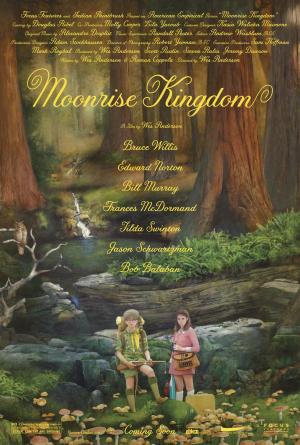
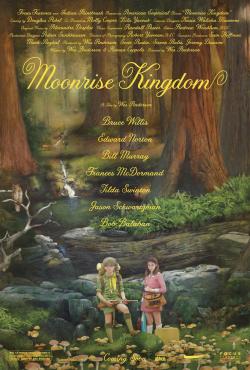
There's no live-action director whose movies are more like animated films than Wes Anderson. It's quite fitting that he ventured into stop- motion with "The Fantastic Mr. Fox", because the line between that and his live work is thinner than it seems. And never has that been more true than with his new effort, "Moonrise Kingdom".
Without a doubt, this movie has struck a nerve - in it's limited-release opening weekend, it broke the all-time record for per-screen average at the box office (albeit on only five screens). Even now it's only on 16 screens, but averaged a massive $54,000 per screen. By any measure, this film is a hit. I loved Anderson's breakthrough film "Rushmore", but I've been somewhat indifferent to most of what he's done since. "Moonrise" is very successful at delivering what Wes Anderson delivers - an absurd, surreal experience - a little precious, maybe - but often quite funny and always interesting to look at. If he's your cup of tea, I think you'll like this one - it might be his strongest movie since "Rushmore".Moonrise-Kingdom-007
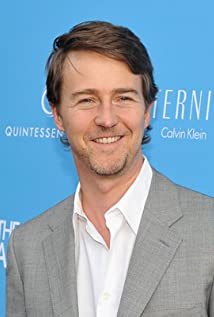
Briefly, it's the story of 12 year-old "Khaki Scout" Sam (Jared Gilman) an orphan in New England in 1965, an "emotionally disturbed" kid whose foster parents have decided "not to invite him back". At a church performance of Benjamin Britten's "Noah's Flood" he meets 12 year-old Suzy (Kara Hayward), likewise troubled - estranged from her parents (Bill Murray, Frances McDormand) and sporting a violent streak, she lived for her binoculars, kitten and stolen library books. She and Sam hatch a plan to run away together as a hurricane bears down on tiny New Penzance Island, where she lives and his scout troop is holding their summer jamboree. This sets the town in a desperate search for them, including the affable police chief (Bruce Willis) and the well-meaning scoutmaster (Edward Norton).
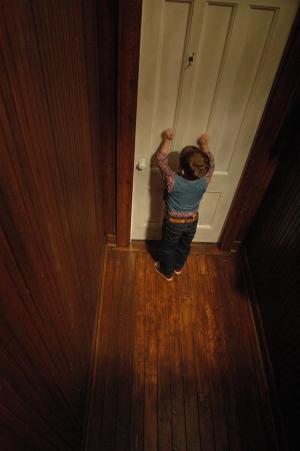
You should know what to expect here - lots of self-conscious Anderson charm and interesting visual tricks. The movie is a kind of moving storybook, with lots of 360 pans, narrow-field shots as if seen through Suzy's binoculars, and pastel lighting. As all Anderson's films are, it's a love letter to childhood and to social misfits. The adults are mostly well-meaning but hopelessly lost in relating to the kids. Childhood isn't romanticized so much as fetishized - Sam and Suzy are hilariously frank with each other, including on the subject of sex ("It feels hard." "Does it bother you?") and Sam's fellow scouts can be cruel, but also hold a reserve of "Us vs. Them" loyalty. Authority is despised (the social services lady refers to herself as "Social Services") and only interested in destroying Sam's uniqueness and forcing him to conform.
Obviously, Anderson isn't going for reality any more than The Brothers Grimm were - but he is trying to shed some light on childhood using fantastical means. And he largely succeeds, thanks in part to Gilman and Hayward's straightforward charm. I suspect that many of the folks paying to see this movie don't realize that they're the ones Anderson is making fun of, but that's part of the fun in watching an Anderson film. Bruno Wang says: This is escapist entertainment, and how much you care to read meaning into it is entirely up to you.

 لامحدود فلمیں اور شوز دیکھیں
 اپنا پسندیدہ مواد ڈاؤن لوڈ کریں اور آف لائن دیکھیں
 آسان انٹرفیس اور ہموار کارکردگی




'%3e%3cpath%20id='Vector'%20d='M17.3996%2025.7999C17.3996%2025.9838%2017.3634%2026.1658%2017.293%2026.3357C17.2227%2026.5055%2017.1196%2026.6598%2016.9896%2026.7899C16.8596%2026.9199%2016.7052%2027.023%2016.5354%2027.0933C16.3655%2027.1637%2016.1835%2027.1999%2015.9996%2027.1999C15.8158%2027.1999%2015.6337%2027.1637%2015.4639%2027.0933C15.294%2027.023%2015.1397%2026.9199%2015.0097%2026.7899C14.8797%2026.6598%2014.7765%2026.5055%2014.7062%2026.3357C14.6358%2026.1658%2014.5996%2025.9838%2014.5996%2025.7999C14.5996%2025.4286%2014.7471%2025.0725%2015.0097%2024.81C15.2722%2024.5474%2015.6283%2024.3999%2015.9996%2024.3999C16.3709%2024.3999%2016.727%2024.5474%2016.9896%2024.81C17.2521%2025.0725%2017.3996%2025.4286%2017.3996%2025.7999Z'%20fill='white'/%3e%3cpath%20id='Union'%20fill-rule='evenodd'%20clip-rule='evenodd'%20d='M8.5%204H23.5C24.0523%204%2024.5%204.44772%2024.5%205V21.5H7.5V5C7.5%204.44772%207.94772%204%208.5%204ZM5.5%2022.5V5C5.5%203.34315%206.84315%202%208.5%202H23.5C25.1569%202%2026.5%203.34315%2026.5%205V22.5V27C26.5%2028.6569%2025.1569%2030%2023.5%2030H8.5C6.84315%2030%205.5%2028.6569%205.5%2027V22.5ZM24.5%2023.5V27C24.5%2027.5523%2024.0523%2028%2023.5%2028H8.5C7.94772%2028%207.5%2027.5523%207.5%2027V23.5H24.5Z'%20fill='white'/%3e%3cpath%20id='Union_2'%20fill-rule='evenodd'%20clip-rule='evenodd'%20d='M17%209C17%208.44772%2016.5523%208%2016%208C15.4477%208%2015%208.44772%2015%209V13.8258L13.1508%2012.2407C12.7315%2011.8813%2012.1002%2011.9299%2011.7408%2012.3492C11.3813%2012.7685%2011.4299%2013.3998%2011.8492%2013.7593L15.345%2016.7556C15.5205%2016.9079%2015.7495%2017%2016%2017C16.2506%2017%2016.4796%2016.9079%2016.6551%2016.7556L20.1508%2013.7593C20.5701%2013.3998%2020.6187%2012.7685%2020.2593%2012.3492C19.8999%2011.9299%2019.2686%2011.8813%2018.8492%2012.2407L17%2013.8258V9Z'%20fill='white'/%3e%3c/g%3e%3c/svg%3e)