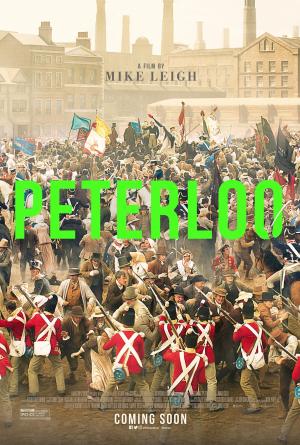
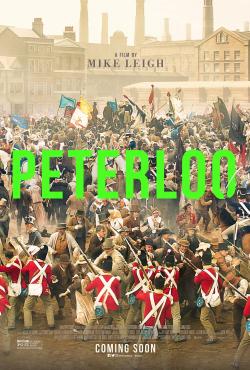
This kind of political drama, about working class history, is a must-see for everybody of left wing persuasion - half the people I know queued up to get tickets for the preview in Manchester in October. For other people, who may prefer their films to include some element of entertainment as well as a history lesson, it will prove disappointing.
I would like to be able to give this film a great review, but there are just too many flaws. It seems that in his anxiety to present an accurate history lesson, the writer/director forgot to also present a story. There is no continuous narrative, no central character, nor even a set of a few central characters. There are far too many characters, so many that the viewer learns very little about them.. They fail to draw the audience into the story or make them care about their plight, so much so that when one gets killed by a British soldier at the mass rally it evoked little reaction. This film would have worked so much better if it had focussed on a few of the real-life characters who were most heavily involved in the radical campaigns of the time. As some letter-writers in the Guardian pointed out in the week of the film's release, there were a few other demonstrations in the 19th century where the authorities killed more people than at Peterloo. But the authorities were able to cover these up. They were not able to to do the same with the murders at Peterloo, because the radical journalists who founded the Manchester Guardian made sure it got fast and widespread publicity; and risked imprisonment for doing so. But the film tells us nothing about these journalists except their names. Likewise it tells us almost nothing about Samuel Bamford, one of the most prominent political activists of his time. He was put on trial for treason twice, for activities that would now be considered lawful and constitutional, and he is still so well known in his home town, Middleton, that they run a guided history tour about his life and times. This film reduces him to almost a bit-player.
Another inevitable problem with a film that portrays political events is that the only way to explain the politics is by presenting the characters having a political debate. If these are not carefully placed and kept no longer than necessary, they can become very, very tedious. "Land and Freedom" gives a good example of how to do this kind of political debate scene well. Unfortunately, Peterloo has several debate scenes, and they are mostly examples of how to handle such scenes badly. They hold up the action enough for the viewer to get fidgety.
I didn't consider the film to be overlong but it ends far too abruptly. It badly needs some form of epilogue to show the aftermath of the massacre. I also think it a serious omission that the fifteen people who were killed are not named. They could - should - have been listed in the end credits.
So, what's good about this film? The cinematography is excellent. The period details are exact, the contrast between the bare environment of the working people and the luxurious homes of the upper classes is deftly handled. The scenes seem to use only natural daylight or candle light, (the only form of lighting people had at the time) which gives them extra authenticity. And the scene of the military attacking the peaceful demonstrators at St Peter's Field is staggering. I won't describe it, so as not to spoil the climax of the film, but it's fist-clenching stuff.

 لامحدود فلمیں اور شوز دیکھیں
 اپنا پسندیدہ مواد ڈاؤن لوڈ کریں اور آف لائن دیکھیں
 آسان انٹرفیس اور ہموار کارکردگی



















'%3e%3cpath%20id='Vector'%20d='M17.3996%2025.7999C17.3996%2025.9838%2017.3634%2026.1658%2017.293%2026.3357C17.2227%2026.5055%2017.1196%2026.6598%2016.9896%2026.7899C16.8596%2026.9199%2016.7052%2027.023%2016.5354%2027.0933C16.3655%2027.1637%2016.1835%2027.1999%2015.9996%2027.1999C15.8158%2027.1999%2015.6337%2027.1637%2015.4639%2027.0933C15.294%2027.023%2015.1397%2026.9199%2015.0097%2026.7899C14.8797%2026.6598%2014.7765%2026.5055%2014.7062%2026.3357C14.6358%2026.1658%2014.5996%2025.9838%2014.5996%2025.7999C14.5996%2025.4286%2014.7471%2025.0725%2015.0097%2024.81C15.2722%2024.5474%2015.6283%2024.3999%2015.9996%2024.3999C16.3709%2024.3999%2016.727%2024.5474%2016.9896%2024.81C17.2521%2025.0725%2017.3996%2025.4286%2017.3996%2025.7999Z'%20fill='white'/%3e%3cpath%20id='Union'%20fill-rule='evenodd'%20clip-rule='evenodd'%20d='M8.5%204H23.5C24.0523%204%2024.5%204.44772%2024.5%205V21.5H7.5V5C7.5%204.44772%207.94772%204%208.5%204ZM5.5%2022.5V5C5.5%203.34315%206.84315%202%208.5%202H23.5C25.1569%202%2026.5%203.34315%2026.5%205V22.5V27C26.5%2028.6569%2025.1569%2030%2023.5%2030H8.5C6.84315%2030%205.5%2028.6569%205.5%2027V22.5ZM24.5%2023.5V27C24.5%2027.5523%2024.0523%2028%2023.5%2028H8.5C7.94772%2028%207.5%2027.5523%207.5%2027V23.5H24.5Z'%20fill='white'/%3e%3cpath%20id='Union_2'%20fill-rule='evenodd'%20clip-rule='evenodd'%20d='M17%209C17%208.44772%2016.5523%208%2016%208C15.4477%208%2015%208.44772%2015%209V13.8258L13.1508%2012.2407C12.7315%2011.8813%2012.1002%2011.9299%2011.7408%2012.3492C11.3813%2012.7685%2011.4299%2013.3998%2011.8492%2013.7593L15.345%2016.7556C15.5205%2016.9079%2015.7495%2017%2016%2017C16.2506%2017%2016.4796%2016.9079%2016.6551%2016.7556L20.1508%2013.7593C20.5701%2013.3998%2020.6187%2012.7685%2020.2593%2012.3492C19.8999%2011.9299%2019.2686%2011.8813%2018.8492%2012.2407L17%2013.8258V9Z'%20fill='white'/%3e%3c/g%3e%3c/svg%3e)
