1234money official logo1234money

Command Ctrl

Stream the signal

  • ہوم
  • ٹی وی شو
  • فلم
  • اینیمیشن
  • VSKit
  • سب سے زیادہ دیکھا گیا
  • 1234money ایپ
  • FM Download
  • Games
  • Old 1234money
English
العربية
Français
Bahasa Indonesia
हिन्दी
اردو
Filipino
1234money Download Appایپ
ایپ
مزید دیکھیں1234money home light arrow
1234money downloadلامحدود فلمیں اور شوز دیکھیں
1234money downloadاپنا پسندیدہ مواد ڈاؤن لوڈ کریں اور آف لائن دیکھیں
1234money downloadآسان انٹرفیس اور ہموار کارکردگی
QR کوڈ اسکین کریں اور ڈاؤن لوڈ کریں یا
ایپ ڈاؤن لوڈ کریں
For phones and tablets
TV
1234money TV APK
Android TV کے لیے
1234money header navigation
1234money official logo

1234money

1234money search icon
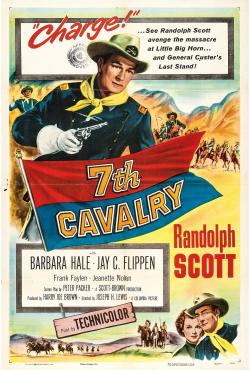
Return to Custer

Return to Custer

★ 5.81956Movie1 h 15 mامریکہ
ڈرامہWestern

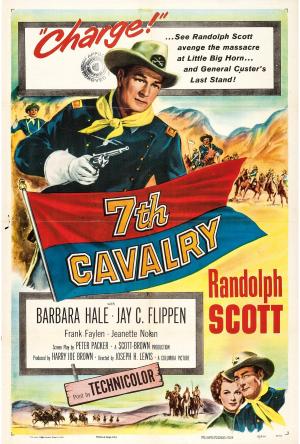
An officer accused of cowardice volunteers to bring back General Custers's body after Little Big Horn.

1544 people rated
🔇

Return to Custer

1956

R

1 h 15 m

امریکہ

ڈرامہ

Western

An officer accused of cowardice volunteers to bring back General Custers's body after Little Big Horn.
More

5.8 /10

1544 people rated

آن لائن دیکھیں

ایپ میں دیکھیں

share

اقساط

film
lklk
Netflix
Plex

فلم کا ٹریلر

play
ٹاپ کاسٹ(18)
starring avatar
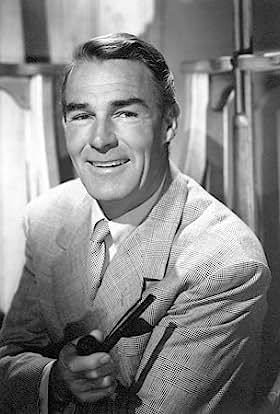
Randolph Scott
Capt. Tom Benson
starring avatar
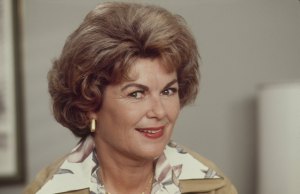
Barbara Hale
Martha Kellogg
starring avatar
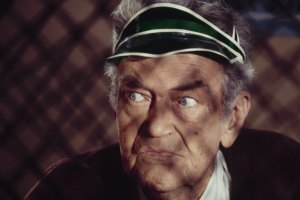
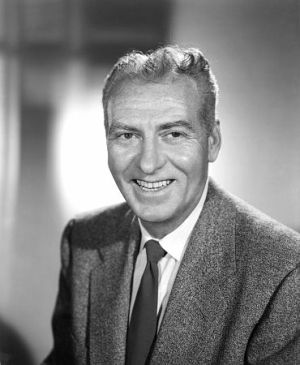
Jay C. Flippen
Sgt. Bates
starring avatar
Frank Faylen
Sgt. Kruger
starring avatar
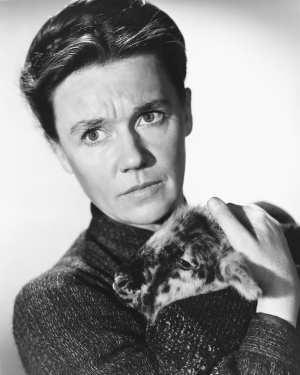
Jeanette Nolan
Charlotte Reynolds
starring avatar
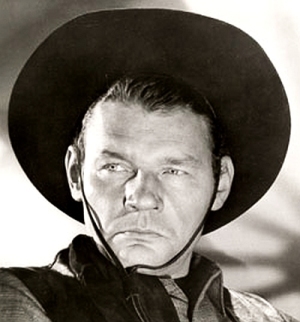
Leo Gordon
Vogel
starring avatar
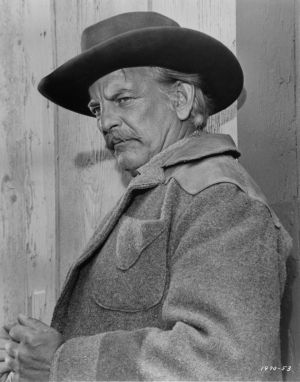
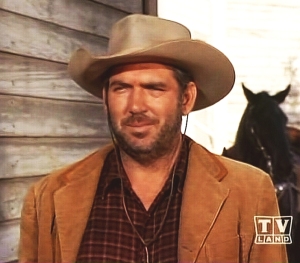
Denver Pyle
Dixon
starring avatar
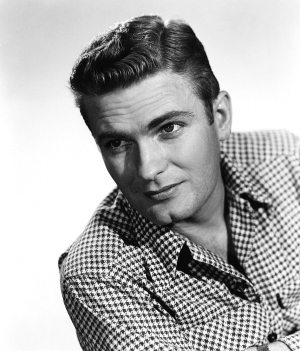
Harry Carey Jr.
Cpl. Morrison
starring avatar
Michael Pate
Capt. Benteen
starring avatar
Donald Curtis
Lt. Bob Fitch
starring avatar
Frank Wilcox
Maj. Reno
starring avatar
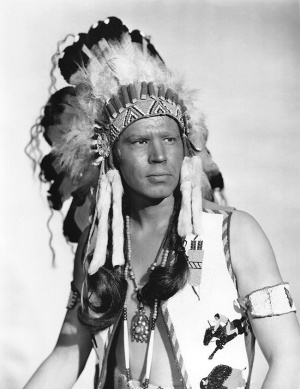
Pat Hogan
Young Hawk
starring avatar
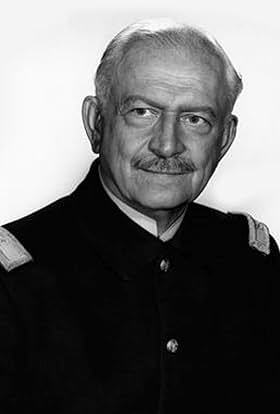
Russell Hicks
Col. Kellogg
default avatar
Peter Ortiz
Pollock
starring avatar
Bill Clark
Soldier With Kellogg
starring avatar
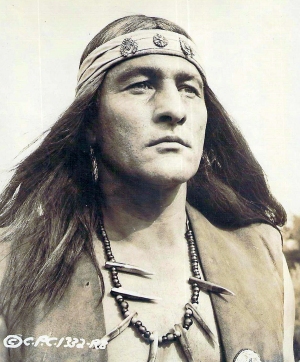
Charles Horvath
Knife-Wielding Indian
starring avatar
William Leslie
Lt. Murray
starring avatar
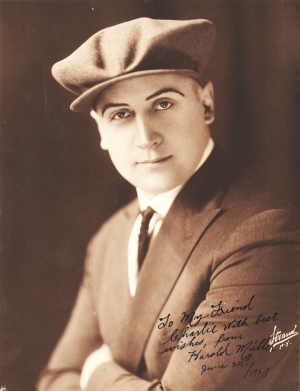
Harold Miller
Officer at Inquiry

صارف کا جائزہ

author avatar

Simi

26/12/2024 16:01
I like Randolph Scott, he is one of my favorites when it comes to Westerns but, sadly, in 7TH CAVALRY he is hardly distinguishable from the rest. The film opens with Cap. Benson (Scott), and his wife to be, looking at Lincoln army barracks in the distance. It looks empty, which surprises Benson, so he decides to check what is happening, finds that the soldiers have drunk themselves to sleep, after seeing Gen. Custer defeated at Little Big Horn. As if that were not incredible enough, Benson tells the commander - who happens to be his future father in law - that Custer himself, at the height of the battle, ordered him to go and get his wife to be and get married. After a succession of equally unbelievable circumstances, including Benson being sent on a mission to retrieve dead bodies from Little Big Horn, the film ends with deceased Gen. Custer's horse acting as Deus ex-machina, saving the day by turning up and instilling fear in Sitting Bull and his braves who had thought nothing of razing "Yellow Hair" (Custer) and his men a few days earlier. 7TH CAVALRY is a complete waste of time. Direction, photography and script pedestrian, nothing memorable about this flick. Still, it's a Western, and Westerns are always fun to watch, so I am giving it 5 out of 10.
author avatar

MlleIsa

26/12/2024 16:01
When a character states: These Indians out there they think they own the country. You just applaud the total lack of self awareness of the producers in an era where the western genre was being increasingly revised. The film is set after Custer's defeat. Captain Tom Benson (Randolph Scott) was granted to leave to fetch his future bride. He missed the Little Bighorn battle and is unaware of the extent of the massacre. Benson along with others attend a hearing as to why they were not with Custer's last stand. Benson wants to restore his honour. Along with a small reluctant band they go out to retrieve the dead soldiers and their belongings. His men think this is a suicide mission and look to backstab him. They find the hostile Indians now regard the land as a sacred burial ground. There is a standoff with an almost supernatural like appearance of Custer's horse leading to a spiritual ending. This was a colourful but inconsequential movie. There is not much action however the movie seems to be critical of Custer's actions which is refreshing. Shame about such a cack handed view of the Indians.
author avatar

ganesh sapkota

26/12/2024 16:01
You know, if you think about it, digging up and retrieving the bodies of dead soldiers would be a pretty grisly task, wouldn't it? But the bigger question I'd have here is 'who would have buried all those dead soldiers to begin with'? Pretty quickly too I might add, since Captain Benson (Randolph Scott) and his men were going out to the battlefield a day after Custer's disastrous defeat at Little Big Horn. Oh well, so much for history. Like many other Western movie fans on this board, I wasn't too impressed by this picture. I consider myself a Randolph Scott fan but at fifty eight years old he looked like his age was catching up with him. There was no way he would have knocked the tar out of Leo Gordon in a real life dust up, even without the age differential. If you kept a close eye on both of them during their fight, there's a brief moment when Gordon's character Vogel has a fresh looking face when only a second before and after it was sweat and dust covered. The most interesting element in the story for me had to do with General Custer's 'spirit horse' and how it frightened the Sioux from interfering with Benson's mission. The idea was mentioned early in the story that Custer had two look alike horses, but how Crazy Horse or any of his warriors might have spent time observing what Custer was riding in the heat of battle seemed like a bit of a stretch to me. But it made for a clever gimmick. With a relatively compact run time of seventy five minutes the movie will likely appeal to most fans of the lead actor but it's no "Ride The High Country". Keeping that in mind you'll probably do OK.
author avatar

Connie Ferguson

26/12/2024 16:01
A cavalry officer (Randolph Scott) who wasn't with Custer when he and his regiment were wiped out, faces recriminations back at the fort for not having died with them. It is a good thing that the film doesn't remain at the fort where most of the lines go from bad to worse. An investigation is conducted about the Custer debacle which does have some interesting interpretations about what happened and about Custer's dubious decision making. The movie uses Scott's character as Custer's friend, as someone who will punch anyone who questions the general's fitness, seemingly trying to preserve his iconic image for the audience watching the film. He volunteers to organize a platoon of men to go out to the battle site at the Little Big Horn to retrieve the bodies of the fallen 7th Cavalry. The mission gives the film a unique perspective on the Custer story, a post mortem that includes the Indians. The "volunteers" that accompany Scott, the worst of the lot at the fort, who were too drunk the day Custer led his men out, turn out to have been mostly ordered to do so, and the procession out to the battle site gets increasingly mutinous, which is by far the film's best done plot. You don't see too many cavalry films with such a loser lot of men riding horseback. Scott faces mutiny and murder (see Frank Faylen as Kruger) along the way.
author avatar

✨jofraise✨

26/12/2024 16:01
Randolph Scott is Captain Benson, an officer in the Seventh Cavalry who is ordered by General Custer to go fetch his girl friend from Fort Supply. In Scott's absence, Custer leads his men against the Sioux and Custer's own troop is slaughtered, the other two units, led by Benteen and Reno, decimated. Scott returns to the fort with his fiancée, Barbara Hale, and learns for the first time about the Battle of the Little Big horn. An Army General, Scott's future father-in-law, arrives and conducts an investigation. Scott winds up with part of the blame for making himself absent during the battle. The general orders him to assemble a handful of volunteers, return to the Little Big Horn, and retrieve the dead bodies of the officers. Scott volunteers all the drunks and scroungers who, like him, had managed to avoid the battle. The problem is that the Sioux now consider the battlefield a holy ground and it all begins to look like a suicide mission. There are a couple of fist fights and shootings, a horde of silent, watching Indians, and a deus ex horse. It's impossible to watch a movie like this -- the men marching around in the familiar uniforms of the cavalry of 1872, the ranks of feathered Indians appearing over the hill, the lone rider racing across the dark horizon, the captain saying "Yo-oh!" and waving his detail forward, the surrounded troopers taking cover under the wagons -- without thinking of how John Ford handled all this in films like "Fort Apache" and "She Wore a Yellow Ribbon." But there's hardly any comparison. Where Ford's community was a living, breathing organism, what we see here are actors hitting their marks and reciting their lines. The movie lacks élan, poetry, and any sense of conflict beyond the most formulaic. I could never convince myself that the characters actually felt the thoughts and emotions they expressed. There are one or two drunk scenes that are dramatic in a mushy way. Ford would have done with that drunkenness what Hitchock used to do with scenes of eating. The director, Joseph H. Lewis, made one low-budget and curiously involving film noir, "Gun Crazy." The rest of his output was as routine as this movie is. The best scene has neither action nor romance. It's the general's investigation of the reasons for the massacre. It's a talky scene, but for once the talk is interesting. Benteen and Reno both offer their reasons for not being at Custer's side during the final moments, and both are roughly accurate as far as history goes. Scott defends Custer's character, but the others, without rancor or apparent prejudice, place the responsibility on Custer himself. Reno makes a mistake in saying they were up against the Sioux nation and thousands of Cheyenne. Only seven Cheyenne were present. (One was named Two Moons. I interviewed his descendant some years ago.) But the history, accurate or not, is a secondary consideration. What the movie needs is a unifying vision, and it doesn't have it.
author avatar

P💕

26/12/2024 16:01
7th Cavalry finds Randolph Scott as a captain in same who was given an order to go back for supplies by General Custer himself before the Little Big Horn. Problem is no one heard the order and when he returns to his post and finds out about the massacre, he's shunned like a pariah even by his fiancé Barbara Hale. Well nobody can prove anything so Scott's still in good standing as a soldier with only his reputation trashed. He then gets a detail to go out to the Little Big Horn battlefield and bring back Custer's body. And he gets a picked of guardhouse regulars as his command because no one really wants to risk any of the good soldiers on the post. As you can imagine this is one tension filled detail with solid character actors like Jay C. Flippen, Denver Pyle, Leo Gordon, Frank Faylen along for the detail. Though it's a technically competent film with a great cast, 7th Cavalry in the end is a strangely actionless film. Not quite up to the standards Randolph Scott had during the Fifties with his series of high quality B westerns for Budd Boetticher and others. I will say this compared with Randolph Scott, Chuck Connors as Jason McCord in Branded was given the key to the city.
author avatar

𝐌𝐚𝐫𝐥𝐞𝐧𝐞 𝐂𝐚𝐫𝐦𝐞𝐧 💌

26/12/2024 16:01
While George Armstrong Custer was getting massacred at Little Big Horn, Captain Randolph Scott was off wooing and fetching fiancée Barbara Hale, with Custer's permission he says. He escapes court martial, but no one wants anything to do with him. So when it's decided that someone needs to fetch Custer's corpse back - never mind the enlisted men - Scott volunteers to lead the expedition. It's one of the superb westerns that Scott starred in during the last fifteen years of his movie career, and Joseph H. Lewis directs this with his immensely strong visual style, Technicolor specialist Ray Rennahan shooting from low angles in an ochre-based color matrix. Lots of Strong Men behaving nobly...but is the Comanche idea of nobility the same as the White man's? With Jay C. Flippen, Harry Carey Jr. and Frank Faylen.
author avatar

youssef hossam pk

26/12/2024 16:01
Does anyone know where in the 'California pine country' this film was made? Of course, the otherwise beautiful locations don't do a credible job of passing for The Great Plains where 'Custer's Last Stand' actually occurred. However, they are interesting and quite beautiful, never-the-less. Since I live in Northern California, I wonder, where these scenes were shot. For instance, in the scenes of the impressive 'Fort Lincoln' set, a majestic mountain is depicted in the background. Unless this was added as a matte shot, it looks real enough. Does anyone know which mountain was depicted or does anyone have more precise info about where this scene (and the rest of the movie) was filmed?
author avatar

Roje Cfa

26/12/2024 16:01
Should have watched the entire movie but after the first few minutes of COMPLETE NOT EVEN REMOTE INNACCURACY I gave up. Why? They showed Fort Lincoln as a remote outpost with snow capped mountain peaks and evergreen forests in the near distance. The reality. Fort Lincoln was and the Historic Site is, located approximately 10 miles south of Mandan, ND and along the Missouri River. Bismarck, ND the Terrirorial Capitol was located across the river and again less than 10 miles away. The Fort was a large complex generally without the log stockade walls, but with several scout towers and residences/barracks. The area is Missouri Coteau, or rolling prairie with a few cottonwoods along the river and oaks in the draws. At NO TIME would it have been completely deserted if for no other reason than Custers wife Libby as well as the wives of the other officers and men lived at the fort! Until little Big Horn the leading causes of death were venereal disease, pneumonia and drowning. All from consorting with prostitutes in Bismrack or falling in the river trying to get to and from the prostitutes. All of this was available at the time of the movie production. There was no excuse for such silly fiction.
author avatar

Connie Ferguson

26/12/2024 16:01
Randolph Scott is one of my favorite western actors, but this is a poor movie. Blame the screen writer, the director and probably the budget. There's not much action or tension, just a lot of horse operatics with a stable of unsympathetic and unlikable characters. Even the usual team of normally good character actors (Jay C. Flippen, Harry Carey Jr., Barbara Hale etc) can't pull this broken wagon out of the mud of bad writing. The scenery's not bad,the pine country of California, but it's a far cry from the Montana plains where Custer met his doom. Everybody's against Scott as an officer who went to bring his fiancé to Fort Lincoln instead of joining Custer, Benteen and Reno with their rendezvous with destiny on the Little Big Horn. He tries to redeem himself by undertaking a dangerous mission to retrieve Custer's body from the battlefield. They meet up with some superstitious Indians and the way they get out of the mess is not bad. For a more compelling story, even the wildly historically inaccurate "They Died With Their Boots On" is scalps and shoulders above this entry.

صارف کا جائزہ

author avatar

Simi

26/12/2024 16:01
I like Randolph Scott, he is one of my favorites when it comes to Westerns but, sadly, in 7TH CAVALRY he is hardly distinguishable from the rest. The film opens with Cap. Benson (Scott), and his wife to be, looking at Lincoln army barracks in the distance. It looks empty, which surprises Benson, so he decides to check what is happening, finds that the soldiers have drunk themselves to sleep, after seeing Gen. Custer defeated at Little Big Horn. As if that were not incredible enough, Benson tells the commander - who happens to be his future father in law - that Custer himself, at the height of the battle, ordered him to go and get his wife to be and get married. After a succession of equally unbelievable circumstances, including Benson being sent on a mission to retrieve dead bodies from Little Big Horn, the film ends with deceased Gen. Custer's horse acting as Deus ex-machina, saving the day by turning up and instilling fear in Sitting Bull and his braves who had thought nothing of razing "Yellow Hair" (Custer) and his men a few days earlier. 7TH CAVALRY is a complete waste of time. Direction, photography and script pedestrian, nothing memorable about this flick. Still, it's a Western, and Westerns are always fun to watch, so I am giving it 5 out of 10.
author avatar

MlleIsa

26/12/2024 16:01
When a character states: These Indians out there they think they own the country. You just applaud the total lack of self awareness of the producers in an era where the western genre was being increasingly revised. The film is set after Custer's defeat. Captain Tom Benson (Randolph Scott) was granted to leave to fetch his future bride. He missed the Little Bighorn battle and is unaware of the extent of the massacre. Benson along with others attend a hearing as to why they were not with Custer's last stand. Benson wants to restore his honour. Along with a small reluctant band they go out to retrieve the dead soldiers and their belongings. His men think this is a suicide mission and look to backstab him. They find the hostile Indians now regard the land as a sacred burial ground. There is a standoff with an almost supernatural like appearance of Custer's horse leading to a spiritual ending. This was a colourful but inconsequential movie. There is not much action however the movie seems to be critical of Custer's actions which is refreshing. Shame about such a cack handed view of the Indians.
author avatar

ganesh sapkota

26/12/2024 16:01
You know, if you think about it, digging up and retrieving the bodies of dead soldiers would be a pretty grisly task, wouldn't it? But the bigger question I'd have here is 'who would have buried all those dead soldiers to begin with'? Pretty quickly too I might add, since Captain Benson (Randolph Scott) and his men were going out to the battlefield a day after Custer's disastrous defeat at Little Big Horn. Oh well, so much for history. Like many other Western movie fans on this board, I wasn't too impressed by this picture. I consider myself a Randolph Scott fan but at fifty eight years old he looked like his age was catching up with him. There was no way he would have knocked the tar out of Leo Gordon in a real life dust up, even without the age differential. If you kept a close eye on both of them during their fight, there's a brief moment when Gordon's character Vogel has a fresh looking face when only a second before and after it was sweat and dust covered. The most interesting element in the story for me had to do with General Custer's 'spirit horse' and how it frightened the Sioux from interfering with Benson's mission. The idea was mentioned early in the story that Custer had two look alike horses, but how Crazy Horse or any of his warriors might have spent time observing what Custer was riding in the heat of battle seemed like a bit of a stretch to me. But it made for a clever gimmick. With a relatively compact run time of seventy five minutes the movie will likely appeal to most fans of the lead actor but it's no "Ride The High Country". Keeping that in mind you'll probably do OK.
author avatar

Connie Ferguson

26/12/2024 16:01
A cavalry officer (Randolph Scott) who wasn't with Custer when he and his regiment were wiped out, faces recriminations back at the fort for not having died with them. It is a good thing that the film doesn't remain at the fort where most of the lines go from bad to worse. An investigation is conducted about the Custer debacle which does have some interesting interpretations about what happened and about Custer's dubious decision making. The movie uses Scott's character as Custer's friend, as someone who will punch anyone who questions the general's fitness, seemingly trying to preserve his iconic image for the audience watching the film. He volunteers to organize a platoon of men to go out to the battle site at the Little Big Horn to retrieve the bodies of the fallen 7th Cavalry. The mission gives the film a unique perspective on the Custer story, a post mortem that includes the Indians. The "volunteers" that accompany Scott, the worst of the lot at the fort, who were too drunk the day Custer led his men out, turn out to have been mostly ordered to do so, and the procession out to the battle site gets increasingly mutinous, which is by far the film's best done plot. You don't see too many cavalry films with such a loser lot of men riding horseback. Scott faces mutiny and murder (see Frank Faylen as Kruger) along the way.
author avatar

✨jofraise✨

26/12/2024 16:01
Randolph Scott is Captain Benson, an officer in the Seventh Cavalry who is ordered by General Custer to go fetch his girl friend from Fort Supply. In Scott's absence, Custer leads his men against the Sioux and Custer's own troop is slaughtered, the other two units, led by Benteen and Reno, decimated. Scott returns to the fort with his fiancée, Barbara Hale, and learns for the first time about the Battle of the Little Big horn. An Army General, Scott's future father-in-law, arrives and conducts an investigation. Scott winds up with part of the blame for making himself absent during the battle. The general orders him to assemble a handful of volunteers, return to the Little Big Horn, and retrieve the dead bodies of the officers. Scott volunteers all the drunks and scroungers who, like him, had managed to avoid the battle. The problem is that the Sioux now consider the battlefield a holy ground and it all begins to look like a suicide mission. There are a couple of fist fights and shootings, a horde of silent, watching Indians, and a deus ex horse. It's impossible to watch a movie like this -- the men marching around in the familiar uniforms of the cavalry of 1872, the ranks of feathered Indians appearing over the hill, the lone rider racing across the dark horizon, the captain saying "Yo-oh!" and waving his detail forward, the surrounded troopers taking cover under the wagons -- without thinking of how John Ford handled all this in films like "Fort Apache" and "She Wore a Yellow Ribbon." But there's hardly any comparison. Where Ford's community was a living, breathing organism, what we see here are actors hitting their marks and reciting their lines. The movie lacks élan, poetry, and any sense of conflict beyond the most formulaic. I could never convince myself that the characters actually felt the thoughts and emotions they expressed. There are one or two drunk scenes that are dramatic in a mushy way. Ford would have done with that drunkenness what Hitchock used to do with scenes of eating. The director, Joseph H. Lewis, made one low-budget and curiously involving film noir, "Gun Crazy." The rest of his output was as routine as this movie is. The best scene has neither action nor romance. It's the general's investigation of the reasons for the massacre. It's a talky scene, but for once the talk is interesting. Benteen and Reno both offer their reasons for not being at Custer's side during the final moments, and both are roughly accurate as far as history goes. Scott defends Custer's character, but the others, without rancor or apparent prejudice, place the responsibility on Custer himself. Reno makes a mistake in saying they were up against the Sioux nation and thousands of Cheyenne. Only seven Cheyenne were present. (One was named Two Moons. I interviewed his descendant some years ago.) But the history, accurate or not, is a secondary consideration. What the movie needs is a unifying vision, and it doesn't have it.
author avatar

P💕

26/12/2024 16:01
7th Cavalry finds Randolph Scott as a captain in same who was given an order to go back for supplies by General Custer himself before the Little Big Horn. Problem is no one heard the order and when he returns to his post and finds out about the massacre, he's shunned like a pariah even by his fiancé Barbara Hale. Well nobody can prove anything so Scott's still in good standing as a soldier with only his reputation trashed. He then gets a detail to go out to the Little Big Horn battlefield and bring back Custer's body. And he gets a picked of guardhouse regulars as his command because no one really wants to risk any of the good soldiers on the post. As you can imagine this is one tension filled detail with solid character actors like Jay C. Flippen, Denver Pyle, Leo Gordon, Frank Faylen along for the detail. Though it's a technically competent film with a great cast, 7th Cavalry in the end is a strangely actionless film. Not quite up to the standards Randolph Scott had during the Fifties with his series of high quality B westerns for Budd Boetticher and others. I will say this compared with Randolph Scott, Chuck Connors as Jason McCord in Branded was given the key to the city.
author avatar

𝐌𝐚𝐫𝐥𝐞𝐧𝐞 𝐂𝐚𝐫𝐦𝐞𝐧 💌

26/12/2024 16:01
While George Armstrong Custer was getting massacred at Little Big Horn, Captain Randolph Scott was off wooing and fetching fiancée Barbara Hale, with Custer's permission he says. He escapes court martial, but no one wants anything to do with him. So when it's decided that someone needs to fetch Custer's corpse back - never mind the enlisted men - Scott volunteers to lead the expedition. It's one of the superb westerns that Scott starred in during the last fifteen years of his movie career, and Joseph H. Lewis directs this with his immensely strong visual style, Technicolor specialist Ray Rennahan shooting from low angles in an ochre-based color matrix. Lots of Strong Men behaving nobly...but is the Comanche idea of nobility the same as the White man's? With Jay C. Flippen, Harry Carey Jr. and Frank Faylen.
author avatar

youssef hossam pk

26/12/2024 16:01
Does anyone know where in the 'California pine country' this film was made? Of course, the otherwise beautiful locations don't do a credible job of passing for The Great Plains where 'Custer's Last Stand' actually occurred. However, they are interesting and quite beautiful, never-the-less. Since I live in Northern California, I wonder, where these scenes were shot. For instance, in the scenes of the impressive 'Fort Lincoln' set, a majestic mountain is depicted in the background. Unless this was added as a matte shot, it looks real enough. Does anyone know which mountain was depicted or does anyone have more precise info about where this scene (and the rest of the movie) was filmed?
author avatar

Roje Cfa

26/12/2024 16:01
Should have watched the entire movie but after the first few minutes of COMPLETE NOT EVEN REMOTE INNACCURACY I gave up. Why? They showed Fort Lincoln as a remote outpost with snow capped mountain peaks and evergreen forests in the near distance. The reality. Fort Lincoln was and the Historic Site is, located approximately 10 miles south of Mandan, ND and along the Missouri River. Bismarck, ND the Terrirorial Capitol was located across the river and again less than 10 miles away. The Fort was a large complex generally without the log stockade walls, but with several scout towers and residences/barracks. The area is Missouri Coteau, or rolling prairie with a few cottonwoods along the river and oaks in the draws. At NO TIME would it have been completely deserted if for no other reason than Custers wife Libby as well as the wives of the other officers and men lived at the fort! Until little Big Horn the leading causes of death were venereal disease, pneumonia and drowning. All from consorting with prostitutes in Bismrack or falling in the river trying to get to and from the prostitutes. All of this was available at the time of the movie production. There was no excuse for such silly fiction.
author avatar

Connie Ferguson

26/12/2024 16:01
Randolph Scott is one of my favorite western actors, but this is a poor movie. Blame the screen writer, the director and probably the budget. There's not much action or tension, just a lot of horse operatics with a stable of unsympathetic and unlikable characters. Even the usual team of normally good character actors (Jay C. Flippen, Harry Carey Jr., Barbara Hale etc) can't pull this broken wagon out of the mud of bad writing. The scenery's not bad,the pine country of California, but it's a far cry from the Montana plains where Custer met his doom. Everybody's against Scott as an officer who went to bring his fiancé to Fort Lincoln instead of joining Custer, Benteen and Reno with their rendezvous with destiny on the Little Big Horn. He tries to redeem himself by undertaking a dangerous mission to retrieve Custer's body from the battlefield. They meet up with some superstitious Indians and the way they get out of the mess is not bad. For a more compelling story, even the wildly historically inaccurate "They Died With Their Boots On" is scalps and shoulders above this entry.
ڈس کلیمر: 1234money پر موجود تمام ویڈیوز اور تصاویر انٹرنیٹ سے ہیں، اور ان کے کاپی رائٹس اصل تخلیق کاروں کے ہیں۔ ہم صرف ویب پیج کی خدمات فراہم کرتے ہیں اور کسی بھی مواد کو اسٹور، ریکارڈ یا اپ لوڈ نہیں کرتے ہیں۔
ہمارے متعلق :سرکاری لنک جاری 1234.money|1234money APK ڈاؤن لوڈ کریں|رازداری کی پالیسی|صارف معاہدہ
© 2026 1234money. All rights reserved.Telegram
1234money official logo

1234money

English
العربية
Français
Bahasa Indonesia
हिन्दी
اردو
Filipino
ہمارے متعلق
سرکاری لنک جاری1234money APK ڈاؤن لوڈ کریںرازداری کی پالیسیصارف معاہدہ
ڈس کلیمر: 1234money پر موجود تمام ویڈیوز اور تصاویر انٹرنیٹ سے ہیں، اور ان کے کاپی رائٹس اصل تخلیق کاروں کے ہیں۔ ہم صرف ویب پیج کی خدمات فراہم کرتے ہیں اور کسی بھی مواد کو اسٹور، ریکارڈ یا اپ لوڈ نہیں کرتے ہیں۔