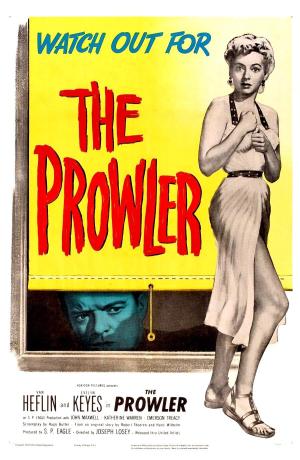
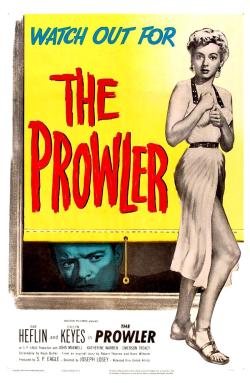
This one isn't around very often on television. I don't know why. It's a pretty good noir, in its own slightly screwy way. When we think of noir, we tend to think of some big dumb brute like Robert Mitchum being manipulated by a scheming woman. Here it's the other way around.
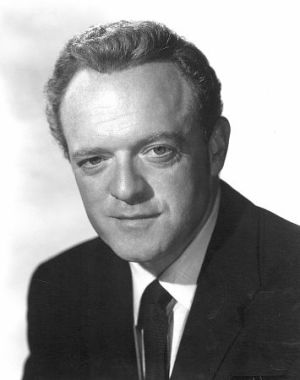
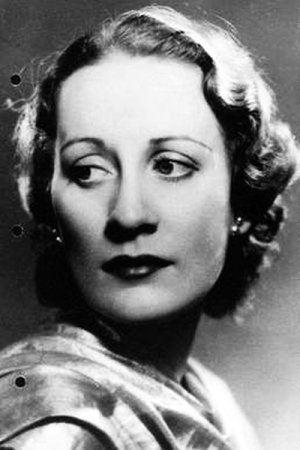
Evelyn Keyes is a bored housewife whose husband is an all-night disk jockey in a thinly disguised Los Angeles. She reports a prowler one night and temptation knocks on the door in the form of police officer Van Heflin. Heflin smirks a lot but he seems to ignite Keyes and soon they are boffing each other while Keyes' elderly hubby is spinning records on the radio. She was unfulfilled before, her husband being impotent, but she's no long unfulfilled and falls in love with Heflin.
I don't think I want to give away much more of the plot because this is one of those instances in which an inexpensively made movie actually has some unpredictable elements in it.
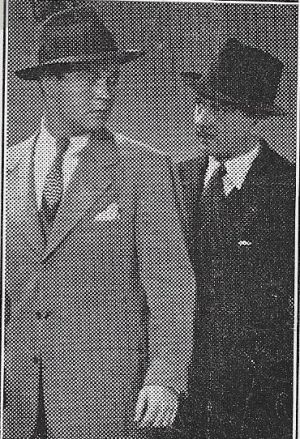
Making this film must have been fascinating, in one way or another, for everyone involved. A middle-aged guy, John Maxwell, great name, pats his wife on the rump. Don't know how that made it past the gate. And the House Unamerican Activities committee was hitting its stride, of course. Joseph Losey, the director, simply gave up and moved permanently to England where he turned out some seriously perverted masterpieces like "The Servant" and some engaging whimsy like "Modesty Blaise." The writer Dalton Trumbo was blacklisted but continued working. Here he appears under the nom de plume "Hugo Butler," the name of a good friend of his.
The producer, S. P. Eagle (aka Sam Spiegel) threw an expensive wrap party and asked everyone to chip in for it. But he'd worked the party into the budget, so he just pocketed everyone's contributions and walked away with the money. As Heflin's character says in a desperate attempt at self justification -- everybody is a little crooked, from bankers to grocery store owners. He could have added movie producers.
I suppose it's possible to read communist propaganda into this movie. Movies cover a lot of ground and, like the Bible or the Constitution, you can pretty much find anything you're interested in finding. Why, for instance, did Heflin have to use bankers as one of several examples of crooked businessmen? True, Trumbo's lines did include grocery store owners and a couple of other working-class types but still -- bankers? Why cast such aspersions? Everyone knows bankers and brokers never cheat. And not just bankers. The protagonist is a greedy, murdering cop. Everyone knows cops are there to serve and to protect us. But there's your commie pinko talking for you, polluting our precious bodily fluids.
Evelyn Keyes was just getting divorced from John Huston at the time this was shot, and her father-in-law, Walter Huston, had just died. That may account for the uneasy quality of her performance. She seems breathless and she trembles throughout. Van Heflin turns in a nice performance. His lies sounded very convincing, to me as well as to the object of his affection. And there are moments when he actually makes us feel sorry for him. But, honestly, wiliness and guile are not his shtik. He's better at straightforward villainy ("They Came to Cordura") and he was excellent as the simple but not unperceptive squatter in "Shane." The sets are minimal and uniformly bleak. The big "hacienda" that the wealthy Keyes lives in looks spare and barren. And Heflin's cop lives in what I guess is called a studio apartment and what I'm sure would be called a dump. Joe Friday was never this badly off.

 لامحدود فلمیں اور شوز دیکھیں
 اپنا پسندیدہ مواد ڈاؤن لوڈ کریں اور آف لائن دیکھیں
 آسان انٹرفیس اور ہموار کارکردگی


















'%3e%3cpath%20id='Vector'%20d='M17.3996%2025.7999C17.3996%2025.9838%2017.3634%2026.1658%2017.293%2026.3357C17.2227%2026.5055%2017.1196%2026.6598%2016.9896%2026.7899C16.8596%2026.9199%2016.7052%2027.023%2016.5354%2027.0933C16.3655%2027.1637%2016.1835%2027.1999%2015.9996%2027.1999C15.8158%2027.1999%2015.6337%2027.1637%2015.4639%2027.0933C15.294%2027.023%2015.1397%2026.9199%2015.0097%2026.7899C14.8797%2026.6598%2014.7765%2026.5055%2014.7062%2026.3357C14.6358%2026.1658%2014.5996%2025.9838%2014.5996%2025.7999C14.5996%2025.4286%2014.7471%2025.0725%2015.0097%2024.81C15.2722%2024.5474%2015.6283%2024.3999%2015.9996%2024.3999C16.3709%2024.3999%2016.727%2024.5474%2016.9896%2024.81C17.2521%2025.0725%2017.3996%2025.4286%2017.3996%2025.7999Z'%20fill='white'/%3e%3cpath%20id='Union'%20fill-rule='evenodd'%20clip-rule='evenodd'%20d='M8.5%204H23.5C24.0523%204%2024.5%204.44772%2024.5%205V21.5H7.5V5C7.5%204.44772%207.94772%204%208.5%204ZM5.5%2022.5V5C5.5%203.34315%206.84315%202%208.5%202H23.5C25.1569%202%2026.5%203.34315%2026.5%205V22.5V27C26.5%2028.6569%2025.1569%2030%2023.5%2030H8.5C6.84315%2030%205.5%2028.6569%205.5%2027V22.5ZM24.5%2023.5V27C24.5%2027.5523%2024.0523%2028%2023.5%2028H8.5C7.94772%2028%207.5%2027.5523%207.5%2027V23.5H24.5Z'%20fill='white'/%3e%3cpath%20id='Union_2'%20fill-rule='evenodd'%20clip-rule='evenodd'%20d='M17%209C17%208.44772%2016.5523%208%2016%208C15.4477%208%2015%208.44772%2015%209V13.8258L13.1508%2012.2407C12.7315%2011.8813%2012.1002%2011.9299%2011.7408%2012.3492C11.3813%2012.7685%2011.4299%2013.3998%2011.8492%2013.7593L15.345%2016.7556C15.5205%2016.9079%2015.7495%2017%2016%2017C16.2506%2017%2016.4796%2016.9079%2016.6551%2016.7556L20.1508%2013.7593C20.5701%2013.3998%2020.6187%2012.7685%2020.2593%2012.3492C19.8999%2011.9299%2019.2686%2011.8813%2018.8492%2012.2407L17%2013.8258V9Z'%20fill='white'/%3e%3c/g%3e%3c/svg%3e)
