"The older the fiddle, the sweeter the tune." - Irish proverb
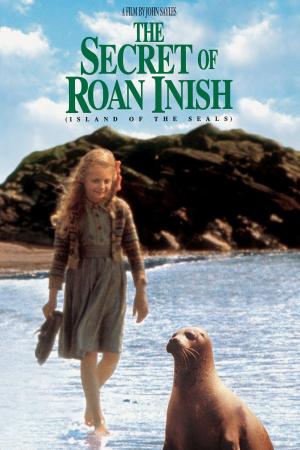
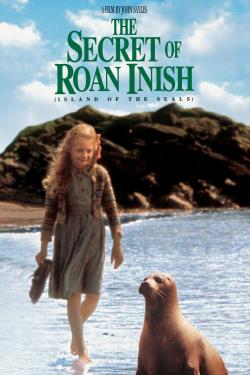
Part of cinema's "Irish boom" in the lead up to the Anglo-Irish ceasefires, "The Secret of Roan Inish" is a low key, fairly unassuming piece of fantasy by director John Sales, notable mostly for some good cinematography by the legendary Haskell Wexler.
Like all of these films ("Waking Ned Devine", "Far and Away", "Riverdance" etc), "The Secret of Roan Inish" exemplifies what writer Natasha Casey calls "Cletic commodification", reducing Ireland and Irishness to "Celtic myths", quaint, pre-modern, rural landscapes, and a depiction of the nation as being forever pre-colonised. Unsurprisingly, the film was widely distributed in America and Britian (since John Ford, "Irishness" has always been used as a vehicle to allow white audiences to role-play being white minorities/victims), but only had a limited release in Ireland. Its pastoral, regressive image of Irish society is more commercially viable outside of its home territory.
The film is often touted as being Sayles' only non-political film, but this isn't true. Its tales of when "man and beast lived side-by-side, sharing the sea", of "monsters shedding their past skins", of a little girl's self determination and slow journey back to her roots, are designed specifically for the Irish diaspora. It's a call for a people to return to their homes and live alongside the now tamed beasts of Old England.
"Everyone wants to march into the future," one haggard Irish character says, mourning about how his country "just got left behind." But the film's solution is to avoid modernization and to delve deeper into the past; a regression into some mythical "pure origins", a move backward to re-establish a pre-colonial Ireland. This is not surprising. The grand narrative of a society moving from the pre-modern to the modern to the post-modern, breaks down in Ireland. After the Anglo-Irish and Civil wars, as well as hundreds of years of struggle, the Irish were concerned with maintaining the nationalist cultural identity that they were finally free to express in their self-governance.
But what Sayles' film does is advocate delving into the "rich identity of Ireland's past", whilst serving up only Disneyland trinkets. It's the condescending David Lean view of Ireland; the art house equivalent of a Lucky Charms cereal box. So it's not only that the film fails to give a genuine ideology of contemporary Ireland, or that it chooses an escape to the past instead of clarifying historical events, but that it pretends to be about "identity" when actually it's relying on mythology in order to avoid questions of authenticity (or the impossibility thereof).
Ironically, with the Irish film industry in ruins, "Irishness" has increasingly become a sort of "viscious circle", foreigners projecting "Irishness" onto a country who must now parrot (and export) such cosy, plastic "Irishness" in their own art if they hope to garner international attention. Sayles is unwittingly participating here in the kind of damaging, bottled-tourism and cultural kitsch that he denounces so well in "Limbo" and "Sunshine State".
Ignoring these issues, the film works fairly well as a children's fantasy, though I suspect most kids and adults will find "Roan Inish" too plain and too slow. Compare the film to Victor Erice's "The Spirit of the Beehive", a masterpiece which, like "Roan Inish", merges history, myth and childhood.
7/10 – Worth one viewing.

 لامحدود فلمیں اور شوز دیکھیں
 اپنا پسندیدہ مواد ڈاؤن لوڈ کریں اور آف لائن دیکھیں
 آسان انٹرفیس اور ہموار کارکردگی



















'%3e%3cpath%20id='Vector'%20d='M17.3996%2025.7999C17.3996%2025.9838%2017.3634%2026.1658%2017.293%2026.3357C17.2227%2026.5055%2017.1196%2026.6598%2016.9896%2026.7899C16.8596%2026.9199%2016.7052%2027.023%2016.5354%2027.0933C16.3655%2027.1637%2016.1835%2027.1999%2015.9996%2027.1999C15.8158%2027.1999%2015.6337%2027.1637%2015.4639%2027.0933C15.294%2027.023%2015.1397%2026.9199%2015.0097%2026.7899C14.8797%2026.6598%2014.7765%2026.5055%2014.7062%2026.3357C14.6358%2026.1658%2014.5996%2025.9838%2014.5996%2025.7999C14.5996%2025.4286%2014.7471%2025.0725%2015.0097%2024.81C15.2722%2024.5474%2015.6283%2024.3999%2015.9996%2024.3999C16.3709%2024.3999%2016.727%2024.5474%2016.9896%2024.81C17.2521%2025.0725%2017.3996%2025.4286%2017.3996%2025.7999Z'%20fill='white'/%3e%3cpath%20id='Union'%20fill-rule='evenodd'%20clip-rule='evenodd'%20d='M8.5%204H23.5C24.0523%204%2024.5%204.44772%2024.5%205V21.5H7.5V5C7.5%204.44772%207.94772%204%208.5%204ZM5.5%2022.5V5C5.5%203.34315%206.84315%202%208.5%202H23.5C25.1569%202%2026.5%203.34315%2026.5%205V22.5V27C26.5%2028.6569%2025.1569%2030%2023.5%2030H8.5C6.84315%2030%205.5%2028.6569%205.5%2027V22.5ZM24.5%2023.5V27C24.5%2027.5523%2024.0523%2028%2023.5%2028H8.5C7.94772%2028%207.5%2027.5523%207.5%2027V23.5H24.5Z'%20fill='white'/%3e%3cpath%20id='Union_2'%20fill-rule='evenodd'%20clip-rule='evenodd'%20d='M17%209C17%208.44772%2016.5523%208%2016%208C15.4477%208%2015%208.44772%2015%209V13.8258L13.1508%2012.2407C12.7315%2011.8813%2012.1002%2011.9299%2011.7408%2012.3492C11.3813%2012.7685%2011.4299%2013.3998%2011.8492%2013.7593L15.345%2016.7556C15.5205%2016.9079%2015.7495%2017%2016%2017C16.2506%2017%2016.4796%2016.9079%2016.6551%2016.7556L20.1508%2013.7593C20.5701%2013.3998%2020.6187%2012.7685%2020.2593%2012.3492C19.8999%2011.9299%2019.2686%2011.8813%2018.8492%2012.2407L17%2013.8258V9Z'%20fill='white'/%3e%3c/g%3e%3c/svg%3e)
