1234money official logo1234money

Command Ctrl

Stream the signal

  • Home
  • TV show
  • Movie
  • Animation
  • VSKit
  • Most Watched
  • 1234money App
  • FM Download
  • Games
  • Old 1234money
English
العربية
Français
Bahasa Indonesia
हिन्दी
اردو
Filipino
1234money Download AppDownload App
Download App
View more1234money home light arrow
1234money downloadEnjoy unlimited movies and shows
1234money downloadDownload your favorite content to watch offline
1234money downloadSimple interface & smooth performance
Scan QR code to download or
Download 1234money
For phones and tablets
TV
1234money TV APK
For Android TV
1234money header navigation
1234money official logo

1234money

1234money search icon
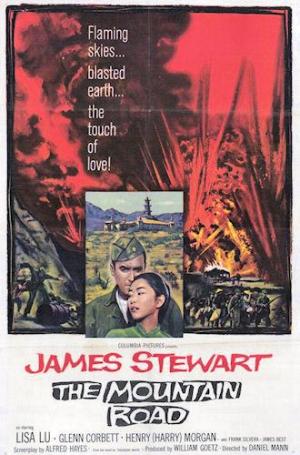
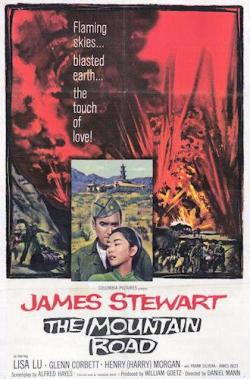
The Mountain Road

The Mountain Road

★ 6.21960Movie1 h 42 mUnited States
DramaWar

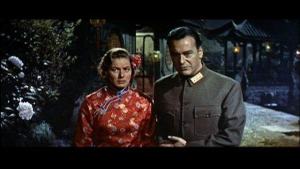
A US Army Major stationed in East China in 1944 is ordered to blow up military installations in order to slow down the advancing Japanese Army.

1247 people rated
🔇

The Mountain Road

1960

R

1 h 42 m

United States

Drama

War

A US Army Major stationed in East China in 1944 is ordered to blow up military installations in order to slow down the advancing Japanese Army.
More

6.2 /10

1247 people rated

Watch Online

Watch in App

share

Episodes

film
lklk
Netflix
Plex

Trailer

play
Top Cast(18)
starring avatar
James Stewart
Maj. Baldwin
starring avatar
Lisa Lu
Madame Sue-Mei Hung
starring avatar
Glenn Corbett
Collins
starring avatar
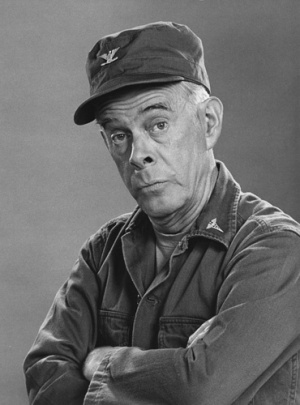
Harry Morgan
Sgt. 'Mike' Michaelson
starring avatar
Frank Silvera
Col. Kwan
starring avatar
James Best
Niergaard
starring avatar
Rudy Bond
Sgt. Miller
starring avatar
Mike Kellin
Prince
starring avatar
Frank Maxwell
Sgt. Ballo
starring avatar
Eddie Firestone
Maj. Lewis
starring avatar
Alan Baxter
Gen. Loomis
default avatar
Leo Chen
Col. Li
starring avatar
Bill Quinn
Col. Magnusson
starring avatar
Peter Chong
Chinese Colonel
default avatar
P.C. Lee
Chinese General
default avatar
W.T. Chang
Bit Role
starring avatar
Kei Thin Chung
Chinese Captain
default avatar
Bart Conrad
Bit Role

User Review

author avatar

zeb patel

23/05/2023 04:14
Never heard of this movie before but Mountain Road is a very engrossing movie about a relatively unknown theatre of WW2 taking place in China during the end of the Japanese occupation. Stewart is excellent in the lead as is the entire cast with special mention to Lisa Lu a Chinese /American actress in a rare lead role. Lots of twists and turns with a bit of a pacifist message as well. Hard-hitting in it's depictions of the suffering and depravity that can occur due to a country being torn apart by war.
author avatar

ruby rana shah

23/05/2023 04:14
THE MOUNTAIN ROAD is an unusual WW2 film in that the enemy combatants are never actually seen during the production, only referred to. Jimmy Stewart and his men are busy blowing up bridges and ammunition dumps in readiness for the imminent arrival of the Japanese in China, but the main thrust of the story is a more nuanced and character-focused drama in which Stewart becomes obsessed with dispensing justice against the Chinese looters who threaten the safety of his men. For a little-known film such as this, THE MOUNTAIN ROAD is surprisingly good in places. Although it's slow and almost entirely lacking in battle action, the characters are what keep you watching. The Arizona locations successfully convince as rural China and Stewart's steady presence sees the movie through from beginning to end. My favourite character by far is the one played by the excellent Chinese-American actress Lisa Lu, who would later star in Shaw's 14 AMAZONS. Lu is far more than just a love interest and her subtle performance is really fantastic; few performers could convey her level of anguish through just a few words and expressions. In some instances THE MOUNTAIN ROAD manages to have its cake and eat it by offering the spectacle of a massive explosive set-piece and a great climatic action scene while at the same time remaining resolutely anti-war.
author avatar

mpasisetefane

23/05/2023 04:14
I watched this movie on commercial late-night TV when I was 17 (in 1969). I am sure I then missed most of what was there to be gleaned, however, the soundtrack was compelling. The movie is something of a preview of coming events (not unlike "The Sand Pebbles") with respect to our involvement in Vietnam. I cannot understand how intelligent people could overlook the problems occasioned by fighting a war in a culture so different from our own. The grist of the movie is how power impacts people and that it is not likely that the first time it is granted, the recipient will be ready. I thought Stewart did an excellent job of articulating his conflict, and regrets, over his use of power, and the female lead's character seemed a little unsympathetic to a man who was genuinely conflicted. The movie leaves me with a trace of melancholy. In 1960, when it was released, there was still time to avoid the all but unfathomable foreign policy blunders of the late '60s. Vietnam impacted the thinking of much of the baby boom generation, and not for the better. It leaves me thinking that the war was fought mostly to satisfy the Joint Chiefs (after Cuba was off limits) and to generate huge amounts of cash for the defense industry.
author avatar

Wesley Lots

23/05/2023 04:14
Enjoyed this film which was shown on TCM and I was very surprised to see that James Stewart, (Major Baldwin) starred in this film which is about a unit of American Engineers who were a demolition crew out to destroy a Chinese stockpile of weapons. These men had to travel on one mountain road which had plenty of these stockpiles to destroy in order to make certain the Japanese did not obtain any of these weapons. Major Baldwin runs into all kinds of problems, like a young Chinese woman named, Madame Sue-Mei Hung, (Lisa Lu) who was the wife of a Chinese General and he wanted her to travel with these American soldiers in order to secure her safety. Men get sick and there are many Chinese people who do not want the Americans blowing up this stockpile of weapons, as they can use them as a bargaining tool in order to secure food and shelter. There is even some romance going on between Madame Sue and Major Baldwin as he finds out her general husband was killed. Harry Morgan, (Sgt. Michaelson) gave a great supporting role along with Lisa Lu as the only woman in the picture. This film clearly points out the difficult problems that existed between American and Chinese relations during World War II. Great film to view, it is rather long and draw out, but we have to consider this film is from 1960.
author avatar

Ashish Gurung

23/05/2023 04:14
Legendary American reporter Theodore H. White covered China in the 1940s, and he wrote the novel on which this unusual James Stewart feature is based. It's not quite anti-war, but it's a very long way from the flag-waving military movies that Stewart made in the 1950s. Stewart's character is a U.S. military engineer working with a small team trying to slow a Japanese advance in China. Though there's plenty of action (especially explosions), the emphasis is on the Americans' interaction with their Chinese allies -- which is fraught with problems. Stewart's character has a local love interest, played by Lisa Lu, but their relationship is nothing like a conventional GI romance. "The Mountain Road" was obviously meant to be a thought-provoking look back at World War II, and to audiences in the early 1960s it probably was. The climax may have been almost shocking. In today's more jaded world, the movie is likely to strike many viewers as dull, with an ending that resolves very little. But it you still have a rose-colored view of the "Greatest War," and think it was less morally messy than our current conflicts, this could be enlightening.
author avatar

Hassam Ansari

23/05/2023 04:14
This is an amazing film about what it truly means to be "unfit for command". His "unit for command" character volunteers to lead a demolition team of 7 other men in war torn, famine torn China during World War II, in an attempt to slow down the advance of the Japanese. And it is of the utmost relevance now in 2020, and has been for at least 40 years. James Stewart plays a man much younger than the actor himself, and you can tell, by the very ignorance and self righteousness of the character he plays. The supporting cast is as excellent as Stewart is. The most recognizable ones are Morgan, Best, and Corbett. Morgan and Best are best known as fairly macho character actors, and Corbett as a potential leading man. Here, Corbett is the interpreter for Stewart. Accompanying the team are a Chinese colonel and the wife of a general who are on their way to the final destination. Fortunately, the colonel also has some soldiers helping. Stewart does a remarkable job in playing what can only be called a villain. There are many examples of actors portraying villains so realistically that they snake oil their way into making naïve people think their motivations aren't pure evil. Heflin in "Gunman's Walk", Eastwood in many Westerns, March in "Hombre", and others. Sometimes, these human monsters are misinterpreted by naïve viewers as actually being "heroes", but there is no way that they are. The major (Stewart) makes about every wrong decision a man can make, and it is obvious to any educated person. His college education only helps him to be a human monster. The major does a good job of seeming to care, but he doesn't, or he wouldn't squander human lives the way he does, nor fail to foresee problems that anyone with his educated would foresee, even in 1944. Sure, there could be some failure to understand Chinese culture, but the fact is that the major is "totally out of control to demons inside" and is "unfit for command". That, in essence, is the film. And it is portrayed with excellence. It should be rated "R" for mature audiences, because only mature viewers can understand what it truly means. There are lessons here. America, certainly for the past 40 or 50 years, has had too many people in authority, and too many voters, and too many jury members, who reward "unfit for command" personality and character. Too many Americans "blame the victim, never the criminal". That is what Western culture deteriorated into. The film also shows the need for Western culture to go back to respected elders, people with experience and savvy, over the young "unfit for command", "upwardly mobile" "mob family member" sorts who are so loved by the ignorant masses, be they theists, atheists, materialists, karma lovers, whatever they are, the connecting link is "arrogance", in believing that some people are demigods, and some are cannon fodder. It is because of this belief and arrogance that certain leaders in the U.S. are in the position they are in, and that means both Republicans and Democrats. This film gives a clear picture of that. It should not be misunderstood as a film that sanctions or excuses or pardons the major, nor as one that actually gives him any natural motivation, but as one that clearly depicts his actions as being out of control to demonic forces (or, if you're a materialist, to chemical forces). And the need to keep such human monsters from being in positions of stewardship.
author avatar

🌬️ Sonya

23/05/2023 04:14
This is a rare film that criticizes the KMT in China's war with Japan in 1944. The KMT was fighting the CCP (Communists) at the same time they were fighting the Japanese. The CCP was fighting the Japanese as well. They are not even mentioned in the film. The Chinese Civil War started way before 1944. It was the KMT (Chiang Kai-Shek) against the CCP (Mao Zedong). It lasted until 1949, when the CCP finally won when the KMT retreated to Taiwan. The film itself, though, has some problems. There is really not too much suspense or tension in the film. Stewart is really miscast (he was more comfortable in Air Force films) as a demolition man. Harry Morgan is very good though, as is the rest of the cast, who rescue the film from Stewart. Other than Flying Tigers, I cannot remember one other well-made film about the Chinese in WW 2. Empire of the Sun was very good, but it was not really about China. The Last Emperor was very good, but it was more about Puyi than the Chinese in WW2. At least this film marks a shift away from the stereotypical portrayal of the Chinese we had seen in films prior to 1960. There were still a few stereotypes, but not as many as before. Interesting film.
author avatar

Bruno Junior

23/05/2023 04:14
I have seen practically every film Jimmy Stewart made in his long and wonderful career. Somehow or other, I never saw this film and was surprised to see it was coming on--especially as I've never heard of it. Well, after seeing it, I can clearly see why this film is rarely seen or talked about, as it stinks. Up until the amazingly confusing ending, it still wasn't a good film but at least was passable entertainment. Stewart plays a major who's in charge of a small group of demolitions experts whose mission is to slow down the Japanese invasion. Despite the importance of the mission, I was surprised how many of Stewart's men seemed like unprofessional whiners. I would think that anyone who really did this job would be offended by this far less than heroic image--and these men must have been very brave and dedicated in real life. Into this motley crew comes a Chinese colonel and the wife of an executed Chinese general--who tag along for part of the mission. Having the lady there in the middle of war and with a group of desperate men seemed to make little sense. It made even less sense when inexplicably, she and Stewart completely out of the blue are in a bit of a romance. And it made yet less sense when she behaved the way she did late in the film, as she came off as sanctimonious and confusing. Stewart's character also made little sense late in the film, as he went from being a decent leader to Captain Ahab's less stable brother!! In fact, by the end of the film, the whole thing just degenerated into a mess--with everyone bickering and killing and complaining. Wow, how inspiring!! My advice is that unless you are a completist who wants to see every one of Stewart's films, this one is amazingly skip-able. Also in this same category would be POT 'O GOLD, THE MAGIC OF LASSIE and AN American TALE: FIVEL GOES WEST. Even great actors can't win 'em all!
author avatar

Ouiam :)

23/05/2023 04:14
I first saw this as a 16 year-old on its release in the UK, and have seen only glimpses on TV since. What I remember most is, having the year before seen "The Big Country", recognising the similarity of the scores as having the same composer in Jerome Moross (I had taken my seat after the opening credits). I felt quite pleased with myself at the time. I thought the movie to be much along the lines of earlier James Stewart/Anthony Mann classics, although with not quite the punch or pace. Harry Morgan's performance explains why he was never short of roles and why he became a stalwart member of the "MASH" brigade. Definitely worth another viewing.
author avatar

yonibalcha27

23/05/2023 04:14
The gangly James Stewart doesn't seem to understand anything or anyone other than his own culture, and how to treat ladies in this film. His character is despicable, and there are times when he is downright racist saying 'I don't take advice from Chinese people any more'. He fails to take you on the journey with him, and you get the feeling that in 1960 at the age of 52, he is growing old and getting set in his ways. His characters seems to be fixed at this point in his career which is why there is very little room for him to grow as an actor. Only John Ford would take him to the next level in 'The Man who shot Liberty Valance' two years later.

User Review

author avatar

zeb patel

23/05/2023 04:14
Never heard of this movie before but Mountain Road is a very engrossing movie about a relatively unknown theatre of WW2 taking place in China during the end of the Japanese occupation. Stewart is excellent in the lead as is the entire cast with special mention to Lisa Lu a Chinese /American actress in a rare lead role. Lots of twists and turns with a bit of a pacifist message as well. Hard-hitting in it's depictions of the suffering and depravity that can occur due to a country being torn apart by war.
author avatar

ruby rana shah

23/05/2023 04:14
THE MOUNTAIN ROAD is an unusual WW2 film in that the enemy combatants are never actually seen during the production, only referred to. Jimmy Stewart and his men are busy blowing up bridges and ammunition dumps in readiness for the imminent arrival of the Japanese in China, but the main thrust of the story is a more nuanced and character-focused drama in which Stewart becomes obsessed with dispensing justice against the Chinese looters who threaten the safety of his men. For a little-known film such as this, THE MOUNTAIN ROAD is surprisingly good in places. Although it's slow and almost entirely lacking in battle action, the characters are what keep you watching. The Arizona locations successfully convince as rural China and Stewart's steady presence sees the movie through from beginning to end. My favourite character by far is the one played by the excellent Chinese-American actress Lisa Lu, who would later star in Shaw's 14 AMAZONS. Lu is far more than just a love interest and her subtle performance is really fantastic; few performers could convey her level of anguish through just a few words and expressions. In some instances THE MOUNTAIN ROAD manages to have its cake and eat it by offering the spectacle of a massive explosive set-piece and a great climatic action scene while at the same time remaining resolutely anti-war.
author avatar

mpasisetefane

23/05/2023 04:14
I watched this movie on commercial late-night TV when I was 17 (in 1969). I am sure I then missed most of what was there to be gleaned, however, the soundtrack was compelling. The movie is something of a preview of coming events (not unlike "The Sand Pebbles") with respect to our involvement in Vietnam. I cannot understand how intelligent people could overlook the problems occasioned by fighting a war in a culture so different from our own. The grist of the movie is how power impacts people and that it is not likely that the first time it is granted, the recipient will be ready. I thought Stewart did an excellent job of articulating his conflict, and regrets, over his use of power, and the female lead's character seemed a little unsympathetic to a man who was genuinely conflicted. The movie leaves me with a trace of melancholy. In 1960, when it was released, there was still time to avoid the all but unfathomable foreign policy blunders of the late '60s. Vietnam impacted the thinking of much of the baby boom generation, and not for the better. It leaves me thinking that the war was fought mostly to satisfy the Joint Chiefs (after Cuba was off limits) and to generate huge amounts of cash for the defense industry.
author avatar

Wesley Lots

23/05/2023 04:14
Enjoyed this film which was shown on TCM and I was very surprised to see that James Stewart, (Major Baldwin) starred in this film which is about a unit of American Engineers who were a demolition crew out to destroy a Chinese stockpile of weapons. These men had to travel on one mountain road which had plenty of these stockpiles to destroy in order to make certain the Japanese did not obtain any of these weapons. Major Baldwin runs into all kinds of problems, like a young Chinese woman named, Madame Sue-Mei Hung, (Lisa Lu) who was the wife of a Chinese General and he wanted her to travel with these American soldiers in order to secure her safety. Men get sick and there are many Chinese people who do not want the Americans blowing up this stockpile of weapons, as they can use them as a bargaining tool in order to secure food and shelter. There is even some romance going on between Madame Sue and Major Baldwin as he finds out her general husband was killed. Harry Morgan, (Sgt. Michaelson) gave a great supporting role along with Lisa Lu as the only woman in the picture. This film clearly points out the difficult problems that existed between American and Chinese relations during World War II. Great film to view, it is rather long and draw out, but we have to consider this film is from 1960.
author avatar

Ashish Gurung

23/05/2023 04:14
Legendary American reporter Theodore H. White covered China in the 1940s, and he wrote the novel on which this unusual James Stewart feature is based. It's not quite anti-war, but it's a very long way from the flag-waving military movies that Stewart made in the 1950s. Stewart's character is a U.S. military engineer working with a small team trying to slow a Japanese advance in China. Though there's plenty of action (especially explosions), the emphasis is on the Americans' interaction with their Chinese allies -- which is fraught with problems. Stewart's character has a local love interest, played by Lisa Lu, but their relationship is nothing like a conventional GI romance. "The Mountain Road" was obviously meant to be a thought-provoking look back at World War II, and to audiences in the early 1960s it probably was. The climax may have been almost shocking. In today's more jaded world, the movie is likely to strike many viewers as dull, with an ending that resolves very little. But it you still have a rose-colored view of the "Greatest War," and think it was less morally messy than our current conflicts, this could be enlightening.
author avatar

Hassam Ansari

23/05/2023 04:14
This is an amazing film about what it truly means to be "unfit for command". His "unit for command" character volunteers to lead a demolition team of 7 other men in war torn, famine torn China during World War II, in an attempt to slow down the advance of the Japanese. And it is of the utmost relevance now in 2020, and has been for at least 40 years. James Stewart plays a man much younger than the actor himself, and you can tell, by the very ignorance and self righteousness of the character he plays. The supporting cast is as excellent as Stewart is. The most recognizable ones are Morgan, Best, and Corbett. Morgan and Best are best known as fairly macho character actors, and Corbett as a potential leading man. Here, Corbett is the interpreter for Stewart. Accompanying the team are a Chinese colonel and the wife of a general who are on their way to the final destination. Fortunately, the colonel also has some soldiers helping. Stewart does a remarkable job in playing what can only be called a villain. There are many examples of actors portraying villains so realistically that they snake oil their way into making naïve people think their motivations aren't pure evil. Heflin in "Gunman's Walk", Eastwood in many Westerns, March in "Hombre", and others. Sometimes, these human monsters are misinterpreted by naïve viewers as actually being "heroes", but there is no way that they are. The major (Stewart) makes about every wrong decision a man can make, and it is obvious to any educated person. His college education only helps him to be a human monster. The major does a good job of seeming to care, but he doesn't, or he wouldn't squander human lives the way he does, nor fail to foresee problems that anyone with his educated would foresee, even in 1944. Sure, there could be some failure to understand Chinese culture, but the fact is that the major is "totally out of control to demons inside" and is "unfit for command". That, in essence, is the film. And it is portrayed with excellence. It should be rated "R" for mature audiences, because only mature viewers can understand what it truly means. There are lessons here. America, certainly for the past 40 or 50 years, has had too many people in authority, and too many voters, and too many jury members, who reward "unfit for command" personality and character. Too many Americans "blame the victim, never the criminal". That is what Western culture deteriorated into. The film also shows the need for Western culture to go back to respected elders, people with experience and savvy, over the young "unfit for command", "upwardly mobile" "mob family member" sorts who are so loved by the ignorant masses, be they theists, atheists, materialists, karma lovers, whatever they are, the connecting link is "arrogance", in believing that some people are demigods, and some are cannon fodder. It is because of this belief and arrogance that certain leaders in the U.S. are in the position they are in, and that means both Republicans and Democrats. This film gives a clear picture of that. It should not be misunderstood as a film that sanctions or excuses or pardons the major, nor as one that actually gives him any natural motivation, but as one that clearly depicts his actions as being out of control to demonic forces (or, if you're a materialist, to chemical forces). And the need to keep such human monsters from being in positions of stewardship.
author avatar

🌬️ Sonya

23/05/2023 04:14
This is a rare film that criticizes the KMT in China's war with Japan in 1944. The KMT was fighting the CCP (Communists) at the same time they were fighting the Japanese. The CCP was fighting the Japanese as well. They are not even mentioned in the film. The Chinese Civil War started way before 1944. It was the KMT (Chiang Kai-Shek) against the CCP (Mao Zedong). It lasted until 1949, when the CCP finally won when the KMT retreated to Taiwan. The film itself, though, has some problems. There is really not too much suspense or tension in the film. Stewart is really miscast (he was more comfortable in Air Force films) as a demolition man. Harry Morgan is very good though, as is the rest of the cast, who rescue the film from Stewart. Other than Flying Tigers, I cannot remember one other well-made film about the Chinese in WW 2. Empire of the Sun was very good, but it was not really about China. The Last Emperor was very good, but it was more about Puyi than the Chinese in WW2. At least this film marks a shift away from the stereotypical portrayal of the Chinese we had seen in films prior to 1960. There were still a few stereotypes, but not as many as before. Interesting film.
author avatar

Bruno Junior

23/05/2023 04:14
I have seen practically every film Jimmy Stewart made in his long and wonderful career. Somehow or other, I never saw this film and was surprised to see it was coming on--especially as I've never heard of it. Well, after seeing it, I can clearly see why this film is rarely seen or talked about, as it stinks. Up until the amazingly confusing ending, it still wasn't a good film but at least was passable entertainment. Stewart plays a major who's in charge of a small group of demolitions experts whose mission is to slow down the Japanese invasion. Despite the importance of the mission, I was surprised how many of Stewart's men seemed like unprofessional whiners. I would think that anyone who really did this job would be offended by this far less than heroic image--and these men must have been very brave and dedicated in real life. Into this motley crew comes a Chinese colonel and the wife of an executed Chinese general--who tag along for part of the mission. Having the lady there in the middle of war and with a group of desperate men seemed to make little sense. It made even less sense when inexplicably, she and Stewart completely out of the blue are in a bit of a romance. And it made yet less sense when she behaved the way she did late in the film, as she came off as sanctimonious and confusing. Stewart's character also made little sense late in the film, as he went from being a decent leader to Captain Ahab's less stable brother!! In fact, by the end of the film, the whole thing just degenerated into a mess--with everyone bickering and killing and complaining. Wow, how inspiring!! My advice is that unless you are a completist who wants to see every one of Stewart's films, this one is amazingly skip-able. Also in this same category would be POT 'O GOLD, THE MAGIC OF LASSIE and AN American TALE: FIVEL GOES WEST. Even great actors can't win 'em all!
author avatar

Ouiam :)

23/05/2023 04:14
I first saw this as a 16 year-old on its release in the UK, and have seen only glimpses on TV since. What I remember most is, having the year before seen "The Big Country", recognising the similarity of the scores as having the same composer in Jerome Moross (I had taken my seat after the opening credits). I felt quite pleased with myself at the time. I thought the movie to be much along the lines of earlier James Stewart/Anthony Mann classics, although with not quite the punch or pace. Harry Morgan's performance explains why he was never short of roles and why he became a stalwart member of the "MASH" brigade. Definitely worth another viewing.

author avatar

yonibalcha27

23/05/2023 04:14
The gangly James Stewart doesn't seem to understand anything or anyone other than his own culture, and how to treat ladies in this film. His character is despicable, and there are times when he is downright racist saying 'I don't take advice from Chinese people any more'. He fails to take you on the journey with him, and you get the feeling that in 1960 at the age of 52, he is growing old and getting set in his ways. His characters seems to be fixed at this point in his career which is why there is very little room for him to grow as an actor. Only John Ford would take him to the next level in 'The Man who shot Liberty Valance' two years later.
Disclaimer: All videos and pictures on 1234money are from the Internet, and their copyrights belong to the original creators. We only provide webpage services and do not store, record, or upload any content.
About 1234money:Official Link Release 1234.money|Download 1234money APK|Privacy Policy|User Agreement
© 2026 1234money. All rights reserved.Telegram
1234money official logo

1234money

English
العربية
Français
Bahasa Indonesia
हिन्दी
اردو
Filipino
About 1234money
Official Link ReleaseDownload 1234money APKPrivacy PolicyUser Agreement
Disclaimer: All videos and pictures on 1234money are from the Internet, and their copyrights belong to the original creators. We only provide webpage services and do not store, record, or upload any content.