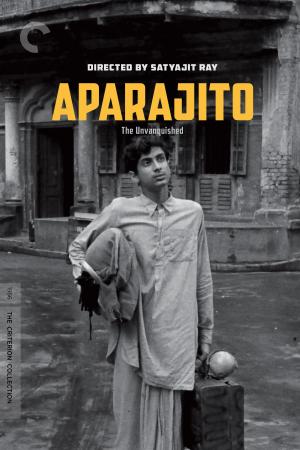
This isn't a bad film by any means. It's well made, often beautifully shot (though not exceptionally so compared to many others before, during the 1950s, or after). For me it just doesn't have that interesting of a directorial or filmic vision: nothing that is exciting as the depth probed by the exploration of inner states and torment of characters in Bergman's films, the poetic cinematography and atmosphere of Tarkovsky, the excitement and technique of Kurosawa, or even the warmth offered by Ozu, another director who made rather simple films focusing on family life.
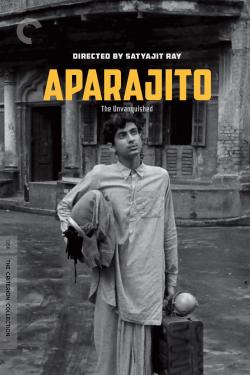
It's similar to the first film in the trilogy in many ways, and my review of that would probably be about identical. Pacing is arguably better, the first and second halves are more varied, where the second half has a more traditional plot leading the film, instead of characters just wandering around and talking, merely showing how the characters live from day to day.
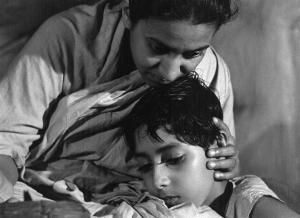
My ignorance of Indian culture may play a part in my indifference, but I've also seen films from many cultures that were unknown to me and was enthralled, so I don't think it's necessarily that. The characters don't have much to act on, they never say anything that is interesting or insightful about the world around them, even (granted the family did not have a high level of literacy, and Apu knew very little before the headmaster took an interest in him). The central characters are the mother and Apu, and neither say or do much. It's all so simple and linear- there's little that adequately stirs the thoughts or emotions in a way that compares to other great films or literature.
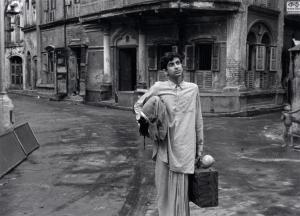
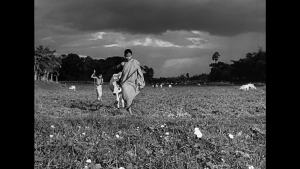
While the cinematography is good, it never reaches the height of the fantastic scene with the train in the first movie. The locations, especially early on, are beautiful. And the acting is naturalistic at many points, especially for the 1950s. However, It appears to me that this, and Ray's career, were outliers in Indian cinema, mostly known for Bollywood films. Ray was an auteur who intended to make more realistic and intimate films in a country that primarily churned out very commercial films, with little room for independents. To me, while this is a well made trilogy, the only reason I can find that it's regarded as highly as it is in the history of film is because of its unique place in history more so than the contents of the film.

 Enjoy unlimited movies and shows
 Download your favorite content to watch offline
 Simple interface & smooth performance

















'%3e%3cpath%20id='Vector'%20d='M17.3996%2025.7999C17.3996%2025.9838%2017.3634%2026.1658%2017.293%2026.3357C17.2227%2026.5055%2017.1196%2026.6598%2016.9896%2026.7899C16.8596%2026.9199%2016.7052%2027.023%2016.5354%2027.0933C16.3655%2027.1637%2016.1835%2027.1999%2015.9996%2027.1999C15.8158%2027.1999%2015.6337%2027.1637%2015.4639%2027.0933C15.294%2027.023%2015.1397%2026.9199%2015.0097%2026.7899C14.8797%2026.6598%2014.7765%2026.5055%2014.7062%2026.3357C14.6358%2026.1658%2014.5996%2025.9838%2014.5996%2025.7999C14.5996%2025.4286%2014.7471%2025.0725%2015.0097%2024.81C15.2722%2024.5474%2015.6283%2024.3999%2015.9996%2024.3999C16.3709%2024.3999%2016.727%2024.5474%2016.9896%2024.81C17.2521%2025.0725%2017.3996%2025.4286%2017.3996%2025.7999Z'%20fill='white'/%3e%3cpath%20id='Union'%20fill-rule='evenodd'%20clip-rule='evenodd'%20d='M8.5%204H23.5C24.0523%204%2024.5%204.44772%2024.5%205V21.5H7.5V5C7.5%204.44772%207.94772%204%208.5%204ZM5.5%2022.5V5C5.5%203.34315%206.84315%202%208.5%202H23.5C25.1569%202%2026.5%203.34315%2026.5%205V22.5V27C26.5%2028.6569%2025.1569%2030%2023.5%2030H8.5C6.84315%2030%205.5%2028.6569%205.5%2027V22.5ZM24.5%2023.5V27C24.5%2027.5523%2024.0523%2028%2023.5%2028H8.5C7.94772%2028%207.5%2027.5523%207.5%2027V23.5H24.5Z'%20fill='white'/%3e%3cpath%20id='Union_2'%20fill-rule='evenodd'%20clip-rule='evenodd'%20d='M17%209C17%208.44772%2016.5523%208%2016%208C15.4477%208%2015%208.44772%2015%209V13.8258L13.1508%2012.2407C12.7315%2011.8813%2012.1002%2011.9299%2011.7408%2012.3492C11.3813%2012.7685%2011.4299%2013.3998%2011.8492%2013.7593L15.345%2016.7556C15.5205%2016.9079%2015.7495%2017%2016%2017C16.2506%2017%2016.4796%2016.9079%2016.6551%2016.7556L20.1508%2013.7593C20.5701%2013.3998%2020.6187%2012.7685%2020.2593%2012.3492C19.8999%2011.9299%2019.2686%2011.8813%2018.8492%2012.2407L17%2013.8258V9Z'%20fill='white'/%3e%3c/g%3e%3c/svg%3e)
