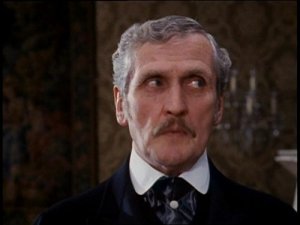
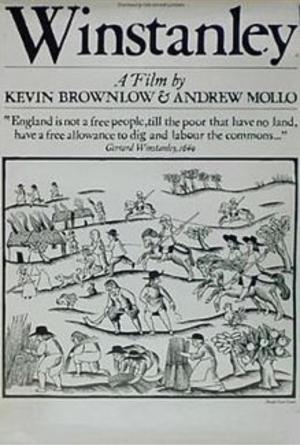
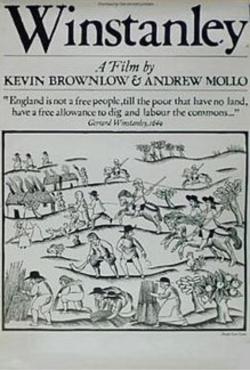
Directed by Kevin Brownlow, and based on a true story, "Winstanley" documents the efforts of Gerrard Winstanley (Miles Halliwell), a social reformer who resisted the privatisation of once common land, and tried to establish a self-sufficient farming community in 17th century England. Essentially a small-scale experiment in socialism/communism, Winstanley's project was crushed by the status quo.
If history teaches us anything, it's that any major attempt to redistribute land, share wealth, nationalise resources or cooperate, gets you swiftly killed, couped or invaded by those with power. From pre-Biblical times, right up to the 20th century, and even today, with the countless overt and covert operations of modern neo-Imperialists, anyone who has attempted to implement any egalitarian policy that even remotely cuts into private profit, has been violently crushed. This is a lesson which Gerrard Winstanley learns the hard way, as he attempts to rally farmers and workers in Surrey, England.
The irony of "Winstanley" is that it takes place after a supposedly "progressive" social revolution. Afterall, the first English Civil War had just ended, and King Charles the 1st killed by Parliamentarians. But life for ordinary British men and women didn't get better; the absolute rule of monarchs was simply replaced by the rule of equally cruel landowners, all of whom accelerated Land Enclosure policies. Then the Restoration came, and Kings were back in charge. Feuds between British royalists, parliamentarians, capitalists and workers would then go on throughout the 1700s and 1800s, giving way to many riots (notably the 1830 Swing Riots), reforms and various regressive and progressive policies. These tensions continue to this day.
Director Kevin Brownlow is a renowned film historian and expert in silent cinema. Perhaps because of this, "Winstanley" is impeccably shot, and at times resembles the works of Bill Douglas (particularly "Comrades"), Pontecorvo, Rosselini and Eisenstein. Though shot on a low budget, the film also boasts fine production design. Its acting has been criticised (like Pasolini, Brownlow utilises amateur actors, some real-life political activists), but these raw qualities merely amplify the film's agitprop credentials.
Incidentally, Brownlow directed "It Happened Here" in 1966, a low budget war drama. Stanley Kubrick would donate film stock to that film's production. Kubrick's own period drama, "Barry Lyndon", premiered the same year as "Winstanley".
8.5/10 – Worth one viewing. See "The Wind That Shakes the Barley".

 Enjoy unlimited movies and shows
 Download your favorite content to watch offline
 Simple interface & smooth performance




'%3e%3cpath%20id='Vector'%20d='M17.3996%2025.7999C17.3996%2025.9838%2017.3634%2026.1658%2017.293%2026.3357C17.2227%2026.5055%2017.1196%2026.6598%2016.9896%2026.7899C16.8596%2026.9199%2016.7052%2027.023%2016.5354%2027.0933C16.3655%2027.1637%2016.1835%2027.1999%2015.9996%2027.1999C15.8158%2027.1999%2015.6337%2027.1637%2015.4639%2027.0933C15.294%2027.023%2015.1397%2026.9199%2015.0097%2026.7899C14.8797%2026.6598%2014.7765%2026.5055%2014.7062%2026.3357C14.6358%2026.1658%2014.5996%2025.9838%2014.5996%2025.7999C14.5996%2025.4286%2014.7471%2025.0725%2015.0097%2024.81C15.2722%2024.5474%2015.6283%2024.3999%2015.9996%2024.3999C16.3709%2024.3999%2016.727%2024.5474%2016.9896%2024.81C17.2521%2025.0725%2017.3996%2025.4286%2017.3996%2025.7999Z'%20fill='white'/%3e%3cpath%20id='Union'%20fill-rule='evenodd'%20clip-rule='evenodd'%20d='M8.5%204H23.5C24.0523%204%2024.5%204.44772%2024.5%205V21.5H7.5V5C7.5%204.44772%207.94772%204%208.5%204ZM5.5%2022.5V5C5.5%203.34315%206.84315%202%208.5%202H23.5C25.1569%202%2026.5%203.34315%2026.5%205V22.5V27C26.5%2028.6569%2025.1569%2030%2023.5%2030H8.5C6.84315%2030%205.5%2028.6569%205.5%2027V22.5ZM24.5%2023.5V27C24.5%2027.5523%2024.0523%2028%2023.5%2028H8.5C7.94772%2028%207.5%2027.5523%207.5%2027V23.5H24.5Z'%20fill='white'/%3e%3cpath%20id='Union_2'%20fill-rule='evenodd'%20clip-rule='evenodd'%20d='M17%209C17%208.44772%2016.5523%208%2016%208C15.4477%208%2015%208.44772%2015%209V13.8258L13.1508%2012.2407C12.7315%2011.8813%2012.1002%2011.9299%2011.7408%2012.3492C11.3813%2012.7685%2011.4299%2013.3998%2011.8492%2013.7593L15.345%2016.7556C15.5205%2016.9079%2015.7495%2017%2016%2017C16.2506%2017%2016.4796%2016.9079%2016.6551%2016.7556L20.1508%2013.7593C20.5701%2013.3998%2020.6187%2012.7685%2020.2593%2012.3492C19.8999%2011.9299%2019.2686%2011.8813%2018.8492%2012.2407L17%2013.8258V9Z'%20fill='white'/%3e%3c/g%3e%3c/svg%3e)